



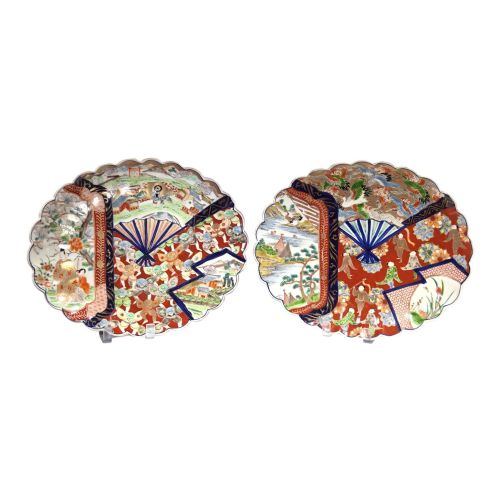


Japanese Export Porcelain Chargers
Japanese export porcelain chargers are large ceramic display plates made for Western markets, prized for rich Imari palettes and intricate hand-painted detail.
Japanese Export Porcelain Chargers
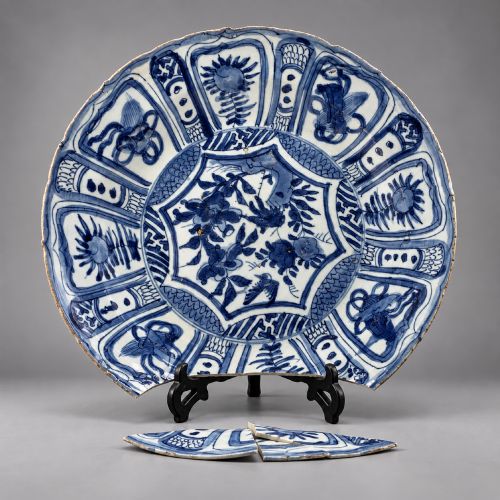
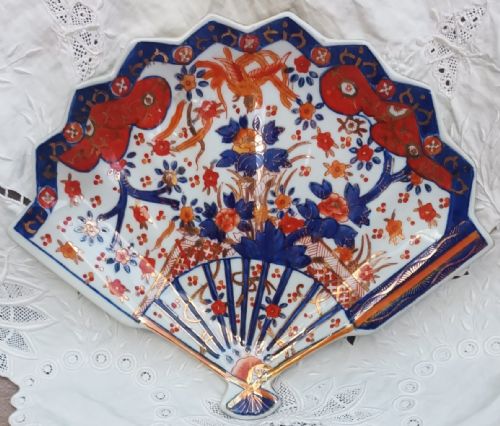
Japanese export porcelain chargers span centuries of production, appearing in forms such as wide display plates, scalloped dishes, and large decorative bowls. When searching for Japanese export porcelain chargers, a buyer encounters substantial ceramic plates designed specifically for overseas trade during the Edo and Meiji periods.
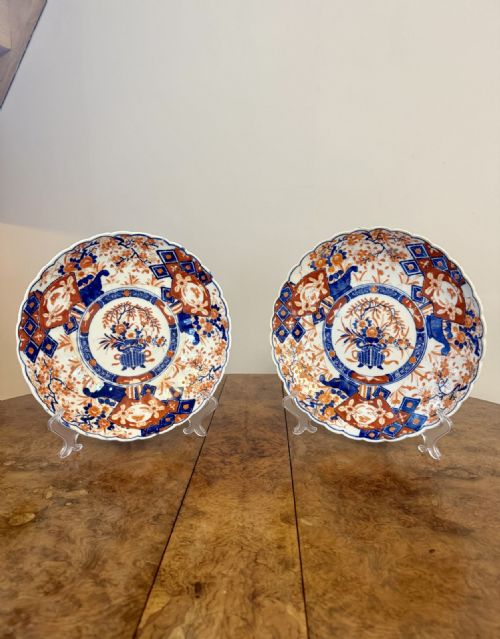
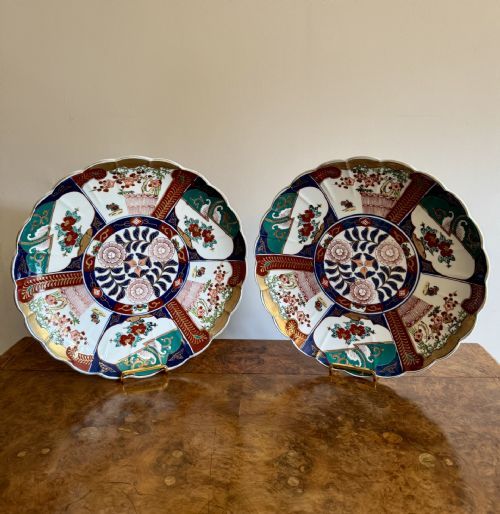
The pieces on this page lean heavily towards the nineteenth and early twentieth centuries, particularly the Victorian and Meiji eras, alongside earlier examples from the seventeenth and eighteenth centuries. Forms range from simple circular charger plates to octagonal plates and deep bowls with fluted or scalloped edges.
Originating primarily from traditional kilns in Arita and Kutani, these ceramics reflect the distinct aesthetics of Japanese export manufacturing. The selection emphasises Imari and Aka-e decoration, showcasing traditional motifs created for international clientele.
How they were made
Makers shaped porcelain clay by hand or on a wheel before applying cobalt underglaze pigments to the raw body. Artisans then fired the pieces at high temperatures to set the durable white base and blue patterns.
Following the initial firing, craftsmen added overglaze enamels in iron red and other colours, frequently incorporating gold leaf and gilding for decorative emphasis. A final lower-temperature firing fixed these vibrant surface details to the glazed ceramic.
The listings span multiple centuries, uniting Edo period porcelain with later Victorian and Meiji export wares.
What varies in quality
The standard of painting defines the distinction between ordinary production and superior pieces, with finer works displaying precise brushwork and carefully rendered motifs such as exotic birds or black ship decoration. The complexity and layering of the Imari palette, combined with the generous application of gold leaf, signal higher craftsmanship.
Physical execution also separates the tiers, seen in the crispness of scalloped or fluted edges and the smoothness of the porcelain body. Earlier Edo period pieces often demonstrate superior potting techniques and deep, resonant glazes compared to later mass-produced output.
The Japanese Export Porcelain Chargers Glossary
- Imari
- A style of Japanese export porcelain characterised by a palette of cobalt blue, iron red, and white, frequently highlighted with gold. The name derives from the port from which these wares were shipped to the West.
- Aka-e
- Red-painted ware featuring dominant iron-red enamel decoration, often associated with early Japanese export ceramics from the Arita kilns. This traditional technique produces striking contrasts against the white porcelain ground.
- Arita
- The historic Japanese town and surrounding region in Hizen province where porcelain production began in the seventeenth century. Kilns here supplied the vast majority of export chargers.
- Kutani
- A style of Japanese coloured porcelain known for bold pictorial designs and rich enamel palettes. These wares date largely from the later nineteenth and early twentieth centuries.
- Meiji Period
- The era of Japanese history lasting from 1868 to 1912, marked by a massive increase in decorative arts produced for international export. Pieces from this time often exhibit intricate hand-painted details.
- Cobalt Underglaze
- A blue pigment applied directly to the raw ceramic body before glazing and firing, ensuring the colour remains permanent and protected beneath the glassy surface.
Japanese Export Porcelain Chargers: Frequently Asked Questions
How were Japanese chargers used originally?
These large plates served primarily as decorative display pieces on walls, sideboards, or dining tables in European and American homes. Wealthy households utilised them to showcase global taste and affluent interior decoration.
While technically functional as tableware, their generous scale and delicate gilding meant owners typically treated them as ornamental art rather than utilitarian dining gear.
How do I date an antique porcelain charger?
Dating relies on stylistic clues, potting characteristics, and the specific palette used in the decoration. Seventeenth and eighteenth-century pieces typically feature heavier potting and deeper cobalt tones, whereas Meiji period items often display denser, brighter enamel work.
Examining the foot rim and the quality of the glaze provides further evidence of the manufacturing period, as kiln technology and raw materials evolved over the centuries.
What is the difference between Arita and Imari?
Arita refers to the Japanese production centre and geographic origin of the porcelain, while Imari describes the decorative style and export shipping port. Most Imari chargers were actually manufactured in the kilns of Arita.
Recognising this distinction helps collectors understand that Arita encompasses a broader range of early wares, whereas Imari specifically denotes the characteristic blue, red, and gold palette.
Can I hang an antique charger on the wall?
Hanging these pieces is a traditional method of display, provided you use a secure, non-damaging wire hanger designed specifically for heavy plates. Ensure the wall mount is firmly anchored to support the substantial weight of the porcelain.
Avoid placing chargers in direct, harsh sunlight to protect the overglaze enamels and gold leaf from fading over time.