







Japanese Imari Charger Plates
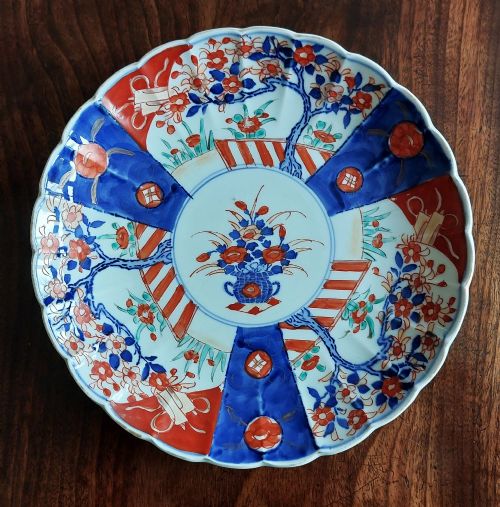
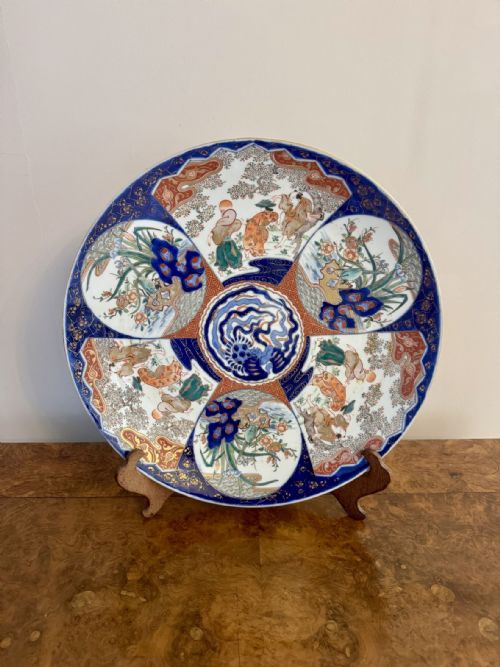
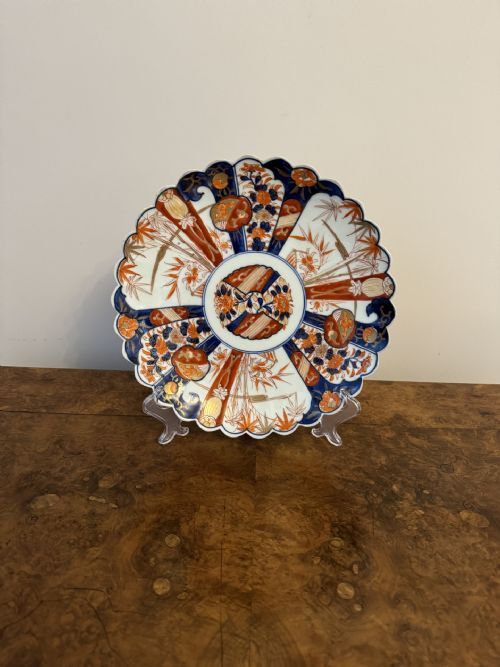
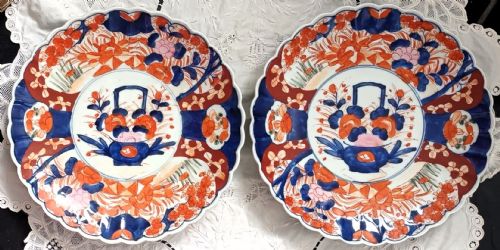
These japanese imari charger plates are large porcelain display pieces defined by rich cobalt blue and iron red palettes.
Japanese Imari Charger Plates
Japanese imari charger plates are substantial ceramic display vessels originating from kilns in Arita. The examples met on this page span the Edo and Meiji periods, stretching from the nineteenth century into the early twentieth century.
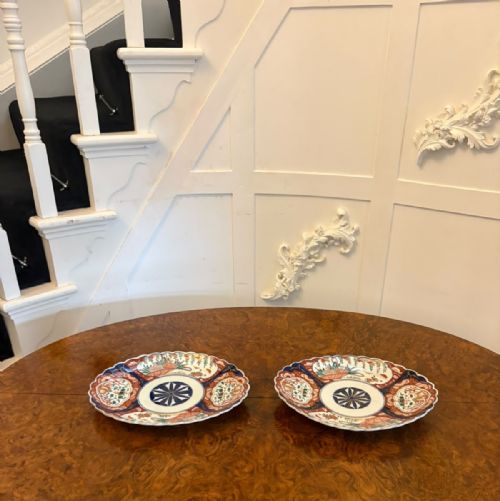
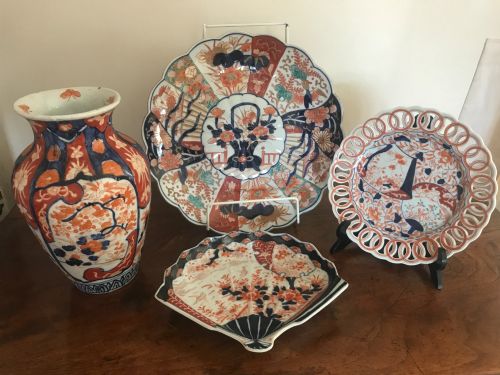
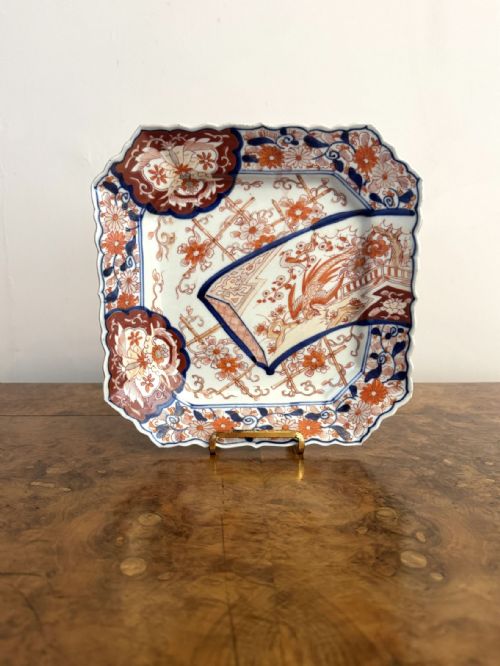
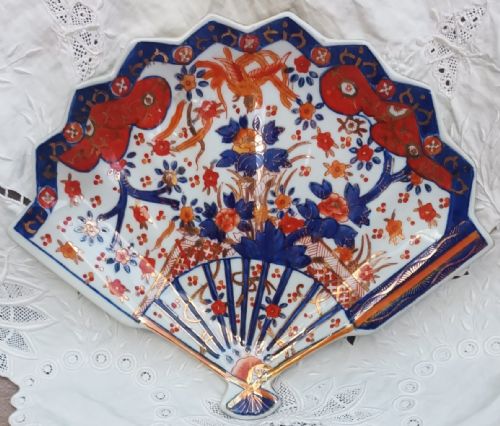
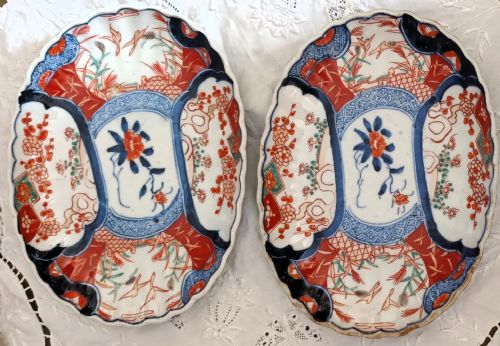
Buyers encounter forms ranging from large circular chargers and wall plates to smaller dishes, square shapes, hexagonal profiles, and scalloped edge plates. They function primarily as decorative ceramics for interior display rather than functional tableware.
How they were made
The makers formed these pieces from white porcelain, applying cobalt underglaze details beneath a transparent ceramic glaze. Artisans then added enamel highlights, often incorporating gilt or gold leaf over the fired surface.
Many items feature hand-painted floral, bird, or figural motifs, including depictions of the Seven Lucky Gods. Firing took place in traditional kilns, resulting in sturdy ceramic bodies built for long preservation.
The listings on this site span the Victorian era, the Meiji period, and the early twentieth century, utilising porcelain, enamel, and gold leaf.
What varies in quality
Quality rests in the precision of the hand painting and the complexity of the design, such as intricate depictions of exotic birds or mythological figures. Plates exhibiting unusual shapes like squares, hexagons, or deeply scalloped edges demonstrate greater technical ambition from the potter.
The vibrancy of the enamel and the generous application of gold leaf or gilding distinguish finer pieces from simpler domestic wares. Scale also dictates the tier, with large chargers requiring greater control during firing to prevent warping.
The Japanese Imari Charger Plates Glossary
- Charger
- A large decorative plate used historically for formal display rather than for serving food at the table.
- Meiji Period
- The era in Japanese history spanning from 1868 to 1912, associated with increased export of decorative arts to Western markets.
- Edo Period
- The period in Japanese history lasting from 1603 to 1868, during which Arita ceramic production became established.
- Arita
- The Japanese town and surrounding region where the production of porcelain first began. Kilns here produced the vast majority of traditional imari wares.
- Cobalt Underglaze
- A blue pigment applied to the raw porcelain body before glazing and firing, creating a permanent colour beneath the glass surface.
Japanese Imari Charger Plates: Frequently Asked Questions
What are japanese imari charger plates?
These items are large decorative porcelain plates produced in Japan, primarily during the nineteenth and early twentieth centuries. They were created for display.
Their surfaces display characteristic hand-painted patterns using cobalt blue, iron red, and gold leaf.
How were japanese imari charger plates used?
These ceramics served as ornamental display pieces in homes rather than utilitarian tableware. They were often shown on walls or displayed on sideboards.
Their robust porcelain bodies and colourful enamel designs suited them for interior decoration.
How do I date a japanese imari plate?
Dating relies on stylistic markers and manufacturing periods such as the Edo or Meiji eras. Nineteenth-century examples often display deep cobalt tones and detailed hand painting.
Changes in porcelain body texture and enamel application help separate earlier production from later twentieth-century pieces.
How do I care for antique charger plates?
These porcelain pieces require gentle handling and dusting with a soft, dry cloth. Avoid using harsh chemical cleaners that might damage the surface enamels or gilding.
When displaying them on walls or surfaces, secure them with appropriate mounts designed for heavy ceramics.