









Cobalt Blue Imari Chargers
Cobalt blue imari chargers are striking decorative ceramics that bring rich historical palettes and intricate patterns to an interior scheme.
Cobalt Blue Imari Chargers
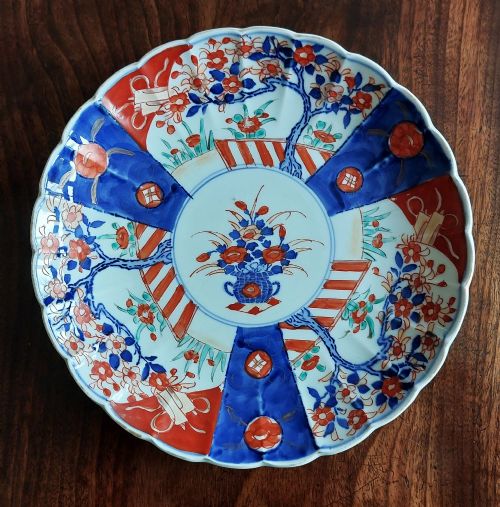
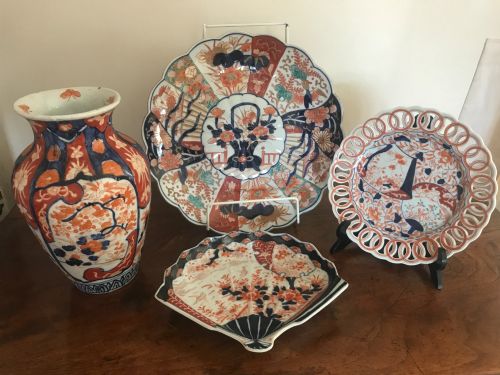
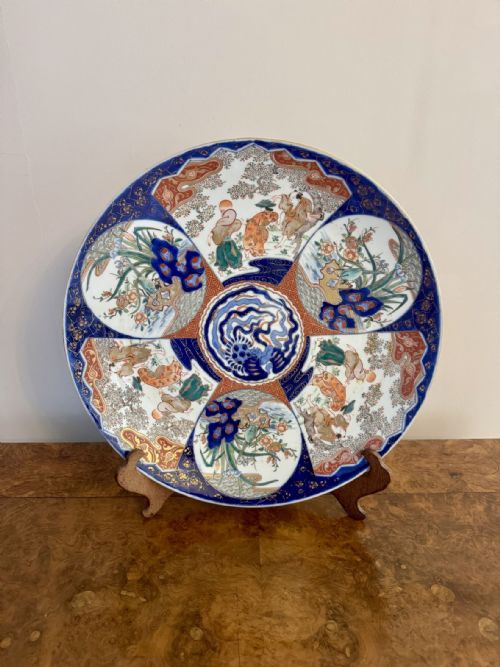
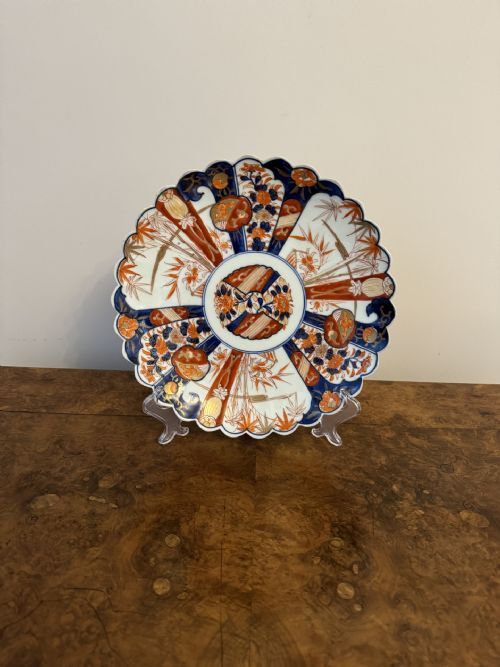
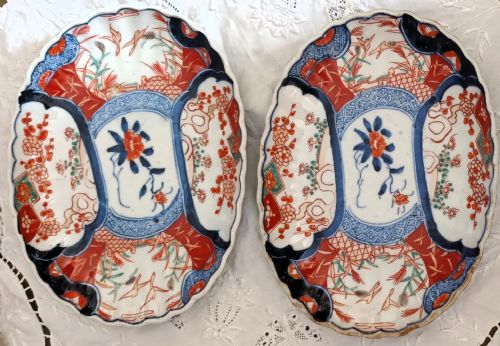
Cobalt blue imari chargers represent a distinctive category of large decorative plates and display dishes originating primarily from Japanese traditions. The selection visible on this page spans from the nineteenth century into the early twentieth century, encompassing both the Edo and Meiji periods.
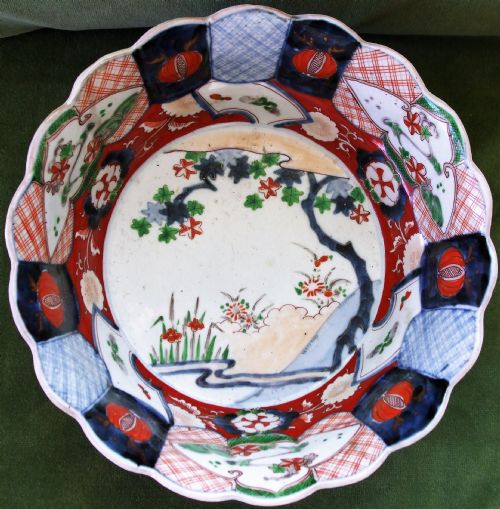
Buyers will encounter various forms within this aesthetic, ranging from large circular chargers and wall plates to scalloped edge bowls and hexagonal plates. These pieces were designed principally for display, utilising rich colour schemes to catch the eye in a reception room.
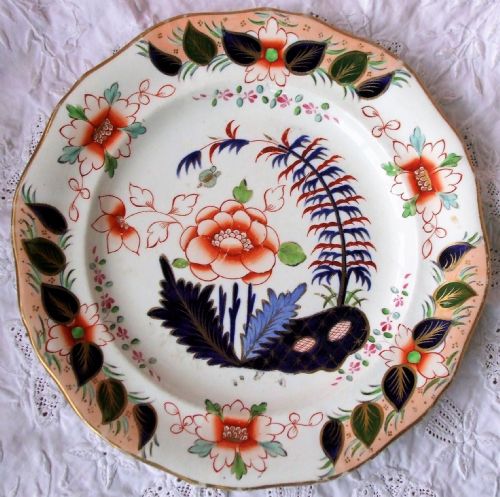
Originating heavily from Japanese production centres such as Arita, these items often depict traditional motifs, including exotic birds and figurative scenes like the Seven Lucky Gods. Alongside Japanese examples, English regional potteries also produced imitation ironstone patterns during the Georgian era.
Materials and construction
The foundation of these items is hard-paste porcelain or ceramic, shaped into large chargers and display plates with characteristic forms like scalloped or square edges. Potters shaped the clay before applying underglaze cobalt pigment to achieve the deep blue tones central to the imari style.
Overglaze enamels and gold leaf were subsequently added to the fired ceramic surface, creating a layered visual texture combining cobalt glaze with gilt details. This multi-stage firing process fused the mineral pigments into a durable decorative finish.
Some chargers quietly depict the Seven Lucky Gods, ensuring your dining room is watched over by an entire mythological committee.
Evaluating quality and execution
Quality in these chargers rests on the crispness of the cobalt pigment and the precision of the hand-painted enamel detailing. Superior examples exhibit tightly controlled brushwork and rich application of gold leaf that remains bright across the surface.
The finesse of the moulding, particularly on scalloped, square or hexagonal edges, separates standard domestic output from exceptional exhibition pieces. Greater complexity in pictorial subjects, such as multi-figure compositions, denotes higher manufacturing ambition.
John Davenport of Longport
The Cobalt Blue Imari Chargers Glossary
- Charger
- A large decorative plate traditionally used for display rather than dining. These substantial pieces anchor a tabletop or wall arrangement.
- Imari
- A style of ceramic decoration originating in Japan, characterised by a palette of cobalt blue and iron red, frequently enriched with gold leaf. The term derives from the port from which these wares were shipped.
- Meiji Period
- A historical epoch in Japan lasting from eighteen sixty-eight to nineteen twelve, associated with increased export of decorative arts to Western markets. Pieces from this era often display confident polychrome enamelling.
- Edo Period
- The period of Japanese history spanning from sixteen oh three to eighteen sixty-eight, noted for the refinement of porcelain production in Arita. Surviving items from this time demonstrate early mastery of underglaze blue.
- Scallop Edge
- A decorative rim shaped into a series of continuous curves resembling a scallop shell. This moulding technique appears frequently on nineteenth century display dishes.
Cobalt Blue Imari Chargers: Frequently Asked Questions
How were cobalt blue imari chargers displayed?
These large plates were typically positioned on sideboards, hung on walls, or supported by stands within formal rooms.
Their substantial diameter and rich gilt decoration ensured they functioned as prominent visual focal points in Victorian and Meiji interiors.
Are these chargers suitable for daily dining?
Original pieces from the nineteenth century are intended primarily for display and decorative collection rather than regular culinary use.
The delicate overglaze enamels and gold leaf can wear down with frequent handling and washing.
How do I distinguish Edo period from Meiji period pieces?
Edo period ceramics often feature heavier potting and deeper, unrefined cobalt tones characteristic of earlier kiln technologies.
Meiji period examples generally display finer enamel work and more commercially oriented export styling.
What is the difference between Japanese imari and English imari patterns?
Japanese imari refers to authentic porcelain manufactured in regions such as Arita utilising traditional cobalt glaze and enamel techniques.
English imari describes later ironstone or ceramic interpretations produced by domestic factories emulating the imported aesthetic.