





Underglaze Blue Imari Ware
Underglaze blue imari ware brings together rich cobalt painting, iron red enamel, and gold leaf on porcelain to anchor a room.

Underglaze Blue Imari Ware
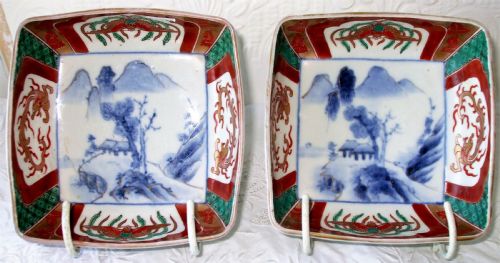
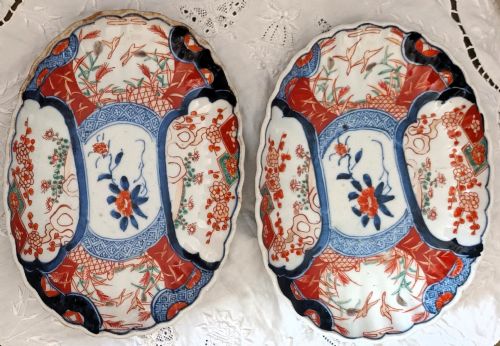
When you search for underglaze blue imari ware, you encounter Japanese ceramic vessels and flatware spanning from the seventeenth century through the early twentieth century. The selection on this page centres upon plates, dishes, chargers, bowls, vases, and jardinieres created in traditions associated with Arita, the Edo period, and the Meiji period.
The objects most frequently met here take the form of decorative plates, dishes, and chargers, alongside smaller sets and larger statement pieces such as vases and jardinieres. These pieces originate across distinct eras, showing how ceramic production evolved from seventeenth-century Arita origins into nineteenth-century Meiji exports.
How they were made
Potters built these pieces in porcelain and ceramic, applying cobalt pigment beneath the glaze to establish deep blue foundational motifs. Once fired, artisans added enamel colours and gold leaf or gilding over the glaze to construct complex decorative surfaces.
Vessels and flatware received shaping through hand and wheel techniques, yielding forms from standard round dishes to scalloped edges and hexagonal profiles. The combination of cobalt blue underglaze with iron red and gold details defined the visual language of the ware.
Underglaze Blue Imari Ware Retail Price Guide 2026
Typical asking prices for underglaze blue imari ware among the pieces listed under this phrase on Sellingantiques today, from the lower quarter to the upper quarter. They describe what is for sale here now, not the wider market.
Object forms documented here include decorative plates, bowls, chargers, vases, jardinieres, and scalloped dishes.
What varies in quality
The distinction between ordinary and superior pieces rests upon the crispness of the cobalt painting beneath the glaze and the precision of the enamel work above it. Stronger examples display deliberate brushwork and well-preserved gilding that remains vibrant against the porcelain body.
Form and scale also dictate the standing of an item, with large jardinieres, chargers, and matched sets requiring greater technical mastery from the kiln than standard utility dishes. The harmony between the underglaze blue, iron red, and gold leaf determines the visual balance of the piece.
The Underglaze Blue Imari Ware Glossary
- Underglaze blue
- Cobalt pigment applied directly to the raw ceramic body before glazing and firing, producing a permanent blue design beneath the glassy surface.
- Imari ware
- Japanese porcelain decorated in a palette typically combining underglaze blue, iron red enamel, and gold, originating from the port of Imari.
- Arita
- The Japanese town and surrounding region where the production of porcelain first began during the Edo period.
- Edo period
- The historical epoch in Japan lasting from 1603 to 1867, noted for the flourishing of distinct ceramic arts.
- Meiji period
- The era of Japanese history spanning from 1868 to 1912, during which decorative arts reached international markets in large quantities.
- Charger
- A large ornamental plate intended for display rather than for serving food at the table.
Underglaze Blue Imari Ware: Frequently Asked Questions
How do I date imari ware?
Dating relies upon stylistic shifts between the Edo and Meiji periods, alongside the handling of the porcelain body and the depth of the underglaze blue.
Seventeenth and eighteenth-century examples often display different potting weights and pigment tones compared to late nineteenth-century export items.
Were these pieces used daily?
Many chargers and large plates served decorative display purposes in interiors rather than everyday dining.
Smaller dishes and bowls saw practical table service use, which accounts for the survival rates of different forms today.
What is the difference between Arita and Imari?
Arita refers to the actual manufacturing location where the porcelain was shaped and fired.
Imari was the port from which these ceramics were shipped abroad, giving the style its common Western name.
How do I display a charger safely?
Chargers require sturdy wall brackets or dedicated plate stands designed to support their weight securely.
Placement should avoid direct sunlight and areas subject to vibration or accidental impact.