
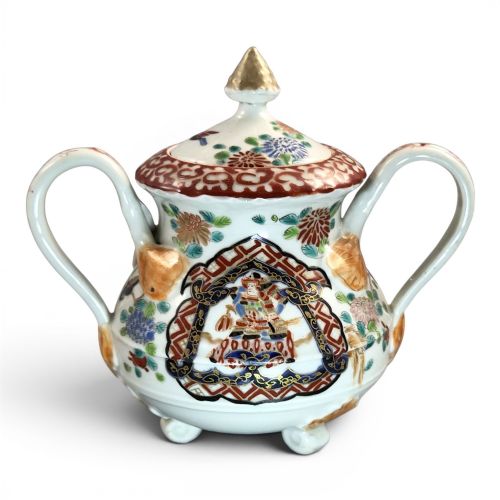


Japanese Covered Jar
A Japanese covered jar brings centuries of ceramic artistry into a room, offering both containment and display through hand-painted palettes and fitted lids.
Japanese Covered Jar
When you search for a japanese covered jar, you encounter vessels designed for storage, display, or ritual use, spanning centuries of Far Eastern and European export production. The objects on this page range from ginger jars and sugar bowls to large baluster vases and incense burners, predominantly shaped from porcelain and earthenware.
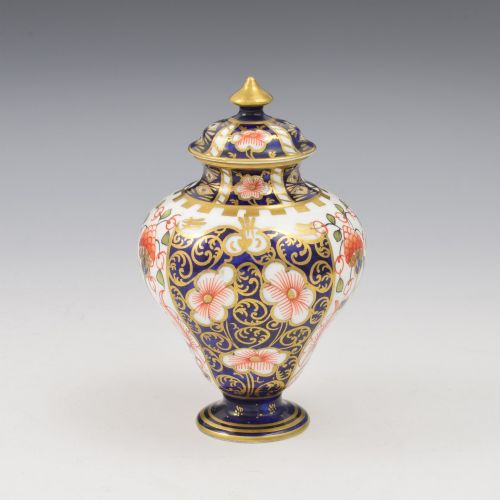
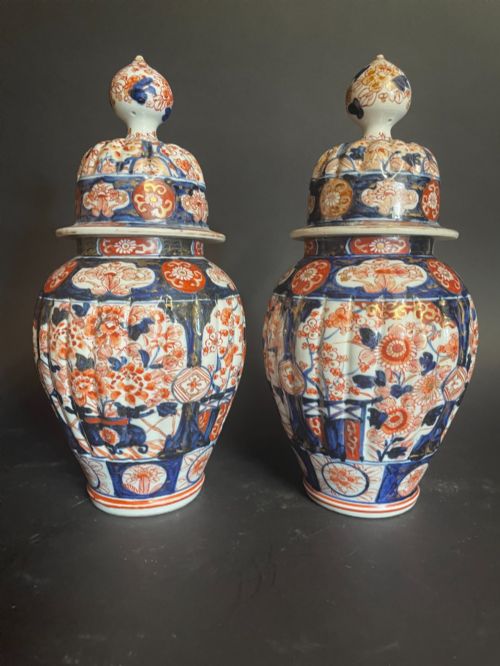
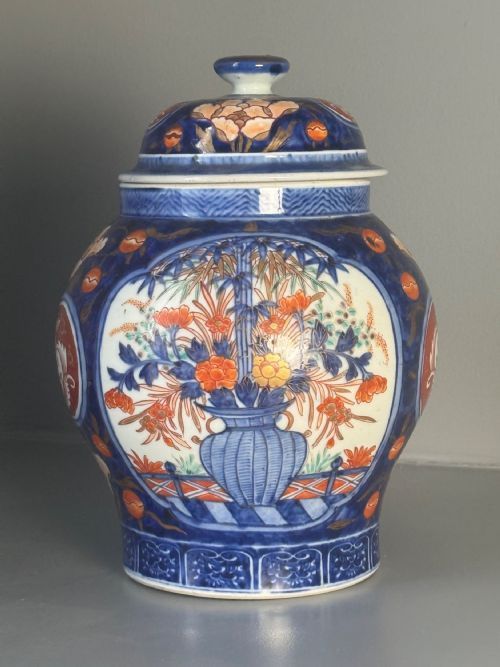
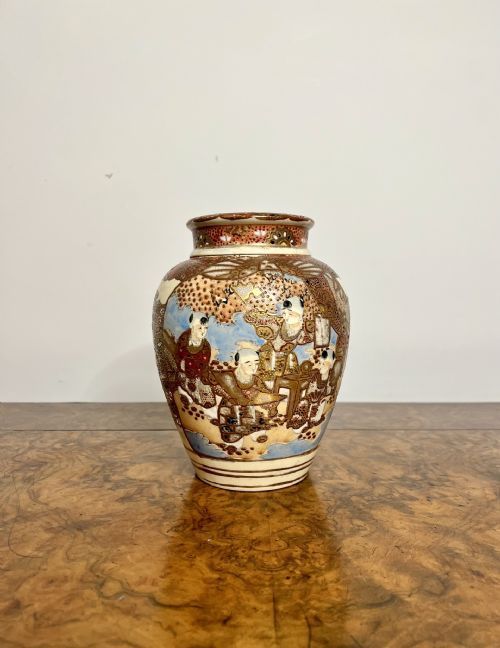
The version you are most likely to meet on this page is the 19th-century Imari or Satsuma lidded vessel, often dating from the Meiji period or late Victorian era. These pieces frequently exhibit traditional blue, red, and gilt ornamentation, alongside structural forms such as octagonal profiles or cylindrical ginger jars with matching covers.
Materials and construction methods
Potters formed these bodies from refined porcelain clay or dense earthenware, shaping them on the wheel or pressing them into moulds before applying foundational glazes. Artisans then hand-painted intricate motifs using cobalt blue pigments, iron-red enamels, and heavy gold leaf gilding, sealing the colours during high-temperature kiln firings.
Alternative examples employ metalworking techniques, utilising copper bases layered with coloured enamel wires in cloisonné work, or cast bronze mixed with silver and gold. Lids were meticulously fitted to the corresponding neck or rim to ensure a seamless profile when closed.
Listings on this site include materials such as enamel, porcelain, gold leaf, earthenware, gilt, glaze, and copper across multiple centuries.
Determining quality and execution
Structural integrity also separates the upper tier from standard wares, including the snugness of the lid fit, the absence of firing distortions in large baluster bodies, and the preservation of delicate surface metals or gold leaf over decades of handling.
Fukagawa Mark·Yamashu·Shizan
The Japanese Covered Jar Glossary
- Imari
- A style of Japanese export porcelain originating from the port of Arita, typically decorated in underglaze blue, iron red, and gilt. This palette became widely imitated across Europe during subsequent centuries.
- Satsuma
- An earthenware pottery type with a crackle-glazed ivory body, heavily decorated with polychrome enamels and gold. It was produced extensively during the 19th century for both domestic and export markets.
- Ginger jar
- A wide-mouthed ceramic storage vessel with a rounded shoulder and a flat or domed lid, originally used in China and Japan for spices and preserves before becoming purely decorative.
- Meiji period
- The era of Japanese history running from 1868 to 1912, characterised by the opening of trade with the West and a surge in highly detailed decorative arts exported abroad.
Japanese Covered Jar: Frequently Asked Questions
What were Japanese covered jars used for?
These vessels originally served practical functions such as storing spices, tea, ginger, or dry goods in domestic households. Over time, many larger lidded jars and ginger jars transitioned into purely decorative interior objects.
Certain forms, such as the koro, were specifically manufactured to burn incense during rituals or quiet contemplation. Export demand eventually turned them into high-status mantelpiece ornaments.
How do I distinguish Imari from Satsuma?
Imari pieces are made from hard porcelain, ringing when tapped, and typically feature a distinct palette of cobalt blue and iron-red enamel accented with gold. They often display floral or panel designs.
Satsuma pieces are constructed from softer earthenware with a characteristic network of fine glaze cracks across an ivory or cream background. They are densely painted with figures, landscapes, and elaborate gilded motifs.
Are these jars from the Edo or Meiji period?
Edo period pieces date from 1603 to 1868, representing earlier traditional export wares and domestic ceramics. The majority of 19th-century pieces encountered on the market fall into the Meiji period, following the opening of international trade.
Stylistic cues and historical signatures help separate the earlier restricted trade items from the prolific output of the late 19th century.
How should I display a lidded jar at home?
Place your lidded jar on a stable surface away from high-traffic walkways to protect the protruding lid and delicate surface gilding. Pairing taller baluster jars with wooden stands helps elevate the piece and showcases the base.
Keep ceramic and cloisonné pieces out of direct sunlight to prevent the enamel colours and gold leaf from fading over long periods.