
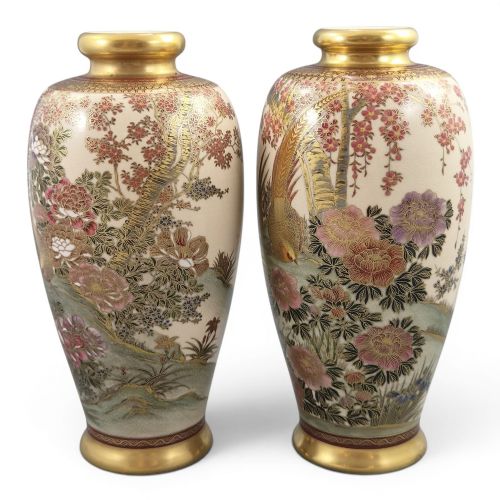


Japanese Ceramic Vase Pair
A japanese ceramic vase pair brings balanced proportion and detailed hand-painting to a room, offering matching symmetry created for display.
Japanese Ceramic Vase Pair
When searching for a japanese ceramic vase pair, buyers encounter matched duos designed for symmetrical placement on mantelpieces, cabinets or pedestals. The selection spans the late nineteenth century through to the early twentieth century, encompassing Meiji, Taisho and Showa periods alongside Victorian and Edwardian cataloguing.
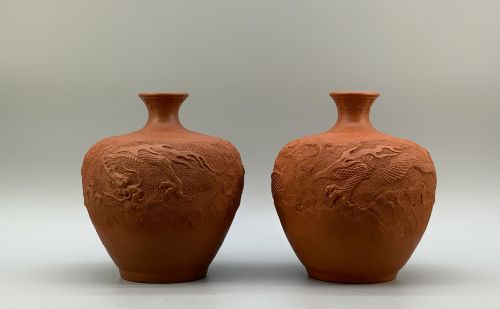
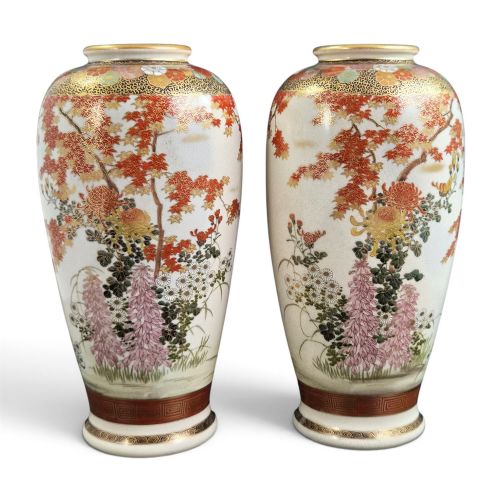
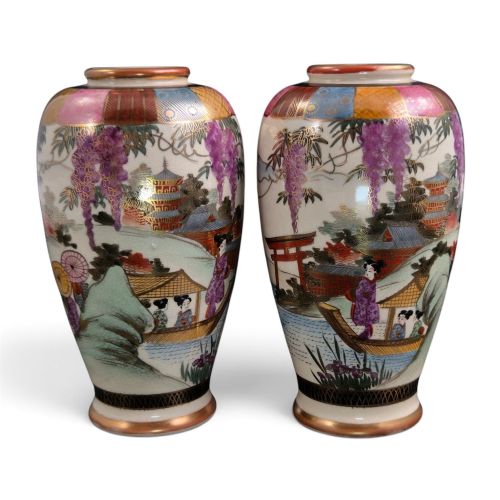
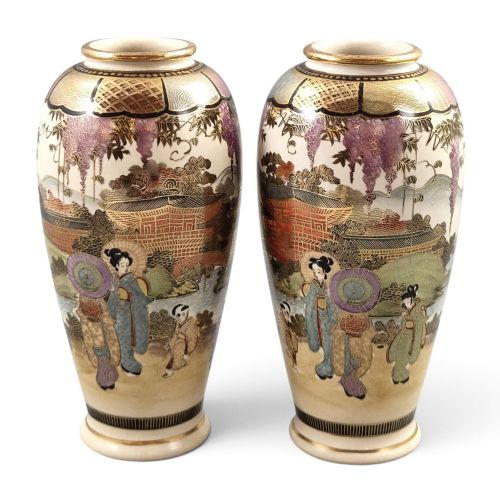
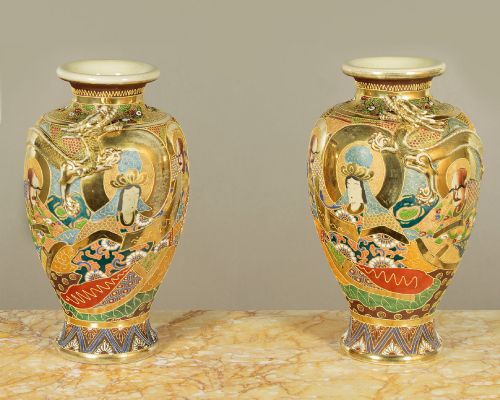
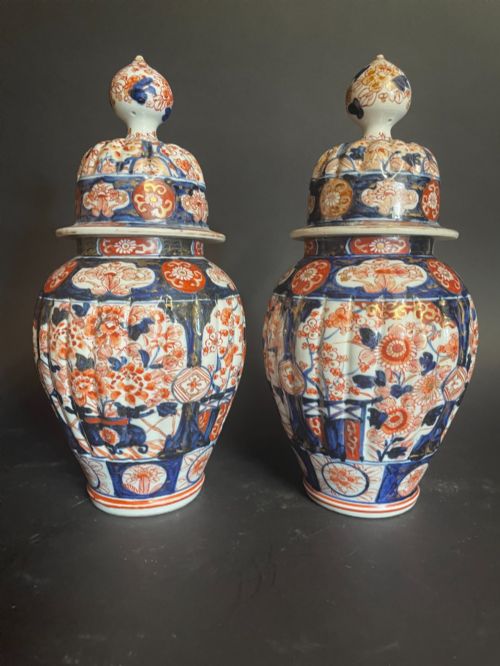
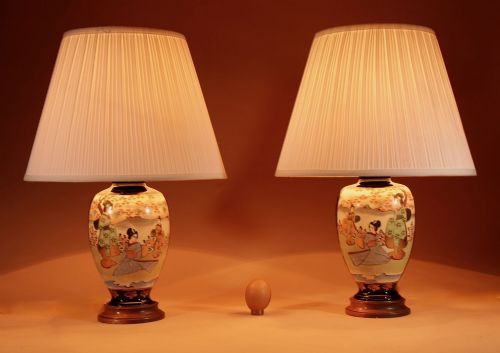
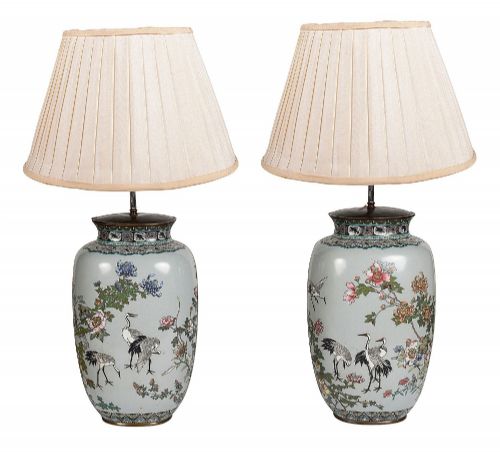
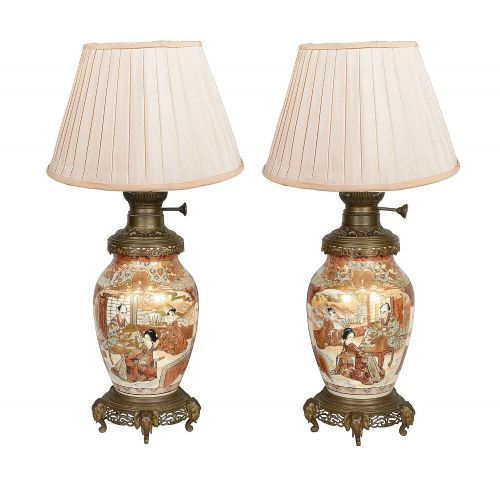
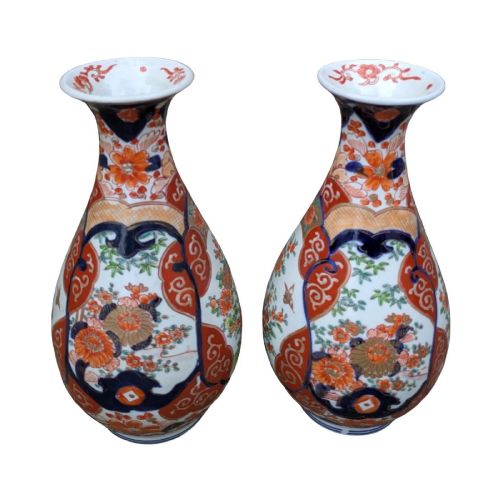
Forms vary from baluster and bottle shapes to lidded jars and double gourds, with several examples adapted into table lamps. Satsuma earthenware and Imari porcelain dominate the inventory, accompanied by Kutani, Seto and Tokoname red clay productions.
How they were made
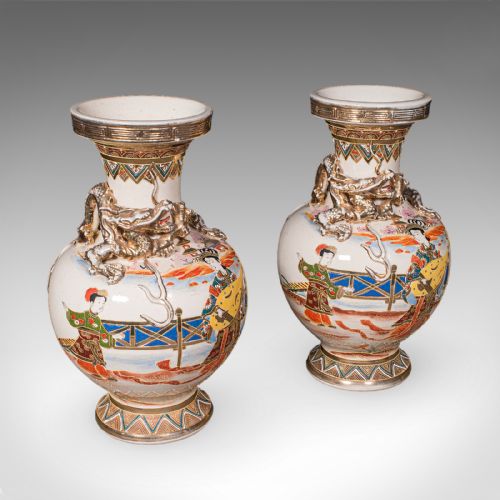
Potters shaped earthenware and porcelain bodies on the wheel or in moulds before applying glazes, enamels and gold leaf accents. Many pieces utilise moriage technique, building up raised slip decoration to give texture to robes, flowers and foliage.
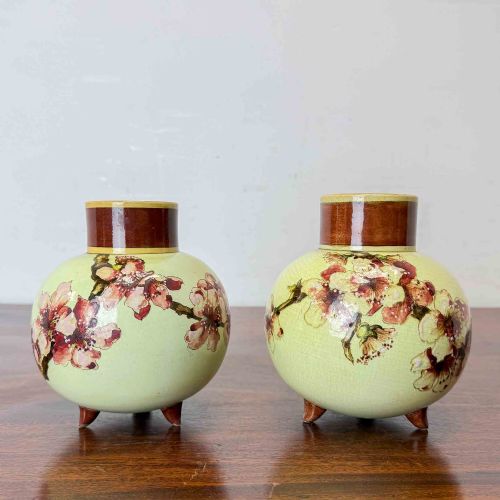
Decoration includes intricate hand-painted scenes featuring figures such as Rakan, alongside natural motifs like wisteria, cherry blossom, butterflies and dragons. Kiln firing fixed these polychrome pigments and gilt details, sometimes supplemented by lacquer panels or original ceramic stands.
Several matched pairs have been converted into table lamps, quietly casting light after a century of ornamental retirement.
What varies in quality
Quality rests on the crispness of the brushwork and the precision of the gilt work across both vessels in the pair. Maker signatures from known Kyoto or Kobe workshops indicate higher tier production, distinguishing standard decorative wares from master-painted examples.
The density and complexity of the enamel palette, together with the preservation of the gilding and the exact matching of dimensions between the two objects, determine the standing of a pair.
Maruni Kobe·Shozan·Manpei·Kinkōzan·Kato Sanhei·Kinzan·Hododa·Hakusan·Tagawa
The Japanese Ceramic Vase Pair Glossary
- Satsuma
- Earthenware pottery with a finely crackled ivory glaze, traditionally decorated with elaborate polychrome enamels and gold leaf.
- Imari
- Porcelain decorated in underglaze blue and contrasting overglaze iron red, green and gold, originating from the town of Arita.
- Moriage
- A ceramic decoration technique using raised slip to create tactile, three-dimensional patterns on the surface of the vase.
- Baluster
- A vase form with a rounded body that tapers toward the base and swells out before rising to a narrower neck.
- Rakan
- Depictions of enlightened followers of Buddha, frequently shown in groups within traditional Japanese decorative art.
Japanese Ceramic Vase Pair: Frequently Asked Questions
How do I display a vase pair?
Matched pairs are traditionally placed symmetrically on either side of a fireplace, sideboard or central focal point to create visual balance.
Ensure both pieces receive adequate light to highlight the enamel details and gold leaf work without crowding the surrounding space.
What is the difference between Satsuma and Imari?
Satsuma wares feature a cream-coloured earthenware body with a crackled glaze and dense enamel painting, often depicting figures or nature.
Imari pieces consist of hard-paste porcelain painted in a distinct palette of cobalt blue, iron red and gold.
Can these vases be used for water?
Earthenware items such as Satsuma are porous and intended primarily for dry decorative display rather than holding fresh flowers and water.
Porcelain forms like Imari are vitreous and better suited for practical use, though antique pieces are generally preserved for display.
How are periods identified?
Periods are determined through a combination of stylistic traits, potting techniques, and the presence of artist signatures or studio marks.
Meiji period pieces often display dense, intricate decoration, while later Taisho and Showa examples reflect evolving aesthetic preferences.