






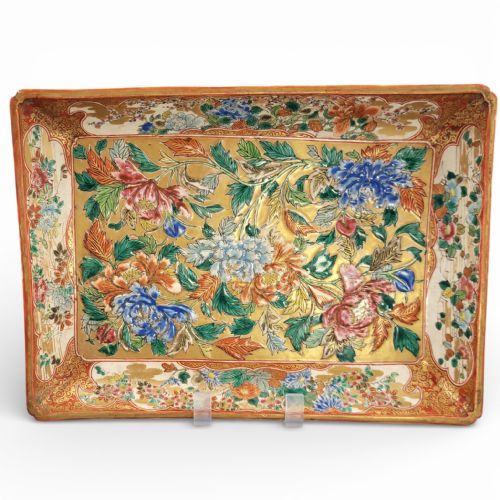
Japanese Ceramic Serving Dish
When you handle a Japanese ceramic serving dish, you find the weight of centuries in porcelain, cobalt underglaze, and iron-red enamel.
Japanese Ceramic Serving Dish
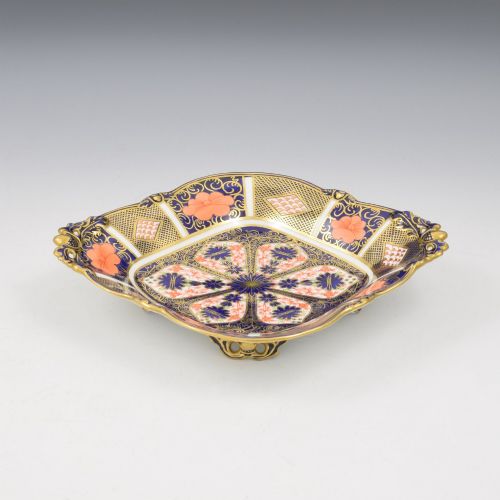
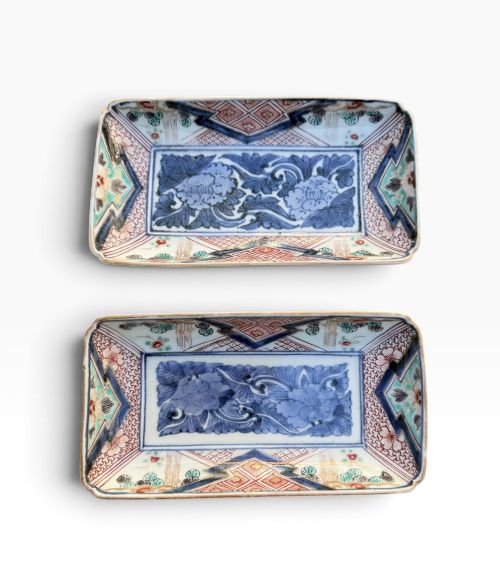
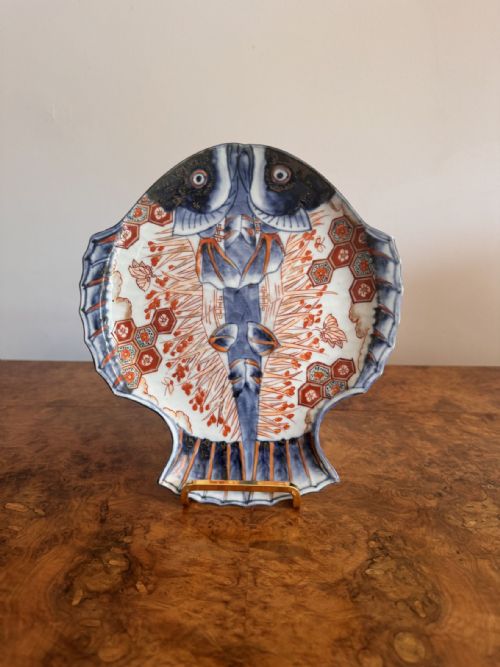
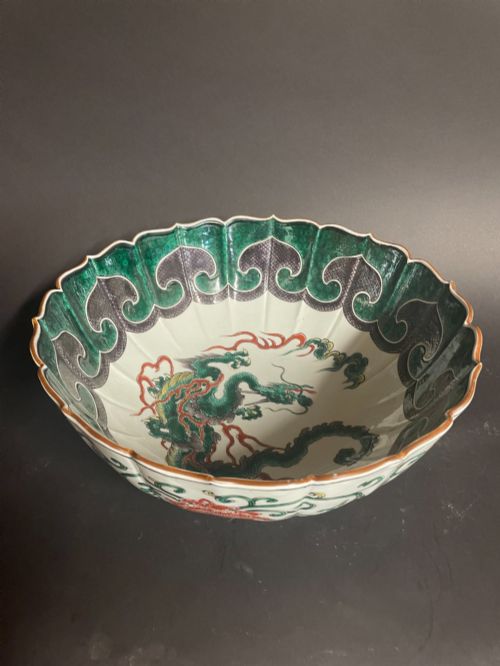
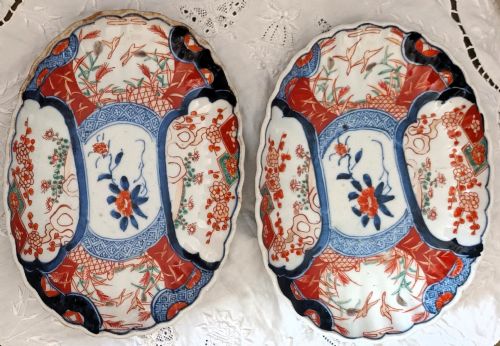
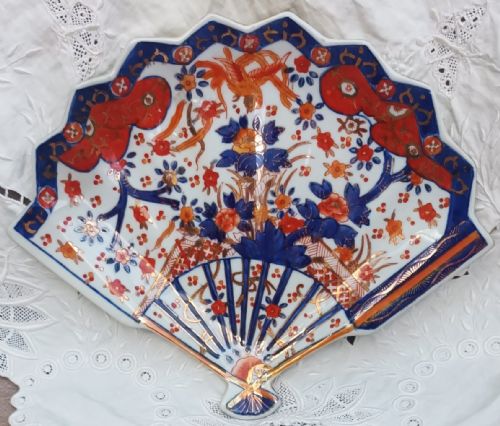
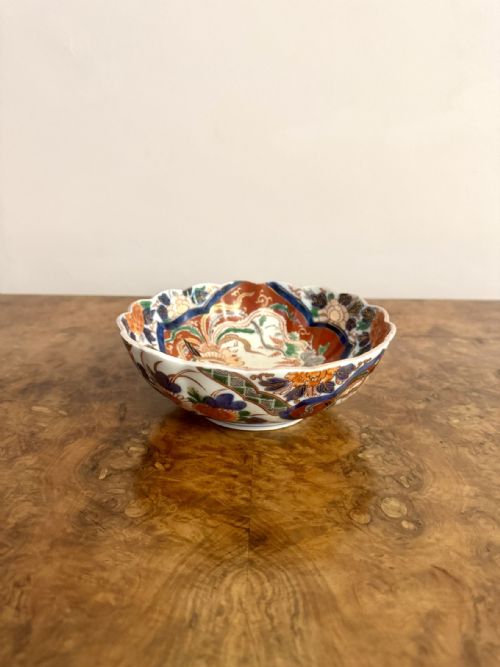
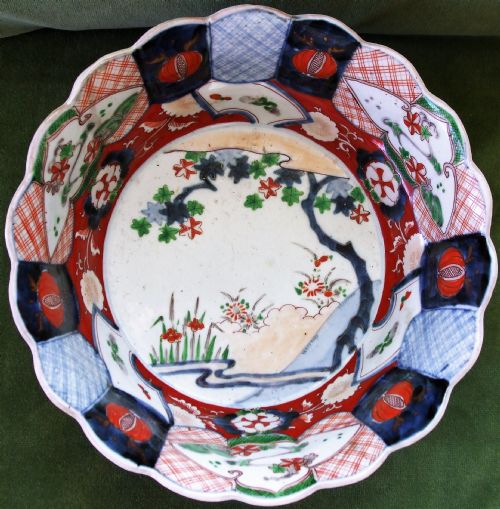
A japanese ceramic serving dish encompasses chargers, platters, bowls, and plates shaped for presentation. The forms on this page span round chargers, square plates, scallop edges, and boat or fan shapes.
The objects here reach back from the nineteenth century into the Edo and Meiji periods, alongside English interpretations in the Imari palette. These wares served functional dining roles before finding appreciation as decorative objects.
Porcelain forms the foundation of nearly every piece, decorated with hand-painted motifs that range from floral and bird compositions to geometric panels.
How they were made
Potters shaped porcelain bodies by hand or wheel, applying cobalt underglaze pigments before the initial firing. Enamel colours and gold leaf or gilding were added in subsequent low-temperature firings to build the layered palette characteristic of Imari wares.
Glaze seals the ceramic body, providing a smooth surface that protects the painted iron-red and blue pigments beneath. Artisans utilised gold gilt to accentuate panel borders and central motifs on finer presentation pieces.
Japanese Ceramic Serving Dish Retail Price Guide 2026
Typical asking prices for japanese ceramic serving dish among the pieces listed under this phrase on Sellingantiques today, from the lower quarter to the upper quarter. They describe what is for sale here now, not the wider market.
Listings feature porcelain forms spanning the 18th century, the Victorian era, and the Meiji period, alongside English bone china interpretations.
What varies in quality
The precision of the hand-painted brushwork dictates the visual strength of each piece, distinguishing hurried production from careful execution. Cobalt depth and the clean application of enamel dictate the clarity of the design.
Form complexity also separates standard wares from superior examples, seen in moulded scallop edges, fan shapes, and boat configurations that demand greater skill from the potter.
Royal Crown Derby
The Japanese Ceramic Serving Dish Glossary
- Imari
- A style of Japanese porcelain featuring a palette of cobalt underglaze blue, iron-red enamel, and gold highlights. This decorative approach originated in Arita and was widely exported.
- Meiji
- A period in Japanese history spanning from 1868 to 1912, marked by significant craft production for both domestic and international markets. Pieces from this era often display complex painted detail.
- Charger
- A large decorative plate or dish utilised for ceremonial display or serving communal courses rather than individual dining. These large porcelain surfaces showcase expansive painted compositions.
- Cobalt underglaze
- A blue pigment applied to the raw porcelain body prior to glazing and firing. This technique ensures the colour remains permanent and protected beneath a glossy surface.
- Arita
- The Japanese town and surrounding region renowned as the birthplace of Japanese porcelain production. Kilns here produced the distinctive wares exported through the port of Imari.
Japanese Ceramic Serving Dish: Frequently Asked Questions
What is an Imari dish?
An Imari dish is a porcelain piece decorated in the traditional palette of cobalt underglaze blue, iron-red, and gold. These wares originated from the Arita kilns in Japan and became famous across Europe for their vibrant patterns.
The style relies on contrasting panels of flora, birds, and geometric borders. Makers balanced dense surface decoration with areas of white porcelain ground.
How were these dishes used?
These ceramics served primarily for food presentation at the table or as decorative chargers displayed on walls and cabinets. Large platters and bowls held communal portions during meals.
Over time, many of these functional items transitioned into purely decorative objects due to their intricate painted designs and fragile porcelain bodies.
How do you date Meiji period porcelain?
Meiji period porcelain dates between 1868 and 1912, coinciding with the reign of the Meiji Emperor. Pieces from this era often exhibit highly detailed hand-painted designs and refined cobalt or enamel work.
Stylistic cues, glazing characteristics, and the transition from traditional Edo aesthetics help narrow the production era. Makers during this time increased output for international trade.
What is Arita porcelain?
Arita porcelain refers to ceramic wares produced in and around the town of Arita in Hizen province, Japan. This region held access to prime clay deposits essential for fine white porcelain.
Kilns in this area pioneered the techniques for blue and white wares as well as polychrome enamelled pieces. The output set the standard for Japanese export ceramics.