
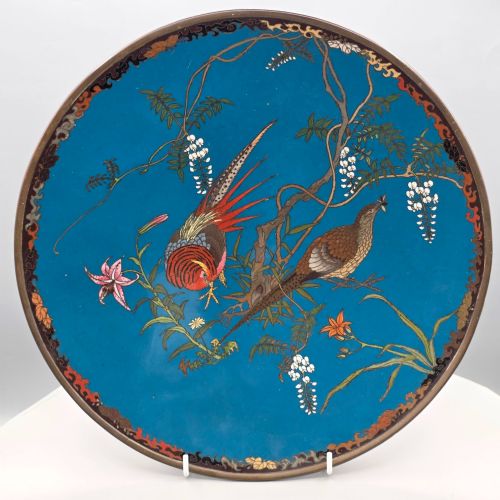
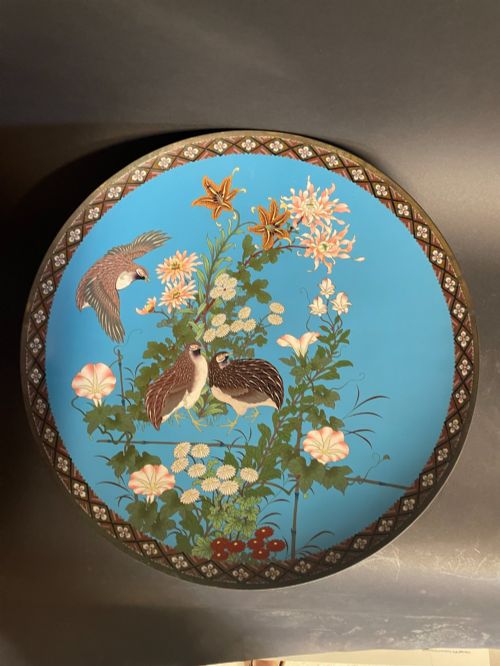
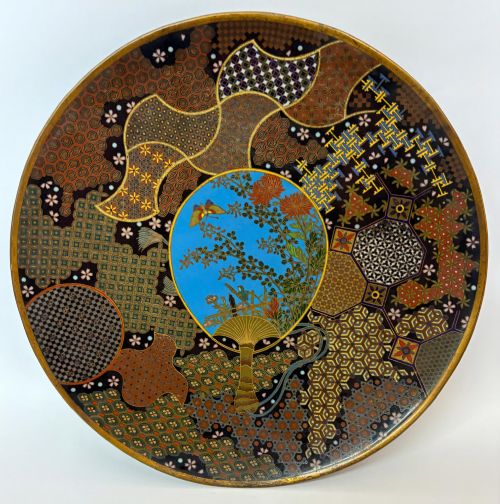


Japanese Brass Enamel Dish
A japanese brass enamel dish brings intricate metalwork and vibrant colour into a room, offering a tangible piece of historical artistry.
Japanese Brass Enamel Dish
A japanese brass enamel dish takes the form of chargers, decorative plates, trays, and bowls created during the nineteenth century. These objects frequently display natural motifs such as birds, fish, chrysanthemums, and landscapes across their circular surfaces.
Most examples originate from the Meiji period and the Edo period, reflecting the meticulous craftsmanship of Japanese metalworkers. Buyers will encounter various scales, ranging from medium plates to large decorative chargers measuring up to fifty centimetres.
Materials and construction
Artisans built these pieces using brass, copper, and bronze as the foundational metal body for the vessels. Wirework formed the intricate outlines of the designs before coloured enamel pastes filled the resulting cells.
Cloisonne enamel technique required repeated firings and polishings to achieve a smooth, lustrous surface across the chargers and bowls. Signed pieces indicate individual workshop pride and adherence to traditional methods.
Certain chargers capture fleeting moments of nature in wire and glass, preserving a leaping koi or an owl staring into the distance forever.
Assessing craftsmanship
The precision of the wirework and the complexity of the pictorial subject matter dictate the calibre of each piece. Elaborate depictions of wildlife, dragons, and landscapes demand greater skill than simpler geometric patterns.
The uniformity of the enamel surface and the depth of the metal polishing separate standard production from exceptional works. Signed pieces often demonstrate a higher degree of artistic ambition and technical control.
The Japanese Brass Enamel Dish Glossary
- Cloisonne Enamel
- A decorative metalwork technique where fine metal wires create cells that hold coloured glass paste before firing. This method produces intricate, multi-coloured patterns across plates and bowls.
- Charger
- A large decorative plate or platter intended for display rather than utility. These large vessels often feature elaborate pictorial subjects like birds and Mount Fuji.
- Meiji Period
- A Japanese historical era spanning from 1868 to 1912 noted for the flourishing of decorative arts exported to the West. Many extant enamel dishes originate from this time.
- Edo Period
- The period of Japanese history preceding the Meiji era, lasting from 1603 to 1868. Surviving vessels from this time demonstrate early mastery of metal enamel work.
- Mon
- A Japanese heraldic badge or emblem used to identify families or clans. These symbols occasionally appear incorporated into the decorative schemes of chargers.
Japanese Brass Enamel Dish: Frequently Asked Questions
How were these dishes used originally?
These metal vessels served primarily as decorative items for display within interiors rather than for serving food. Large chargers sat on stands or hung on walls to showcase the artistry of the metalworker.
Smaller bowls and trays held small household objects or simply functioned as ornamental art pieces in traditional and Western settings.
How do I identify a Meiji period piece?
Meiji period items typically display vibrant enamel colours and highly detailed pictorial motifs such as birds, iris flowers, and landscapes. The manufacturing output during this era focused heavily on intricate decorative objects for export.
Examinations of the metal base and wire work reveal the advanced technical precision characteristic of late nineteenth century workshops.
Are these dishes made of brass or copper?
The structural bodies of these decorative objects utilise metals including brass, copper, and bronze. Artisans selected these materials for their malleability and ability to bond securely with enamel layers.
Surface finishes and patination on the reverse often expose the underlying metal composition used by the maker.
How should I display a large charger?
Large chargers require sturdy plate stands or wall mountings designed to support the substantial weight of the metal and enamel construction. Positioning them away from direct sunlight preserves the vibrancy of the coloured enamel.
Allowing adequate space around the piece ensures the intricate details of subjects like koi fish or dragons remain fully visible.