


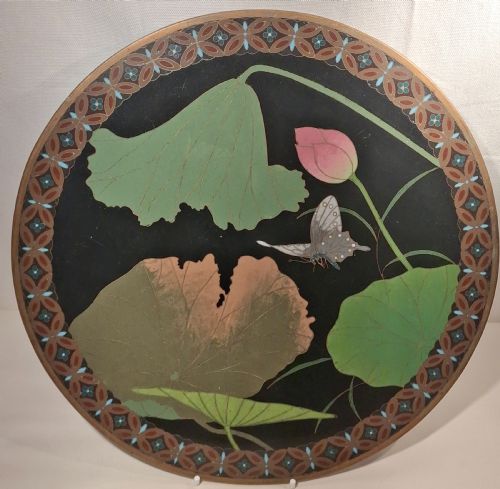


Vintage Cloisonne Wall Plate
These vintage cloisonne wall plate examples bring decorative copper and enamel craftsmanship into your interior scheme.
Vintage Cloisonne Wall Plate
A vintage cloisonne wall plate brings traditional metalwork and coloured glass into a room, often taking the form of large chargers or plaques. When you search for a vintage cloisonne wall plate, you meet pieces originating from Japanese Meiji, Edo, and Chinese Qing periods.
The objects span centuries, including items from the eighteenth century up to nineteen-hundred. Common forms include decorative chargers and medium plates designed for display.
How They Were Made
These items rely on copper, bronze, and brass foundations that shape the rigid body of the charger or plate. Artisans soldered thin silver wire and other wire onto the metal base to map out detailed motifs like dragons, koi, and birds.
Workers filled the resulting cells with coloured enamel before firing and polishing the surface to a smooth finish. This technique created the distinct compartmentalised patterns seen across the plaques and trays.
What Varies in Quality
Quality depends on the precision of the wirework and the complexity of the imagery depicted across the enamel surface. Pieces featuring intricate subjects like samurai figures or mount fuji display greater technical control than simpler geometric designs.
The fineness of the enamel polish and the clarity of the metallic outlines also separate standard decorative plates from exceptional masterworks.
The Vintage Cloisonne Wall Plate Glossary
- Cloisonne Enamel
- A decorative metalwork technique where glass paste is applied within wire compartments on a metal base. This method defines the surface texture of the plates.
- Charger
- A large decorative plate traditionally used for display rather than dining. These items form the largest format in the collection.
- Meiji Period
- A Japanese historical era lasting from eighteen-sixty-eight to nineteen-twelve noted for fine metal arts. Many listed plaques originate from this time.
- Qing Dynasty
- The last imperial dynasty of China, spanning from sixteen-forty-four to nineteen-twelve. Pieces from this era contribute distinct styling.
- Mon
- A Japanese emblem or crest used to indicate family lineage or affiliation. These symbols appear within the enamel decoration.
Vintage Cloisonne Wall Plate: Frequently Asked Questions
How do I hang a heavy charger?
Heavy chargers require secure wall fixtures designed to support substantial weight without slipping. Use proper plate hangers that distribute the load evenly across the rim.
Ensure the wall anchor fixes directly into solid brick or a stud behind plaster. Check the wire or foot ring on the back before mounting.
What periods do these pieces span?
The collection includes items from the eighteenth century through to nineteen-hundred. Japanese Meiji and Edo periods represent the majority of the available metalwork.
Chinese Qing dynasty examples also appear alongside nineteenth-century European interpretations. Each era brings distinct colour palettes and wire techniques.
Are these plates meant for food?
These decorative chargers and plaques serve primarily as visual display items rather than functional tableware. The delicate enamel surfaces are not suited for serving food or regular washing.
Display them on walls or sturdy stands to protect the copper and wire structure from damage.
How should I clean my enamel plaque?
Dust the surface gently with a soft, dry cloth to remove everyday particles. Avoid liquid cleaners, chemical polishes, or abrasive cloths that can scratch the delicate glass enamel.
Keep the plate away from direct sunlight and damp environments to preserve the vibrant colours of the wire cells.