
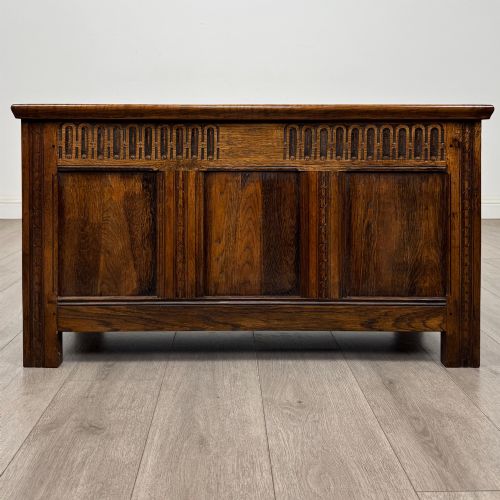
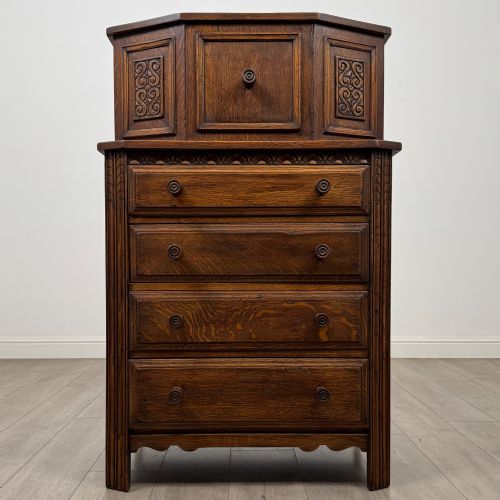


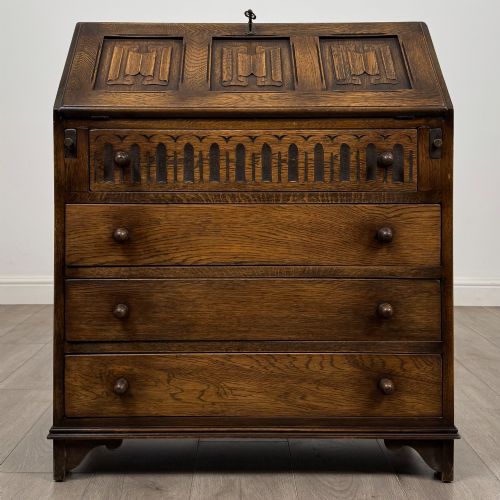
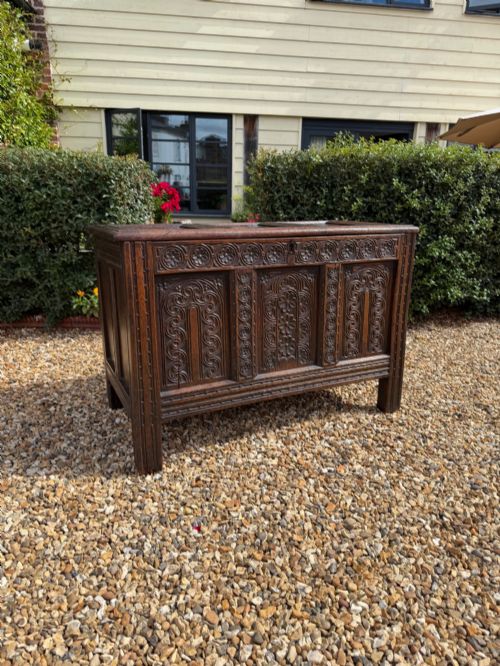
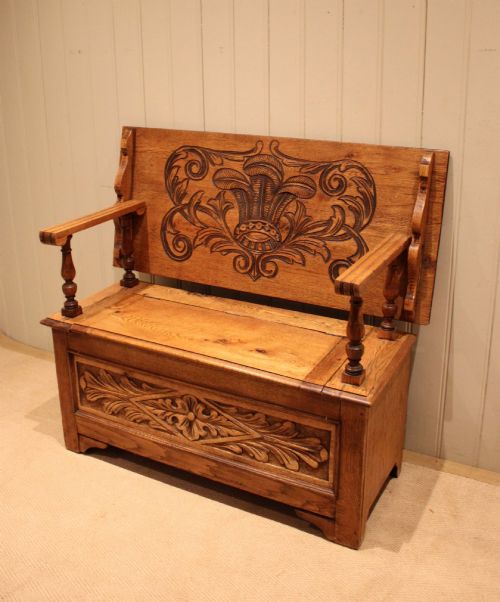
Jacobean Carved Oak Chest
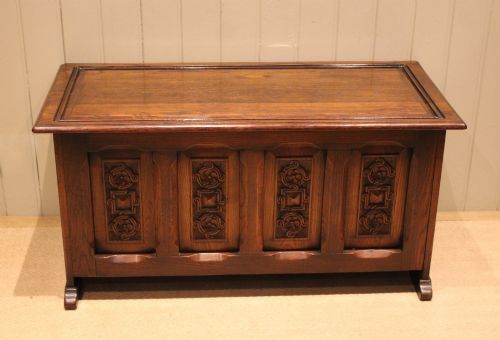
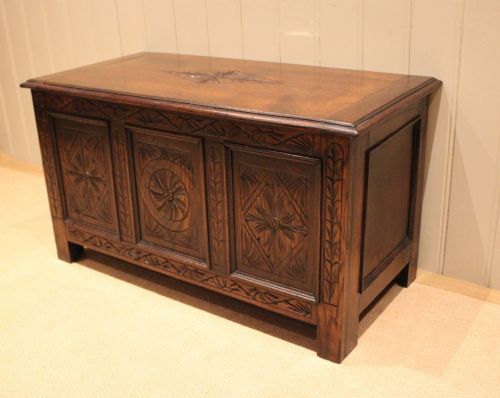
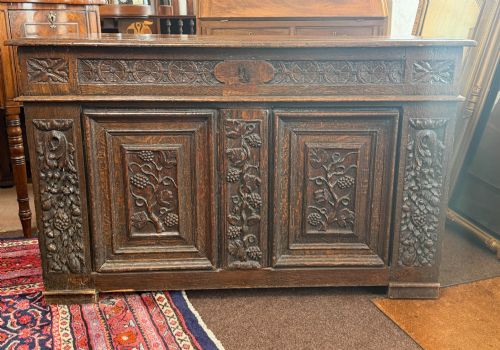
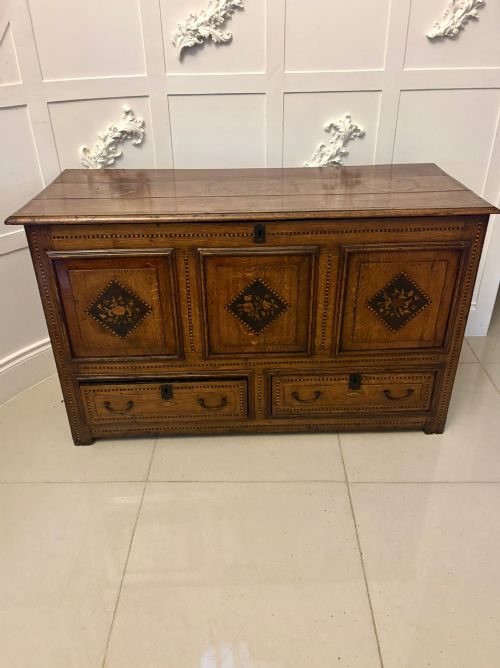
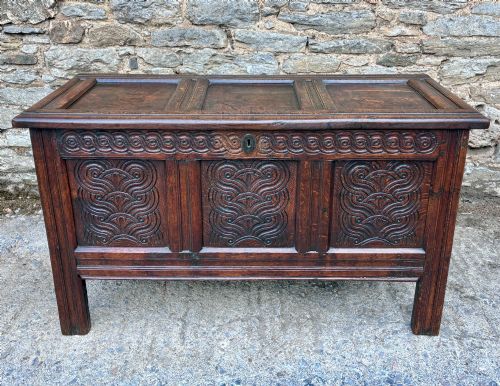
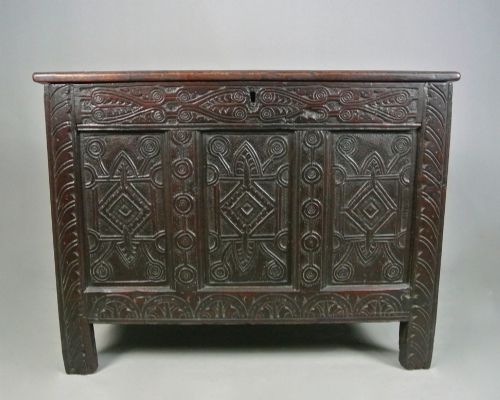
A jacobean carved oak chest brings substantial early timber and deep geometric relief directly into a modern interior.
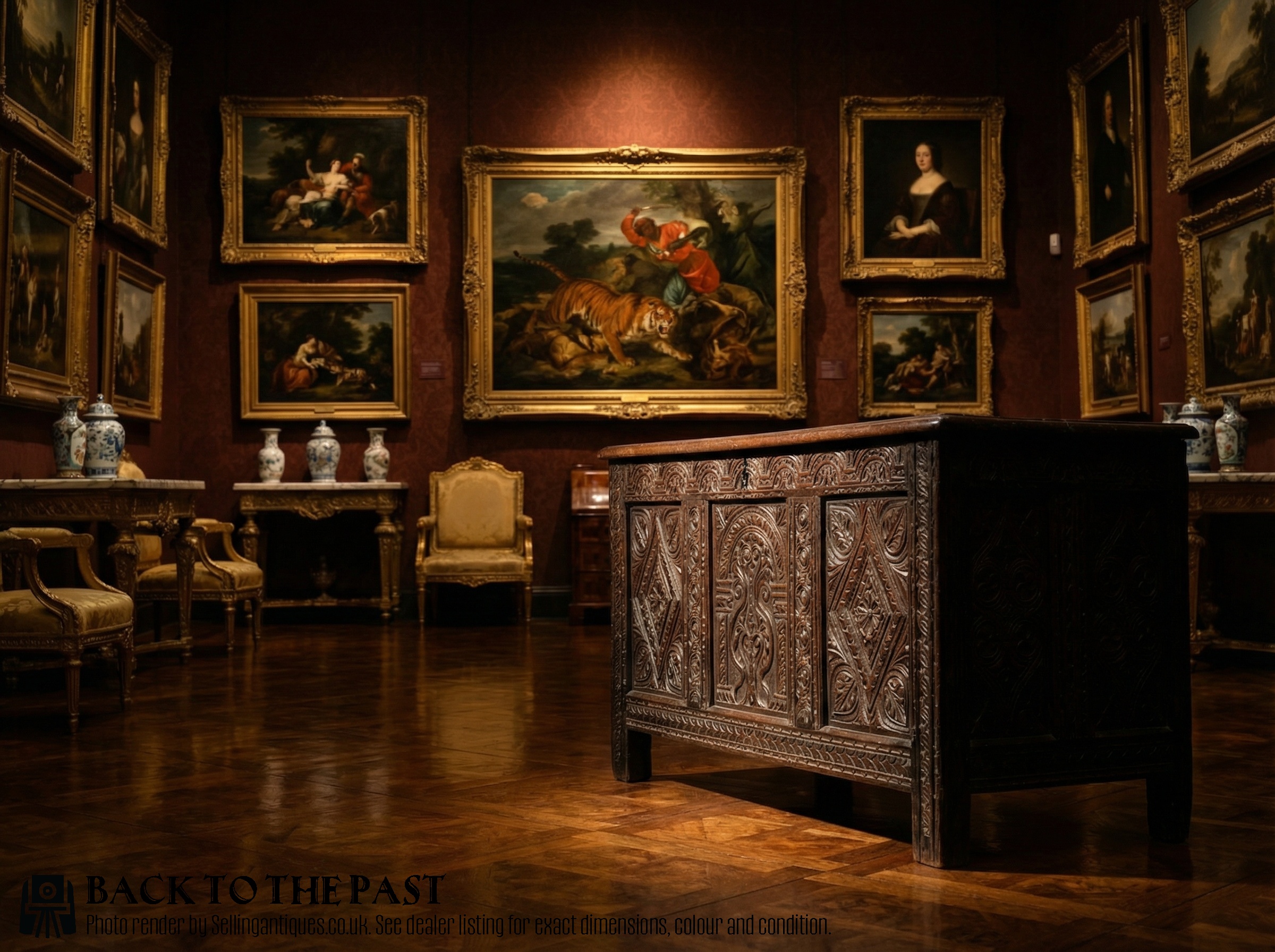
Identifying a jacobean carved oak chest
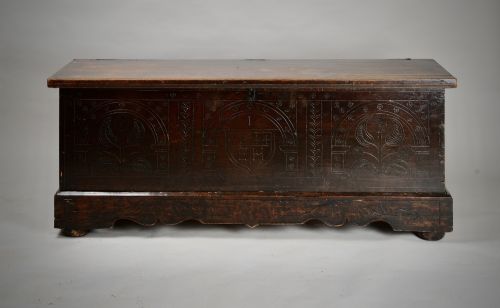
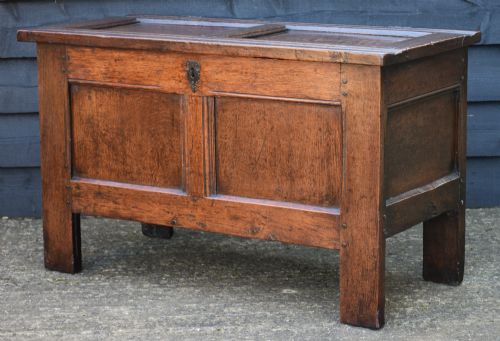
Buyers seeking a jacobean carved oak chest will encounter robust storage furniture primarily originating from the seventeenth century, alongside later revival pieces from nineteen thirty. These items appear under various categorical forms in the listings, including coffers, chests, press cupboards, dresser bases, and desk boxes.
The seventeenth-century examples form the core of what is available, frequently exhibiting traditional regional construction such as the Dorset coffer or inlaid oak coffer. Alongside these genuine period items, the inventory includes seventeenth-century style interpretations and later augmented pieces that incorporate earlier carved elements.
Materials and construction methods
The primary material across these pieces is solid oak, frequently paired with iron hardware, brass accents, and occasional ebonised wood details. Joinery relied heavily on traditional framing techniques to accommodate the natural movement of heavy timber over centuries.
Decoration was achieved through skilled hand carving and inlay work, creating the characteristic geometric patterns and relief panels associated with the period. Surfaces often display the deep colour and patination accumulated through generations of use and maintenance.
Retail Price Guide 2026
Typical UK retail prices for jacobean carved oak chest, calculated from the Sellingantiques database of over a million retail prices indexed since 2003. This retail price guide relies exclusively on Sellingantiques data; no external sources or auction records are used, so the figures do not describe the wider market.
Recorded object types include press cupboards, desk boxes, and dresser bases alongside traditional coffers and storage trunks.
Assessing quality in early oak storage
Quality in these pieces is dictated by the crispness of the original hand carving and the integrity of the primary timber construction. Earlier seventeenth-century examples demonstrate superior joinery methods compared to later revivals, though later pieces still require thoughtful evaluation of their material authenticity.
The Jacobean Carved Oak Chest Glossary
- Cofer
- An early term for a strongbox or chest used for storing valuables and textiles before the widespread use of wardrobes.
- Press cupboard
- A large storage furniture form featuring enclosed upper and lower compartments, often decorated with carved panels.
- Ebonised wood
- Timber treated to imitate ebony, utilised for dark contrasting decorative details on seventeenth-century furniture.
- Dorset coffer
- A specific regional variation of the traditional oak storage chest associated with the Dorset area.
Frequently Asked Questions
How do I date a jacobean carved oak chest?
Dating relies on examining the construction joints, tool marks, and style of the carving. Seventeenth-century examples show specific hand-working methods distinct from later nineteenth or twentieth-century revivals.
Material shrinkage and natural patination also provide strong indicators of age. Comparing the timber grain across different panels helps confirm the period.
Where were these chests placed in historic homes?
These robust storage pieces typically stood in principal chambers, halls, or landings to hold linens, documents, and valuable possessions. Their heavy construction made them secure strongboxes for domestic valuables.
In modern settings, they function effectively as blanket boxes, coffee tables, or hallway storage. Their flat tops allow them to serve double duty as display surfaces.
How should I care for historic oak furniture?
Maintain stable indoor humidity levels to prevent the solid oak timber from splitting or warping over time. Avoid placing the chest near direct heat sources or strong sunlight.
Apply traditional beeswaxes sparingly to nourish the wood and preserve the surface patination. Gentle dusting with a dry cloth is sufficient for routine maintenance.
What is the difference between a coffer and a chest?
Historically, a coffer denoted a more secure storage box often fitted with a domed or flat lid for travel and safekeeping. The terms are frequently used interchangeably in modern inventories to describe seventeenth-century storage trunks.
Both forms share heavy frame-and-panel construction techniques. Regional variations often dictate the specific terminology applied to individual pieces.