







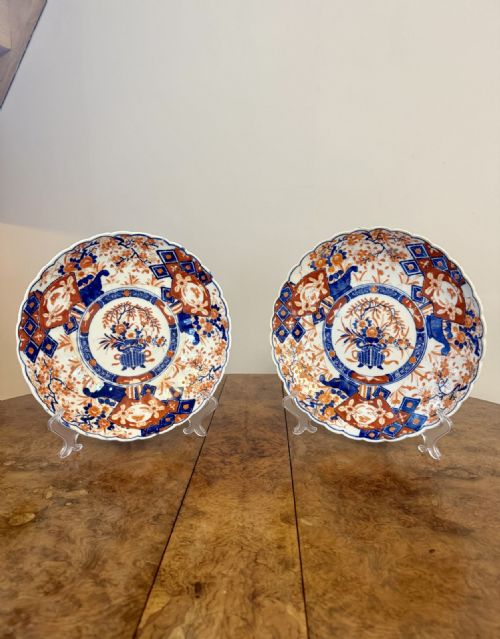
Iron Red Cobalt Blue Plate
An iron red cobalt blue plate brings together contrasting metallic pigments and deep underglaze tones to anchor a room or display.
Iron Red Cobalt Blue Plate
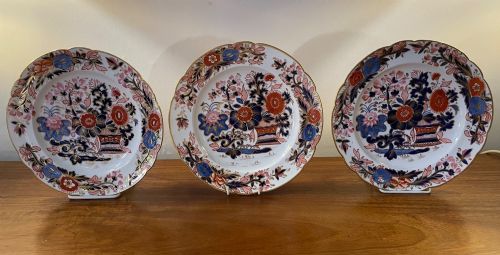
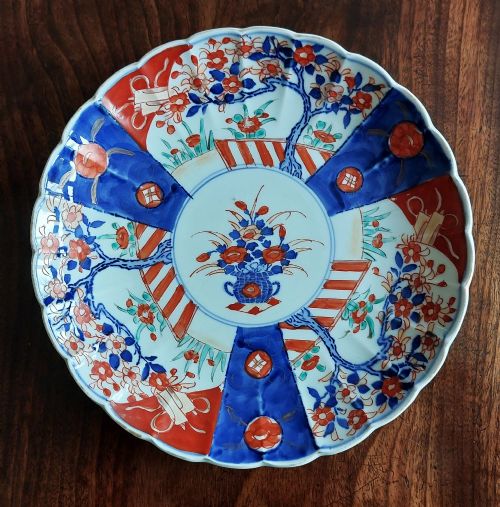
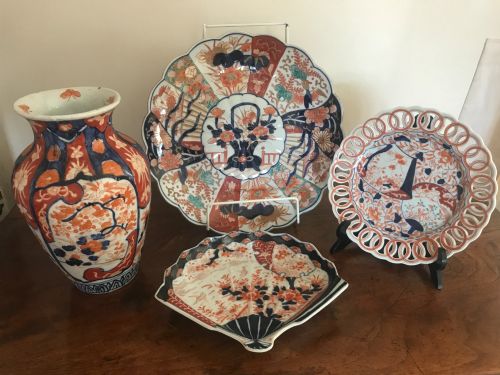
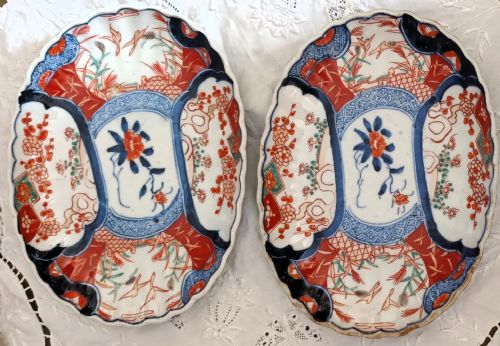
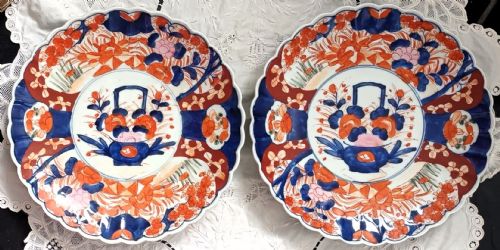
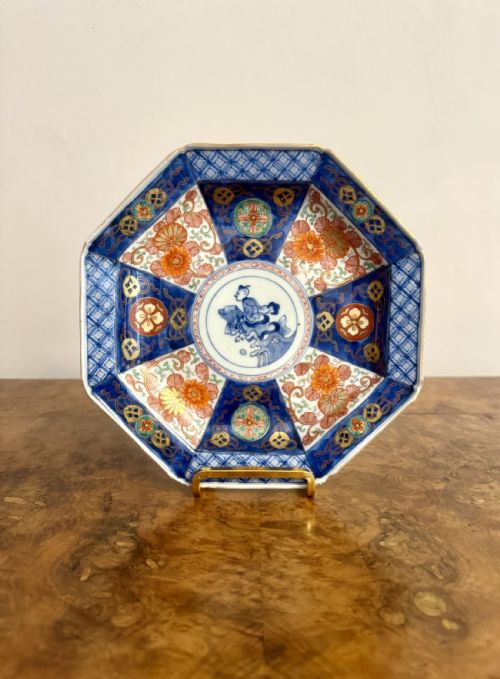
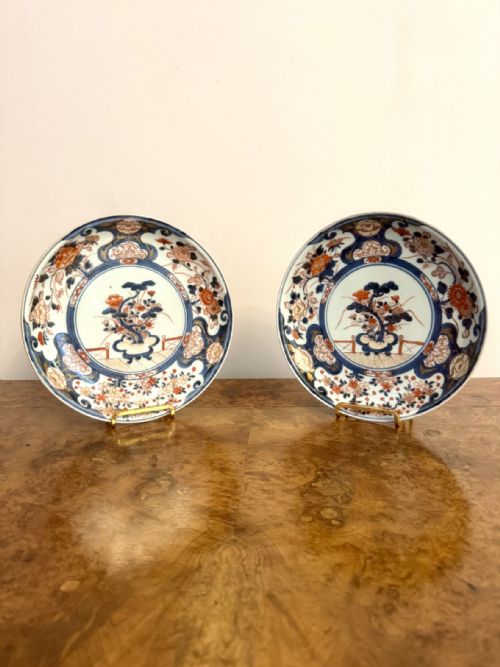
When you search for an iron red cobalt blue plate, you encounter decorative ceramics created primarily in the Japanese Imari and Meiji traditions, alongside select 19th-century English Staffordshire pieces. These items appear in various forms, including large chargers, wall plates, ribbon plates, and square display dishes with scalloped or hexagonal edges.
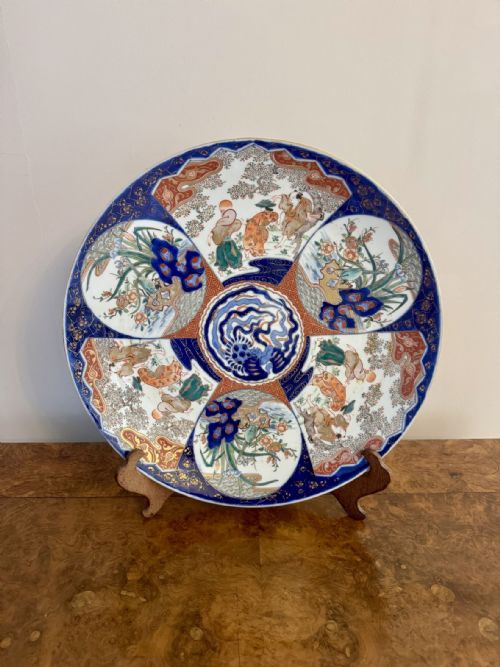
The objects most frequently met on this page date from the 19th century up to 1920, with a strong concentration of Meiji period Japanese porcelain. Buyers discover both individual display dishes and matched pairs or larger sets depicting traditional motifs such as exotic birds and the Seven Lucky Gods.
Materials and construction
The pieces rely on a base of ceramic and porcelain, shaped into chargers, bowls, and plates before receiving decoration. Artisans applied cobalt underglaze to achieve deep blue tones directly on the clay body.
Detailing involves iron red enamel combined with touches of gold leaf, gilt, and gilding to add contrast and richness to the surface design. Firing methods fused these metallic pigments and glazes to the porcelain body for lasting visual depth.
Materials recorded across these items include porcelain, ceramic, cobalt underglaze, iron red enamel, gold leaf, and gilding.
Assessing quality and craftsmanship
Quality rests upon the precision of the hand-painted brushwork and the complexity of the surface composition. Pieces at the higher end display crisp separation between the cobalt underglaze and the vibrant iron red enamel, often accompanied by well-preserved gilding.
The form itself dictates distinction, with unusual shapes like hexagonal edges, square plates, and scalloped profiles commanding attention above standard circular designs. The clarity of depictions, such as birds or figural groups, separates standard decorative items from superior examples.
The Iron Red Cobalt Blue Plate Glossary
- Cobalt Underglaze
- A blue pigment applied to ceramic before glazing and firing, producing deep, permanent tones that withstand high temperatures. This forms the foundational blue layer seen in Imari ceramics.
- Iron Red
- A brick-red enamel pigment used extensively in Japanese and English Imari decoration. It is applied over the glaze and fired at a lower temperature than the underlying cobalt.
- Charger
- A large decorative plate traditionally used for display rather than dining. These pieces often feature complex painted scenes designed to be mounted on walls or set on sideboards.
- Meiji Period
- The era of Japanese history lasting from 1868 to 1912, associated with the production of intricate porcelain exported to Western markets. Pieces from this time often combine rich cobalt blue with iron red and gold leaf.
- Scalloped Edge
- A decorative rim shaped into a series of interconnected curves rather than a straight circle. This technique appears frequently on Japanese display plates and dishes.
Iron Red Cobalt Blue Plate: Frequently Asked Questions
How do I display an iron red cobalt blue plate safely?
Large chargers and decorative plates suit wall mounting using specialised spring hangers designed for heavy porcelain. Alternatively, sturdy plate stands allow these pieces to rest securely on sideboards or mantelpieces.
Avoid placing display dishes in areas prone to direct sunlight or heavy foot traffic to protect the enamel and gilding from accidental knocks.
Are these plates meant for dining?
Most pieces catalogued under this style function primarily as decorative chargers, wall plates, and display dishes rather than functional tableware. The delicate nature of the enamel and gold leaf surface decoration makes them unsuited for regular use with cutlery.
Gentle dusting with a dry cloth keeps the surface clean without risking abrasion to the painted pigments.
What is the difference between a plate and a charger?
Chargers are significantly larger than standard dining or display plates, usually measuring well over twelve inches in diameter. They were historically produced for ceremonial use or grand sideboard display rather than individual dining.
Plates in these collections measure smaller and appear more frequently in matched pairs, sets, or larger collections of matching items.