
Inlaid Wood Buffet
An inlaid wood buffet brings substantial surface space and rich cabinet work to a dining room, combining functional storage with decorative marquetry.
Inlaid Wood Buffet
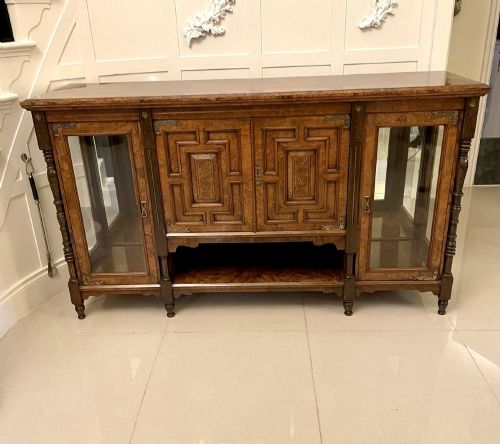
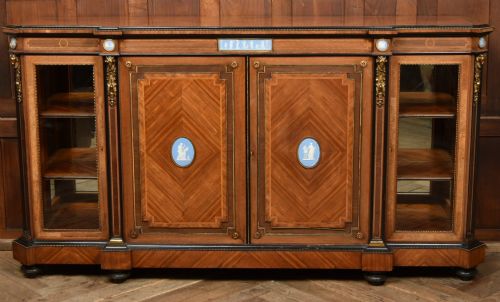
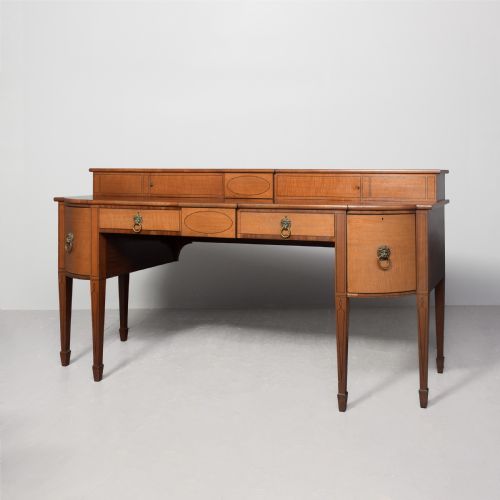
When you search for an inlaid wood buffet, you encounter dining room storage forms spanning the eighteenth, nineteenth, and early twentieth centuries. These pieces appear under various designations including sideboards, side cabinets, credenzas, and servers.
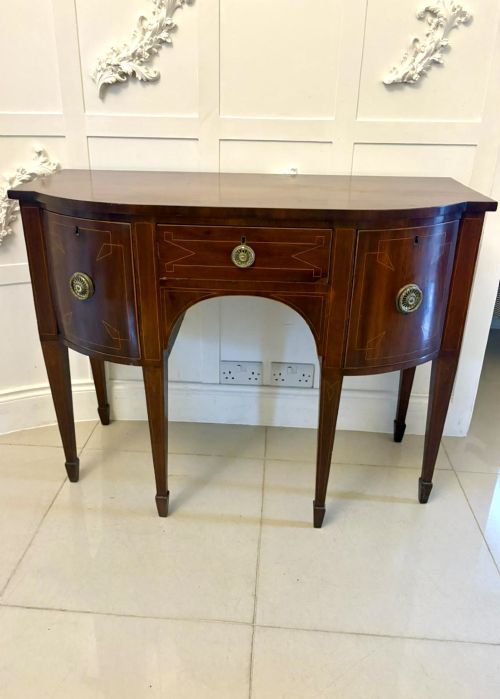
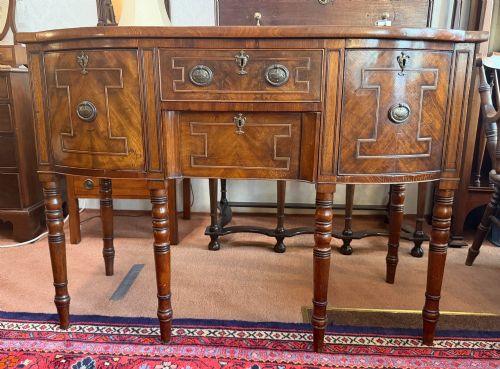
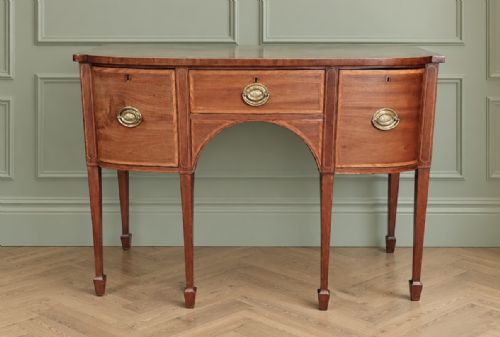
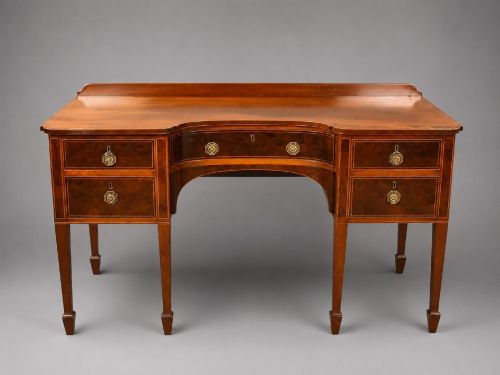
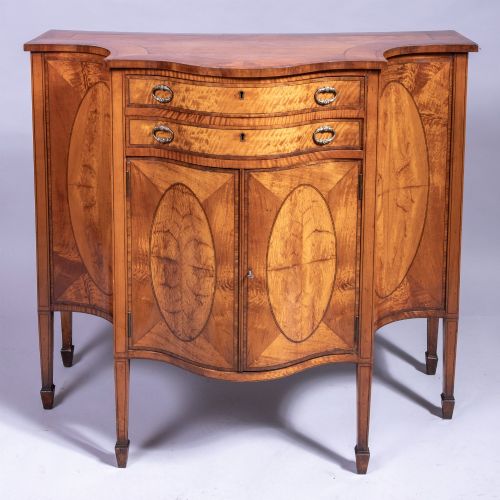
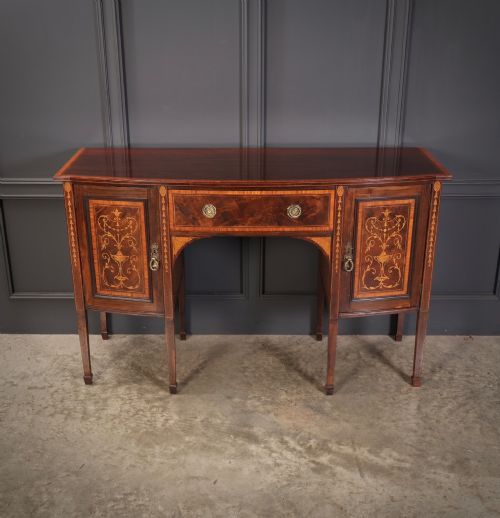
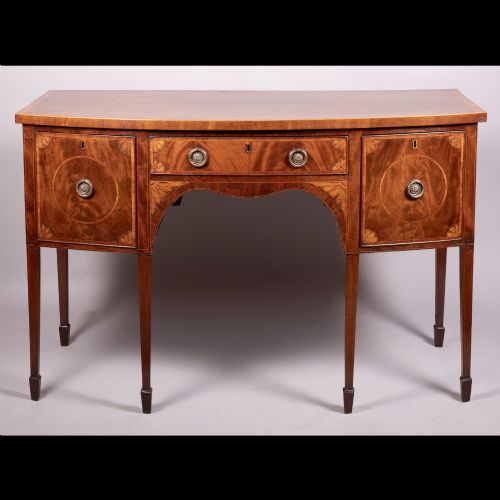
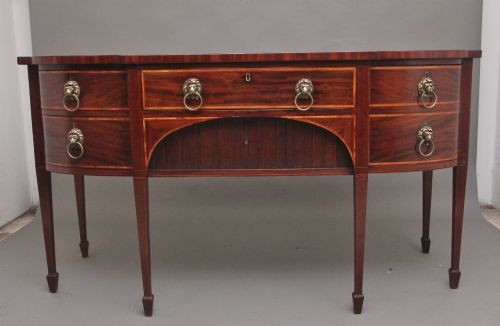
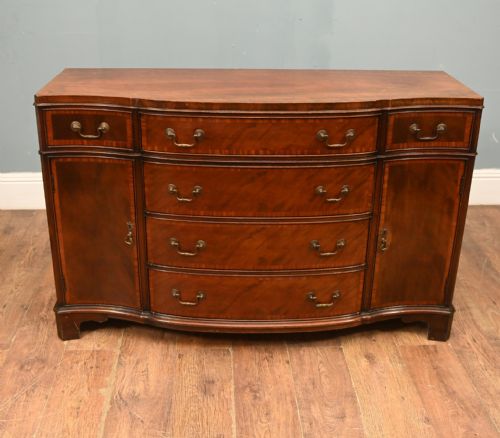
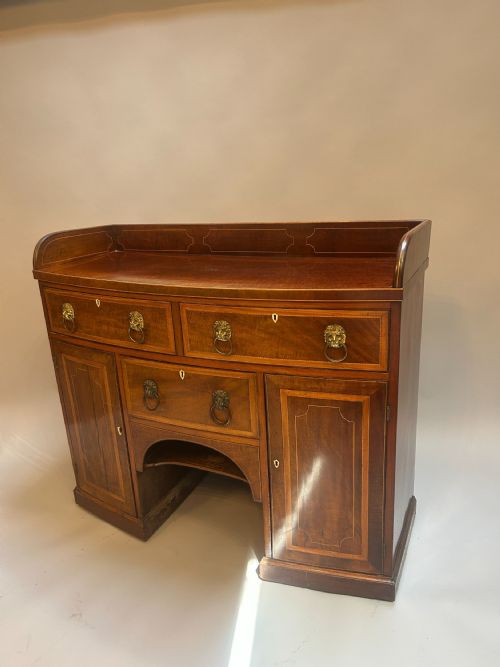
The most common examples on this page are mahogany sideboards and credenzas originating from the Georgian, Victorian, and Edwardian periods. Pieces emerge in straight, bow-front, serpentine, and breakfront shapes.
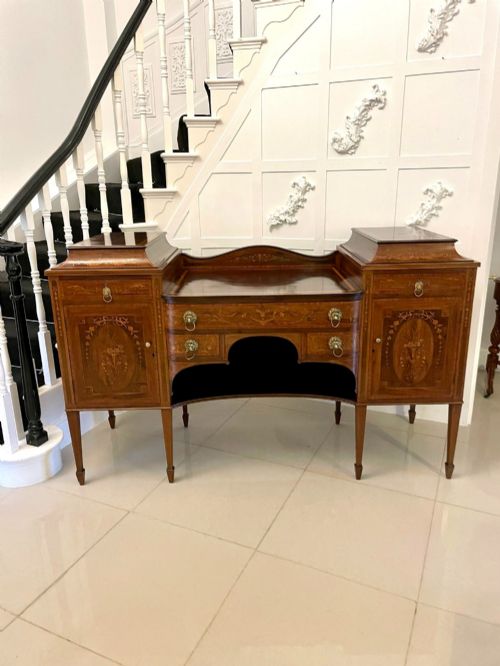
Origins range across British workshops, Scottish makers, and continental European pieces featuring marble tops and French styling. Forms adapt from simple servers to large stage-back sideboards and four-door exhibition cabinets.
Materials and construction methods
Cabinet makers constructed carcass frames primarily from solid mahogany, oak, and walnut, often applying figured mahogany veneers to large surfaces. Secondary timbers provide structural support behind the decorative exteriors.
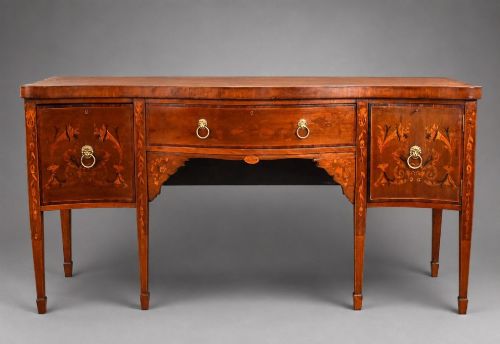
Inlay and marquetry work utilises contrasting timbers such as satinwood, boxwood, and ebony, alongside fruitwood and burr elm. Craftsmen cut intricate floral and geometric patterns into the primary wood to create detailed borders and central medallions.
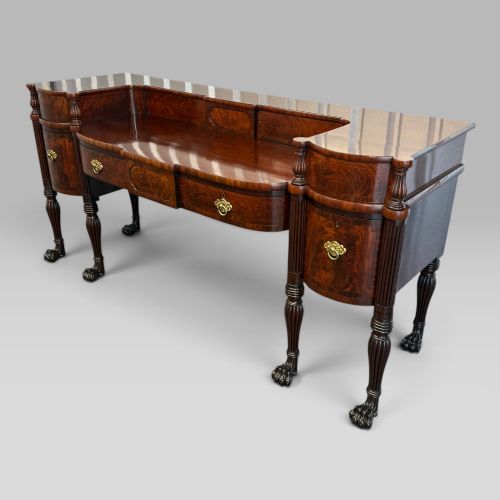
Additional decorative elements include brass handles, gallery rails, lion paw feet, and fitted interior drawers. French examples incorporate inset marble tops above the inlaid wooden bases.
Six carved lion paw feet support one particular Regency mahogany sideboard, standing ready to pounce across the dining room floor.
Assessing quality in construction and design
Quality separates pieces through the precision of the cabinet work and the depth of timber selection. Superior examples display carefully matched flame or figured mahogany veneers that continue seamlessly across drawers and doors.
The crispness of the inlaid marquetry defines the upper tier of pieces, showing tight joints between contrasting woods without excessive filler. Drawer construction using hand-cut dovetails and solid secondary timbers indicates higher workshop standards.
Proportion and architectural balance distinguish standard production from exhibition pieces. Elaborate forms with serpentine fronts, breakfront profiles, or specific maker attribution demonstrate superior design ambition.
Hewetsons London·Gordovil Spain
The Inlaid Wood Buffet Glossary
- Marquetry
- Decorative veneer work forming pictures or patterns by assembling small pieces of coloured wood, shell, or ivory. This technique creates the intricate floral and geometric motifs seen across drawer fronts and tops.
- Credenza
- A dining room storage cabinet or sideboard, frequently featuring glass doors or elaborate marquetry. Victorian examples often incorporate mirrored backs or marble tops.
- Serpentine
- A furniture front curved in a concave-convex-concave shape. This sweeping contour requires advanced woodworking skill to execute properly on a buffet or sideboard.
- Satinwood
- A durable hardwood with a lustrous, golden-yellow sheen used extensively for inlay and banding during the Sheraton and revival periods. It provides sharp contrast against darker woods like mahogany.
- Bow-front
- A convex, outwardly curved front elevation typical of many Georgian and nineteenth-century sideboards. The curve softens the linear appearance of large dining furniture.
Inlaid Wood Buffet: Frequently Asked Questions
What is the difference between a buffet and a sideboard?
Buffets and sideboards serve similar dining room storage functions, though historical terminology often depends on the period and region. Sideboards frequently include pedestals, drawers, and stage-backs for displaying silver and porcelain.
Buffet forms tend to emphasise lower cabinet storage with flat upper surfaces. Both terms appear interchangeably across eighteenth and nineteenth-century listings.
How do I identify a Georgian sideboard?
Georgian sideboards date from the eighteenth and early nineteenth centuries, characterised by solid timber construction and restrained classical proportions. They often feature tapered legs, brass ring handles, and subtle mahogany grain patterns.
Later Victorian interpretations tend to be heavier in scale, incorporating elaborate mirror backs or dense marquetry inlay.
Where were these buffets placed in a home?
Dining rooms formed the primary location for these large storage pieces, where they held serving dishes, cutlery, and glassware during meals. Large sideboards with stage-backs also functioned as display surfaces for expensive dining silver.
Drawing rooms and grand hallways occasionally accommodated smaller side cabinets and credenzas.
How do I care for antique inlaid wood?
Maintain inlaid furniture by keeping it away from direct sunlight and sudden temperature shifts that cause veneer to lift. Regular dusting with a dry, soft cloth preserves the polished finish without building up residue.
Apply high-quality beeswax sparingly to nourish dry timber and protect delicate satinwood or boxwood banding.