
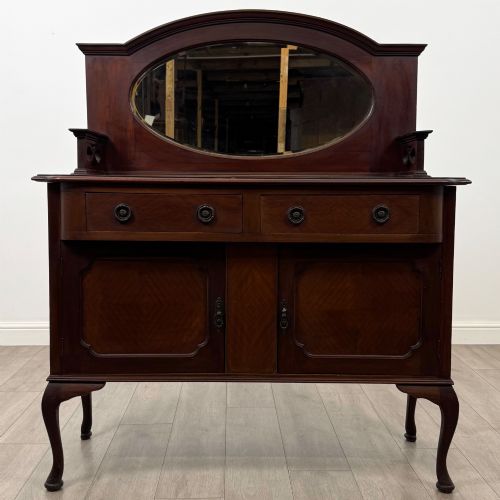
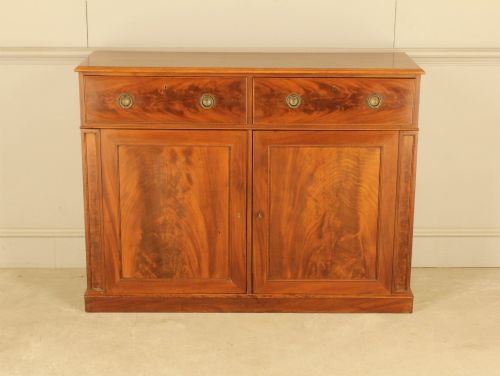
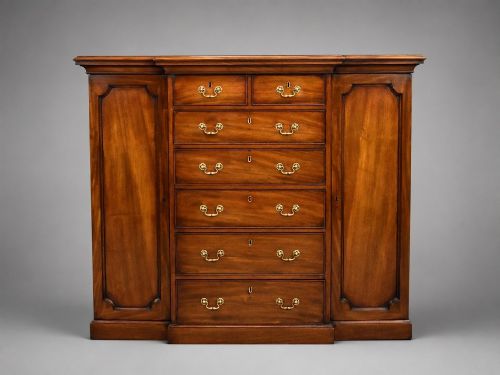
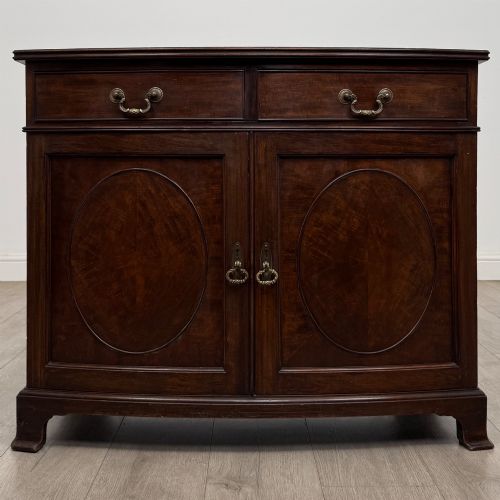

Edwardian Mahogany Dining Server
These edwardian mahogany dining server examples provide practical storage and display for the dining room through traditional cabinetmaking forms.
Edwardian Mahogany Dining Server
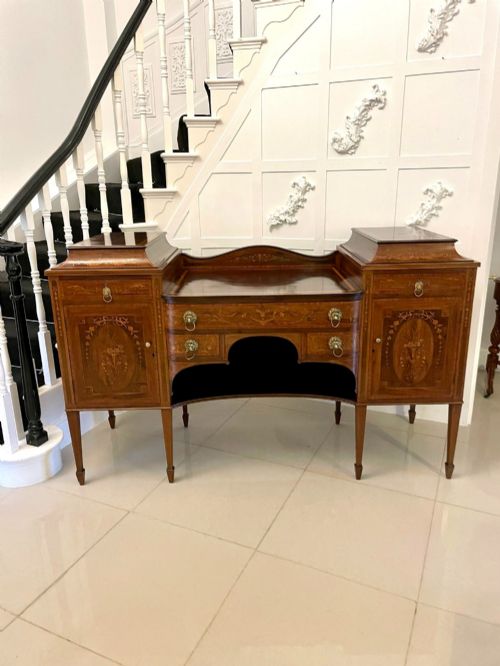
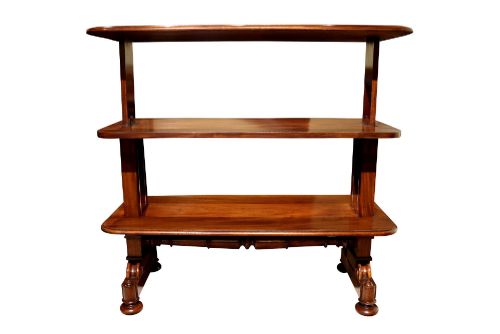
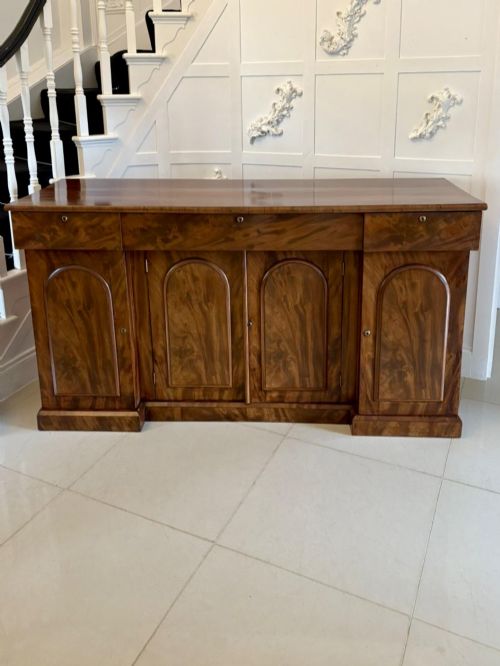
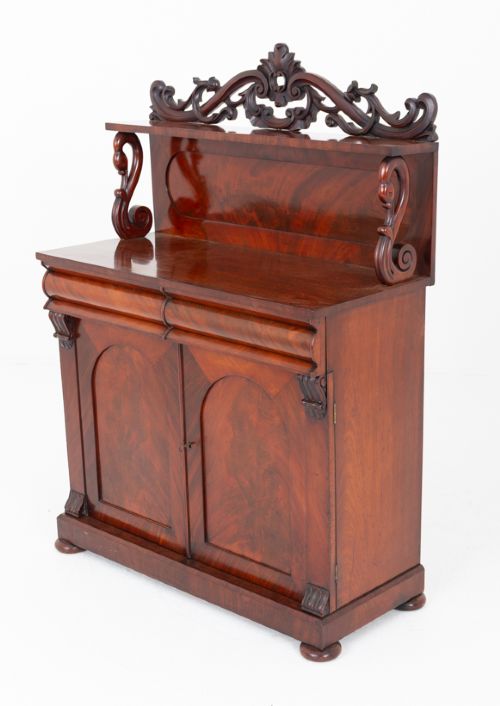
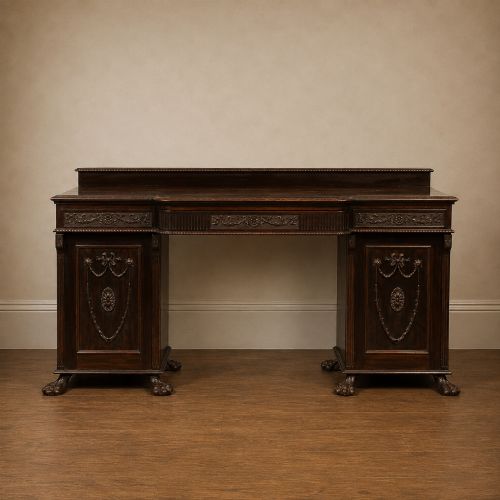
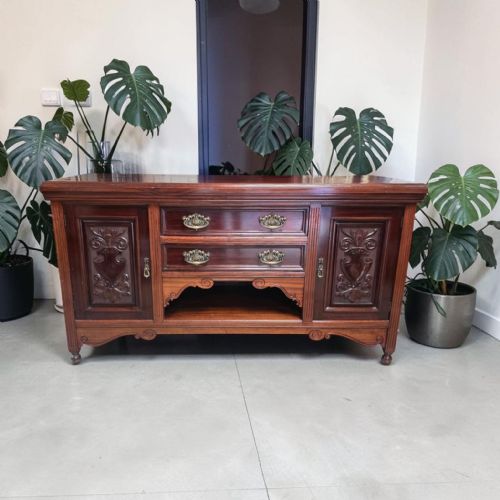
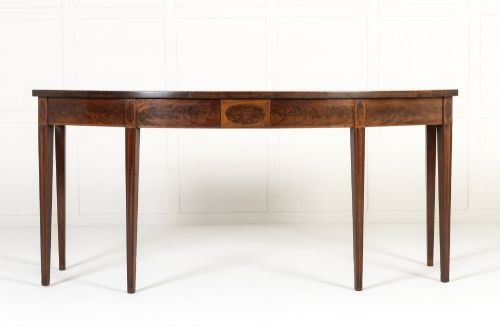
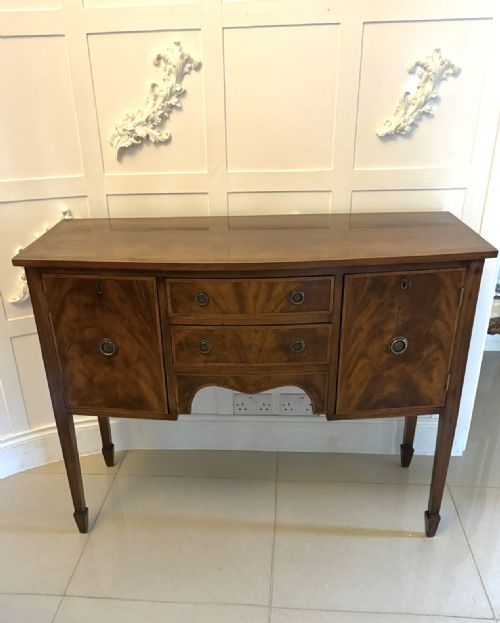
An edwardian mahogany dining server functions as a principal storage piece in the dining room, taking the form of sideboards, buffets, and serving tables. Pieces meeting this description originate predominantly from the Edwardian period and the early twentieth century, alongside nineteenth-century precursors.
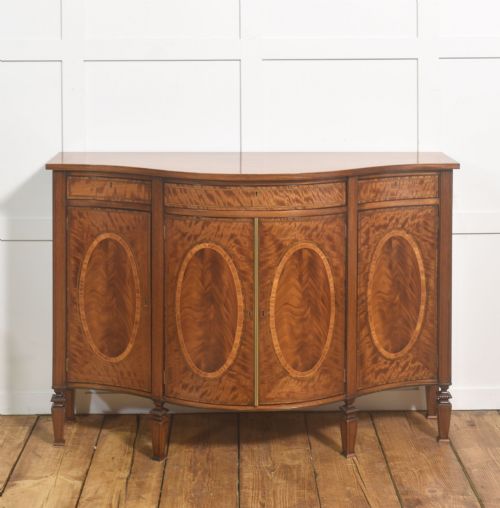
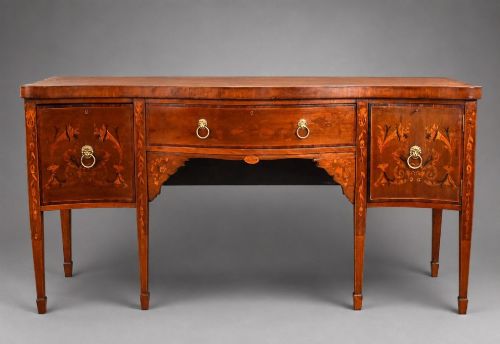
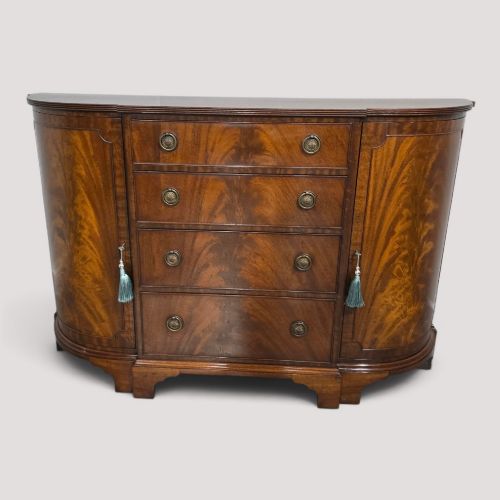
The assortment relies heavily on bow-front, breakfront, and serpentine shapes constructed from mahogany. Makers of the period often drew inspiration from earlier Sheraton, Hepplewhite, and Adam designs, producing pieces that combined utility with classical revival aesthetics.
Materials and Technique
Construction centres on solid mahogany and mahogany veneers, occasionally incorporating figured grain or flame mahogany sections. Cabinetmakers applied contrasting timbers such as satinwood, boxwood, and various inlay techniques to accentuate the structural lines.
Joinery techniques follow traditional cabinetmaking standards, incorporating brass hardware for handles and mounts. Surfaces receive polish that highlights the natural grain and the precision of the marquetry or crossbanding.
Current listings feature mahogany, satinwood, boxwood, and brass across Edwardian and Victorian periods.
Distinctions in Standard
Standard varies according to the selection of timber figures and the intricacy of the inlay work. Flame mahogany veneers and fine satinwood crossbanding require specialist skill to execute cleanly.
The refinement of the carved details, the weight of the brass fittings, and the integrity of the original construction distinguish higher-grade examples from simpler utility pieces.
Hewetsons London·M D Miller And Sons Nottingham
The Edwardian Mahogany Dining Server Glossary
- Bowfront
- A curved cabinet front that swells outward in the centre, creating a convex profile. This shape appears frequently on serving pieces from the Edwardian period.
- Crossbanding
- A narrow strip of veneer applied perpendicularly to the grain of the main surface, framing the primary timber. It provides a distinct border on drawer fronts and tabletops.
- Marquetry
- Decorative patterns formed by fitting together small pieces of veneer into wooden panels. Artisans utilise contrasting woods to create floral or geometric motifs.
- Breakfront
- A large piece of furniture where the central section projects forward from the flanking wings. This architectural arrangement adds depth and visual weight to dining room cabinetry.
- Serpentine
- A front profile that curves inward centrally and swells outward at the ends, forming an elongated wave shape. This contour requires precise woodworking to achieve a smooth line.
Edwardian Mahogany Dining Server: Frequently Asked Questions
How do I use an edwardian mahogany dining server today?
These pieces function effectively in modern dining rooms or living spaces for storing tableware, linens, and serving platters. The flat top surface also offers space for serving food or displaying decorative objects.
Their substantial construction ensures they remain practical for daily use while providing traditional character to an interior.
What styles are common in edwardian mahogany dining servers?
Many examples reflect the Sheraton Revival style, incorporating classical motifs, delicate inlay, and balanced proportions. Other pieces lean towards Edwardian Adam or Arts and Crafts aesthetics.
Makers frequently looked to eighteenth-century Georgian designs for inspiration, adapting those proportions for Edwardian homes.
How do I distinguish Edwardian pieces from Victorian ones?
Edwardian dining servers often display lighter proportions and brighter satinwood inlay, influenced by Sheraton Revival taste. Victorian examples tend to feature heavier figured mahogany and more robust structural forms.
Examining the secondary woods and construction methods helps clarify the period of manufacture.
What maintenance do these wooden servers require?
Regular dusting with a soft, dry cloth preserves the polished finish of the mahogany. Direct sunlight and fluctuating humidity should be avoided to protect the veneers and inlays.
Occasional application of appropriate wax maintains the lustre of the timber without building up residue.