
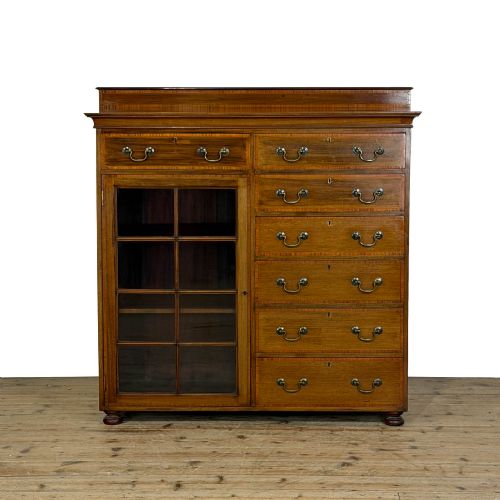
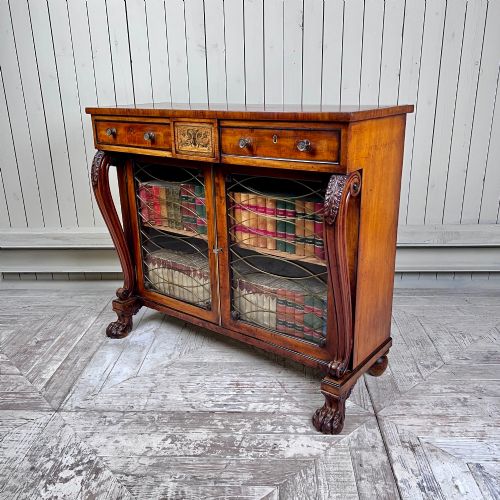
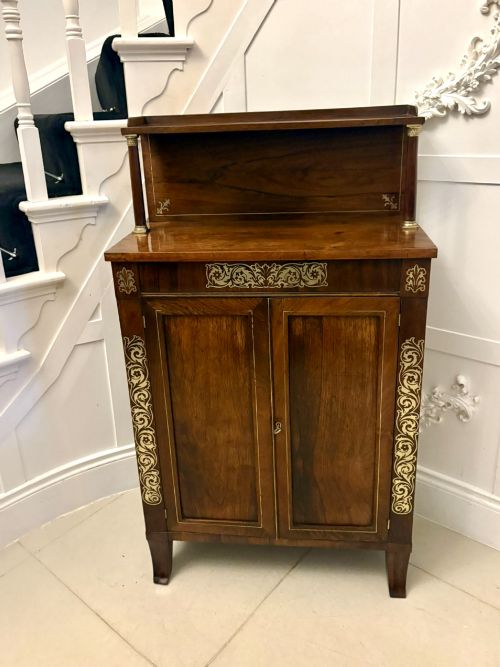
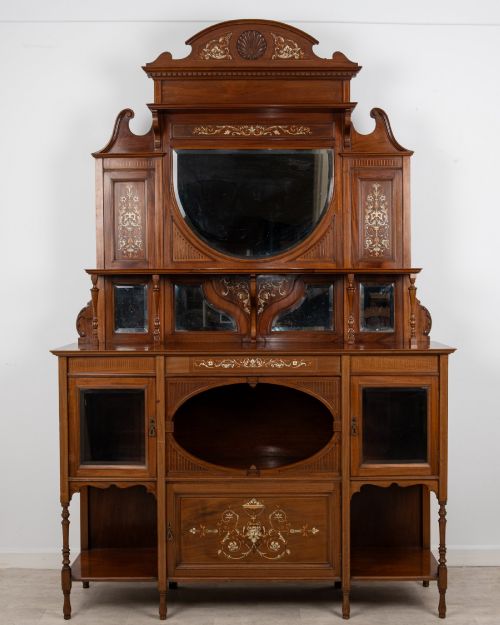


Inlaid Mahogany Chiffonier
An inlaid mahogany chiffonier brings rich timber and delicate detail together, offering both display surface and enclosed storage for the home.
Inlaid Mahogany Chiffonier
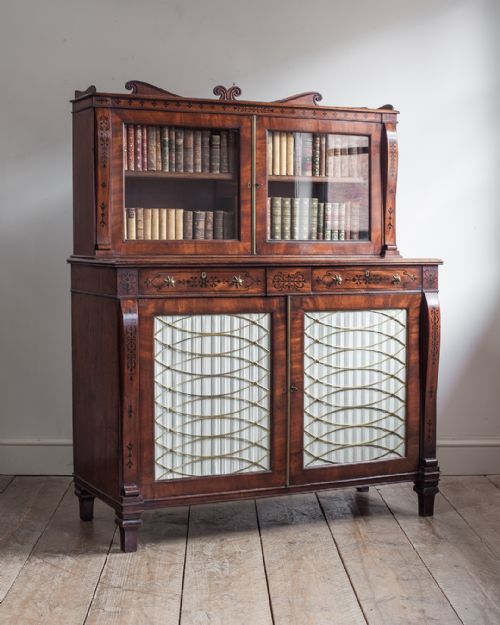
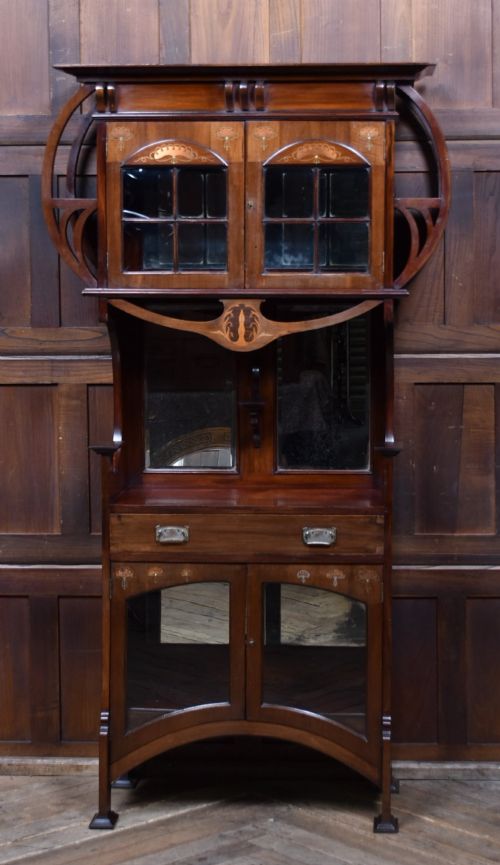
The inlaid mahogany chiffonier is a low cabinet designed for side placement, emerging strongly through the nineteenth century into the Edwardian era. These pieces combine flat top surfaces with lower cupboards, occasionally rising to incorporate mirror backs or upper bookcase sections.
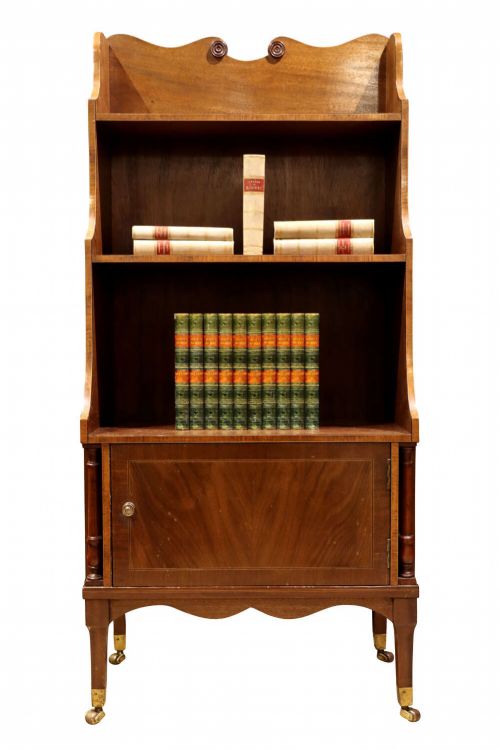
Examples on this page span the Regency period through to Edwardian and later Victorian workshops. The form frequently intersects with sideboards, display cabinets, and waterfall bookcases, maintaining the characteristic low profile.
Makers utilised timber grains alongside contrasting stringing and marquetry to decorate the foundational carcase. The domestic role shifted from functional dining room storage towards refined parlour and drawing room display.
Materials and Construction
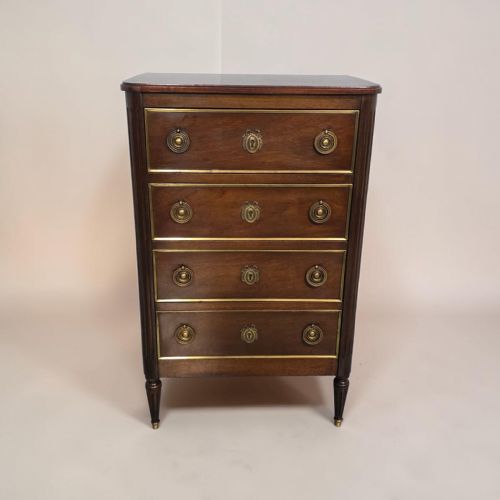
Makers built the primary carcase and panels in solid and veneered mahogany, introducing satinwood, boxwood, and ebony for contrasting stringing and pictorial inlay. Brass mounts, castors, and glazed doors frequently complete the structural assembly of these cabinets.
Joinery methods relied on traditional cabinetmaking techniques to house panelled doors and drawer boxes securely within the mahogany framework. Inlaid motifs were carefully set into routed recesses on the drawer fronts and cupboard doors.
Surface finishing involved polishing the timber to enhance the natural grain patterns while protecting the delicate lighter wood inlays. Glass was fitted into door frames to allow for the display of collections within the upper sections.
Some nineteenth century cabinetmakers hid extra secret drawers behind simple cupboard plinths.
Judging Quality and Execution
Quality rests in the precision of the timber selection and the sharpness of the inlay work. Finer cabinets display meticulous alignment where contrasting woods meet the mahogany ground, avoiding crude painted substitutes.
The integration of secondary materials like brass hardware and heavy glass doors indicates the original tier of production. Robust internal construction and well-fitted drawers distinguish superior workshop output from standard commercial output.
Edwards & Roberts·Gillows·Maple & Co
The Inlaid Mahogany Chiffonier Glossary
- Chiffonier
- A low sideboard or cabinet, typically featuring a combination of drawers and lower cupboards beneath a flat top surface. The form evolved during the nineteenth century to serve dining and drawing rooms alike.
- Inlay
- A decorative technique where pieces of contrasting wood, such as satinwood or boxwood, are embedded into the surface of a mahogany carcase. This creates geometric lines or pictorial motifs across doors and drawer fronts.
- Marquetry
- Elaborate decorative veneer work assembled in patterns to form pictorial designs on furniture surfaces. It appears on select cabinet doors and friezes using various tinted and natural timbers.
- Stringing
- Thin inlaid lines of contrasting light or dark wood used to outline panels, drawer fronts, and edges. It provides a crisp linear definition to the mahogany surface.
- Waterfall Bookcase
- A tall open or glazed shelving unit where each successive shelf steps back from the one below. Several examples incorporate cupboard storage at the base.
Inlaid Mahogany Chiffonier: Frequently Asked Questions
What is an inlaid mahogany chiffonier?
An inlaid mahogany chiffonier is a low nineteenth or early twentieth century cabinet featuring enclosed cupboard space and decorative wood contrasting.
These pieces served various domestic storage and display roles across the Victorian and Edwardian periods.
How do I date an inlaid mahogany chiffonier?
Dating relies on observing stylistic markers such as Regency brass mounts, Victorian mirror backs, or Edwardian satinwood banding.
Timber choice and the complexity of the inlay also help assign pieces to specific nineteenth or twentieth century decades.
Were these chiffoniers used in dining rooms?
These cabinets found places in both dining rooms and drawing rooms for storing tablewares or displaying ornaments.
Later Victorian and Edwardian variations leaned more towards decorative display in formal reception spaces.
How do I care for mahogany and inlay?
Protect the polished surfaces by keeping timber away from direct heat sources and sudden humidity shifts.
Regular light dusting with a dry cloth maintains the finish without risking the delicate wood stringing.