




Stained Glass Cabinet
These stained glass cabinet examples combine timber frames with leaded colour, offering a traditional way to store books and display treasured objects.
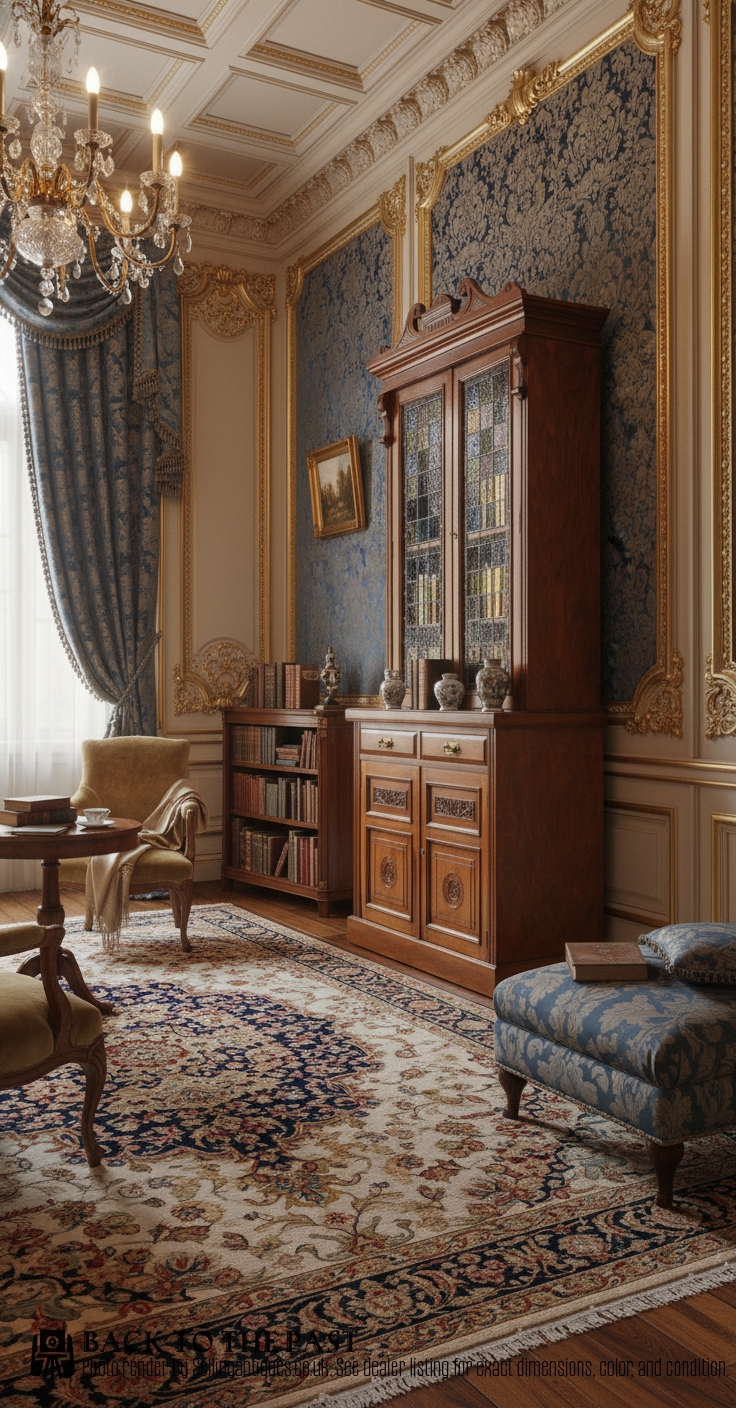
Stained Glass Cabinet
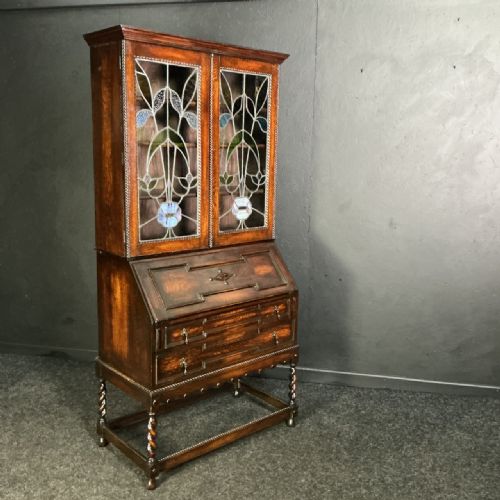
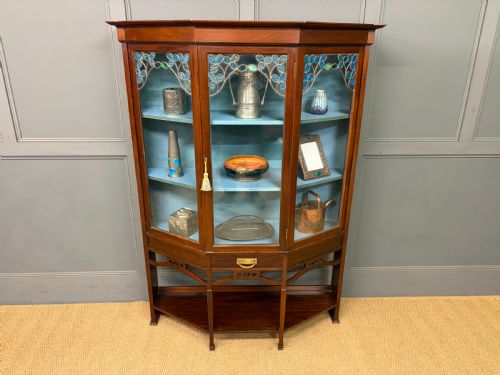
A stained glass cabinet typically takes the form of a display cabinet, bookcase, or bureau bookcase designed to hold books and decorative items behind glazed doors. These pieces appear across several periods, including Victorian, Edwardian, and the early twentieth century.
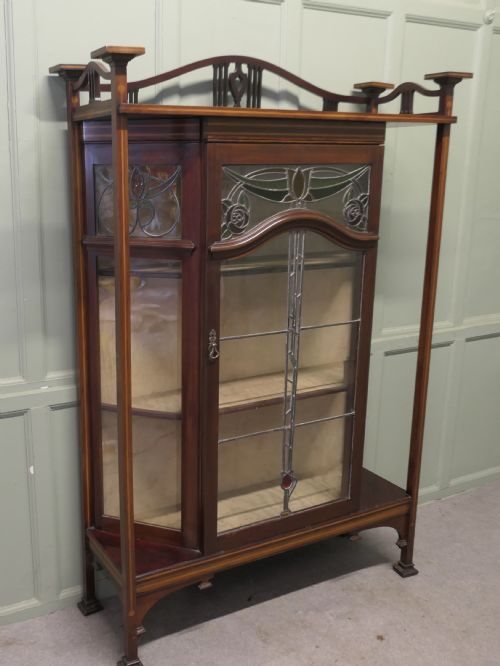
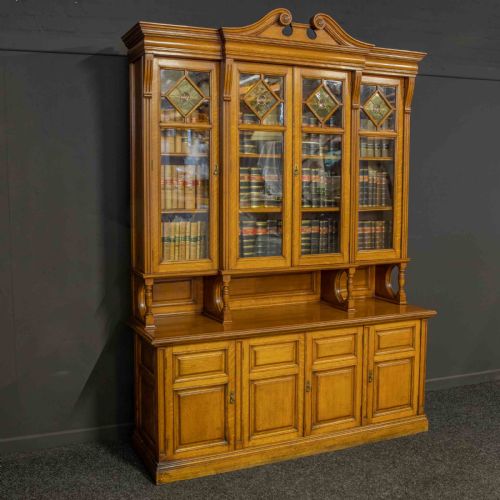
The versions most commonly met on this page range from compact wall-mounted pharmacy or bathroom cupboards to substantial oak and mahogany bookcase cabinets. Makers from the Arts and Crafts and Art Nouveau movements frequently utilised leaded glass panels within these timber structures.
Buyers also encounter Flemish Revival interpretations featuring carved oak and geometric leaded work. Each form serves a practical storage function while introducing colourful light into a room through the patterned glazing.
Materials and Construction
Construction relies primarily on sturdy hardwoods such as oak and mahogany, occasionally supplemented by walnut or fruitwood inlay and fabric linings. Cabinetmakers joined the timber frames using traditional methods to support the weight of heavy timber shelving and glazed doors.
The distinctive glazing consists of coloured glass pieces held together by lead cames, soldered at the joints to form intricate floral, geometric, or figurative designs. Brass hardware such as hinges and handles secures the doors and drawers across both Victorian and Edwardian examples.
Stained Glass Cabinet Retail Price Guide 2026
Typical asking prices for stained glass cabinet among the pieces listed under this phrase on Sellingantiques today, from the lower quarter to the upper quarter. They describe what is for sale here now, not the wider market.
Some pharmacy cupboards still retain a faint, lingering trace of old apothecary herbs behind their colourful glass.
Judging Quality
Quality in a stained glass cabinet rests on the ambition of the design and the precision of the timberwork. Pieces associated with notable workshops demonstrate superior joinery and more sophisticated marquetry or carving compared to standard commercial productions.
The artistry of the leaded glass panels distinguishes finer pieces from simpler utilitarian cupboards. Intricate hand-cut coloured glass and secure lead cames indicate higher workshop standards.
Shapland and Petter
The Stained Glass Cabinet Glossary
- Came
- A slender strip of lead with a grooved channel used to hold pieces of glass together in a window or cabinet door. These strips are soldered at the intersections to form a rigid structural network.
- Marquetry
- Decorative patterns created by fitting thin pieces of wood veneer onto a timber surface. This technique often appears on the doors or friezes of Edwardian and Art Nouveau furniture.
- Flemish Revival
- A nineteenth-century style drawing inspiration from seventeenth-century Flemish design, characterised by heavy carved oak and architectural details. Cabinets in this style frequently incorporate stained glass panels.
- Bureau Bookcase
- A dual-purpose form combining a slant-front desk compartment with a shelving section above enclosed by doors. The upper doors often feature glazed panels.
- Fruitwood Inlay
- Contrasting light or dark fruitwood inserted into a primary timber ground to form linear or botanical motifs. It adds subtle tonal variation to mahogany and walnut furniture.
Stained Glass Cabinet: Frequently Asked Questions
What fits inside a stained glass cabinet?
These cabinets suit the storage of books, ceramics, glassware, and decorative objects behind protective doors. Deeper bookcase variants accommodate larger volumes, while smaller hanging versions hold everyday items.
Interior shelf arrangements vary by piece, with some featuring fixed wooden shelves and others adjustable supports. The glazed doors keep dust away from delicate collections while maintaining visibility.
How do I date a stained glass cabinet?
Dating relies on observing the timber species, construction techniques, and stylistic markers such as Art Nouveau floral motifs or Victorian carved oak details. Edwardian pieces often display lighter mahogany frames with subtle inlay.
Archival records and historical design sources also help place specific cabinets into periods like the late nineteenth or early twentieth century. Examining the hardware and backboards provides further clues regarding age.
Where should I place a stained glass cabinet?
Positioning these cabinets near a natural light source allows sunlight to pass through the coloured glass panels, illuminating the interior patterns. They function effectively in living rooms, studies, or hallways as focal storage points.
Consider the weight and dimensions of the timber frame when selecting a wall space for smaller hanging cabinets or floor placement for large bookcase combinations.
How do I care for stained glass cabinets?
Maintenance involves dusting the timber surfaces regularly with a soft cloth and cleaning the glass panes with a mild, non-abrasive solution. Avoid placing leaded glass under excessive physical pressure or direct harsh moisture.
Period timber benefits from occasional waxing to preserve the finish of woods like oak and mahogany. Checking the stability of the brass hardware ensures the doors continue to close securely.