

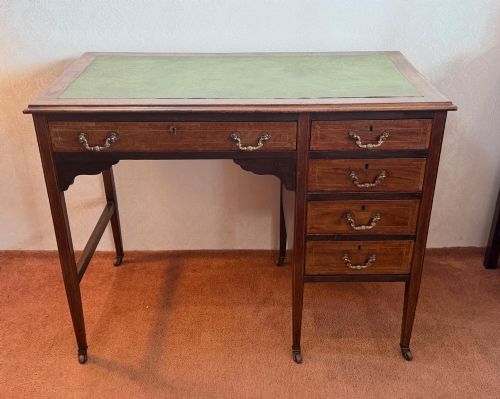
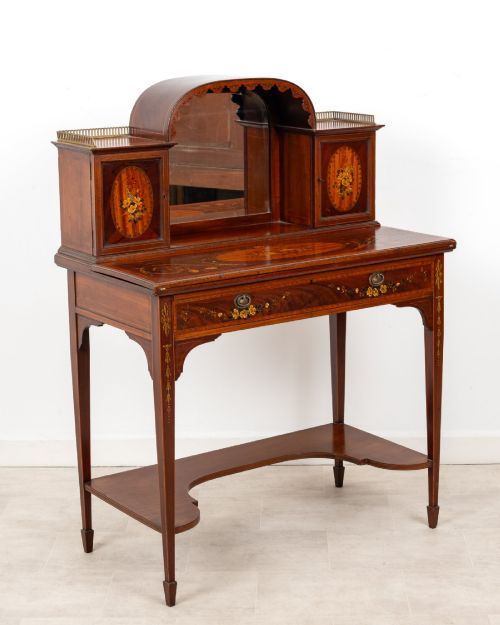
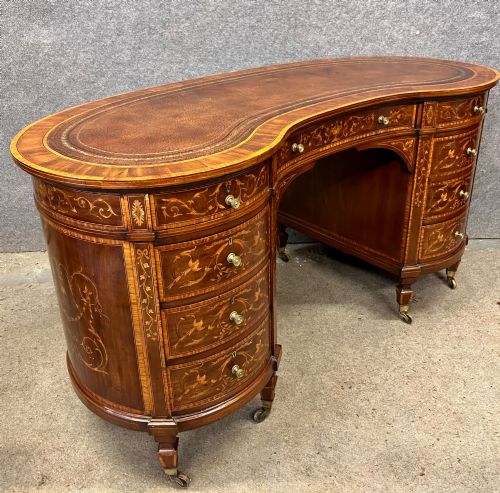
Inlaid Ladies Writing Table
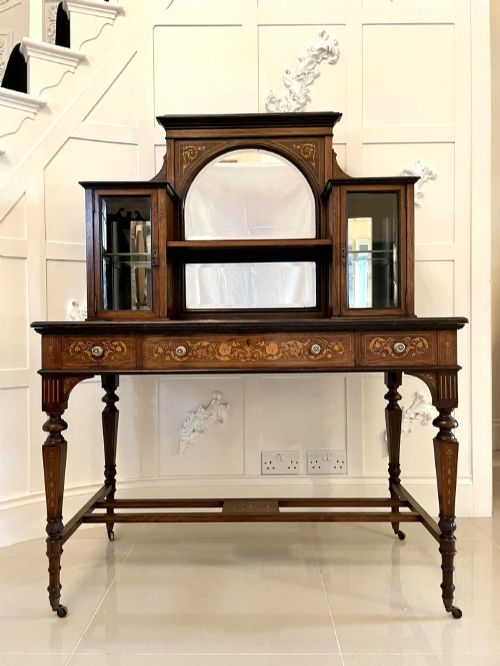
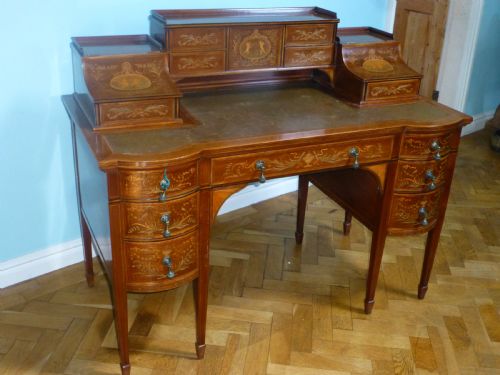
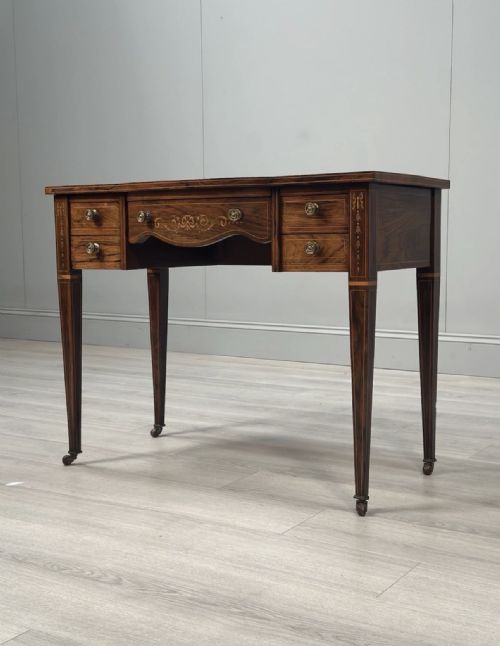
An inlaid ladies writing table brings delicate proportions and refined writing surfaces into a room, combining practical stationery storage with decorative marquetry.
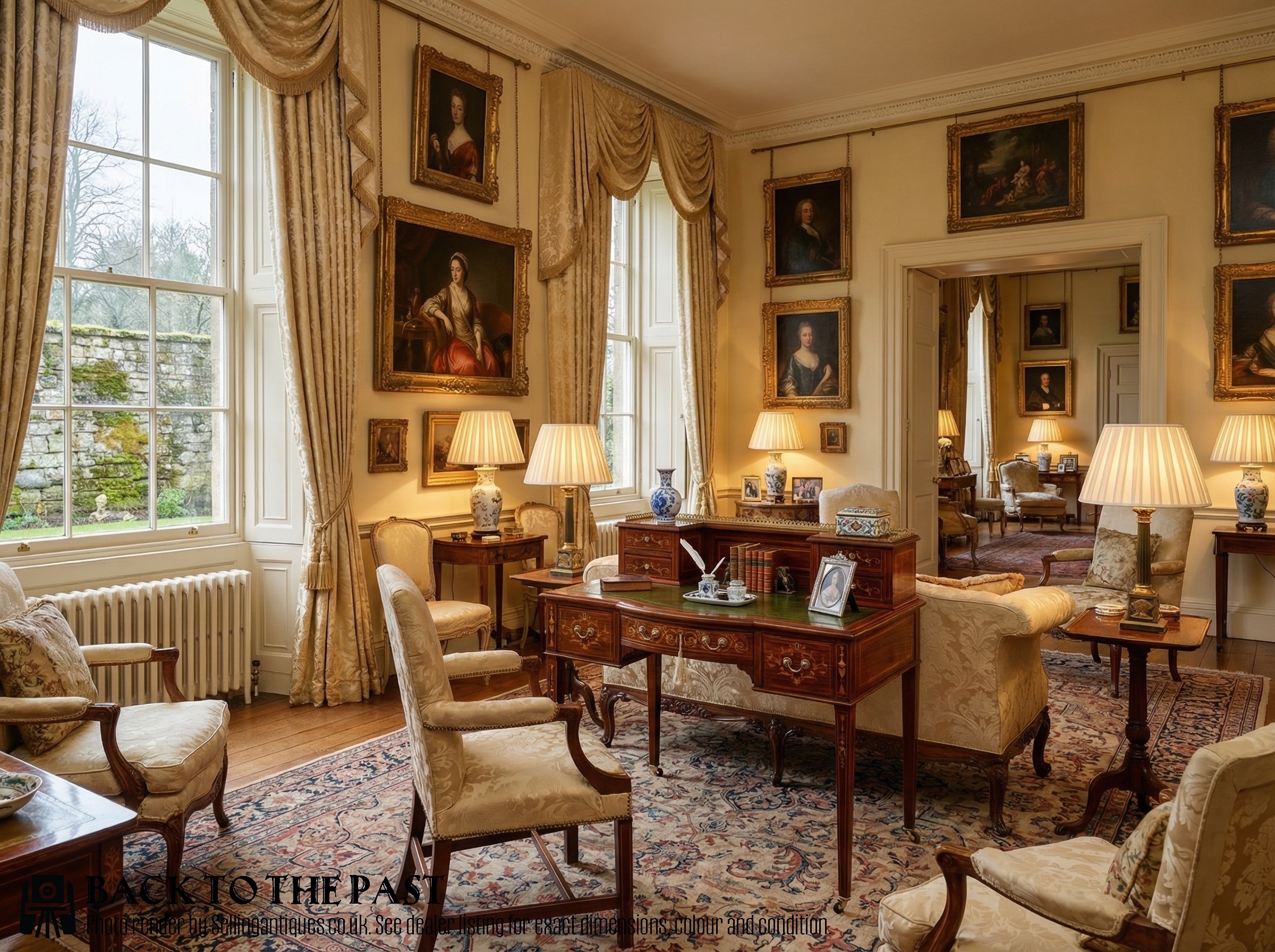
Inlaid Ladies Writing Table
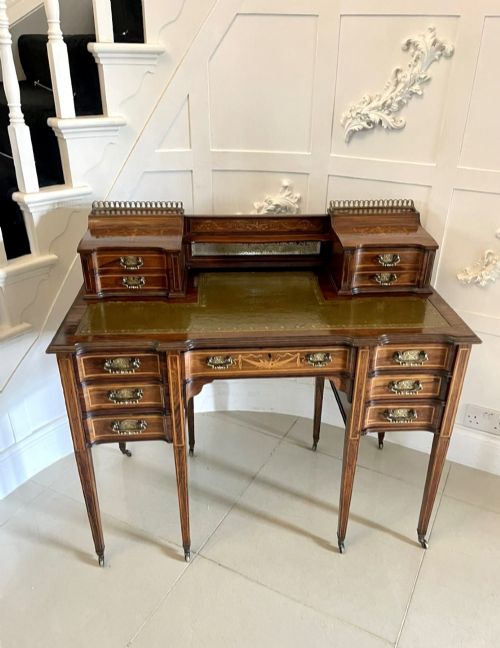
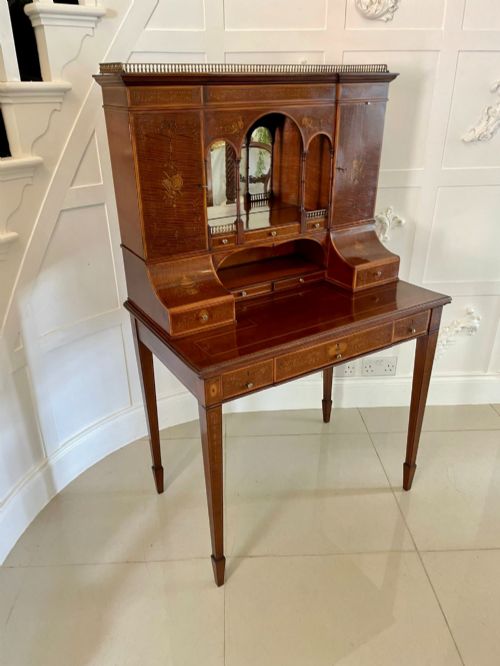
An inlaid ladies writing table provides a compact surface for correspondence, typically constructed during the Victorian and Edwardian periods for domestic use. These pieces often feature fitted interiors with small drawers, pigeonholes, and compartments designed for stationery and writing implements.
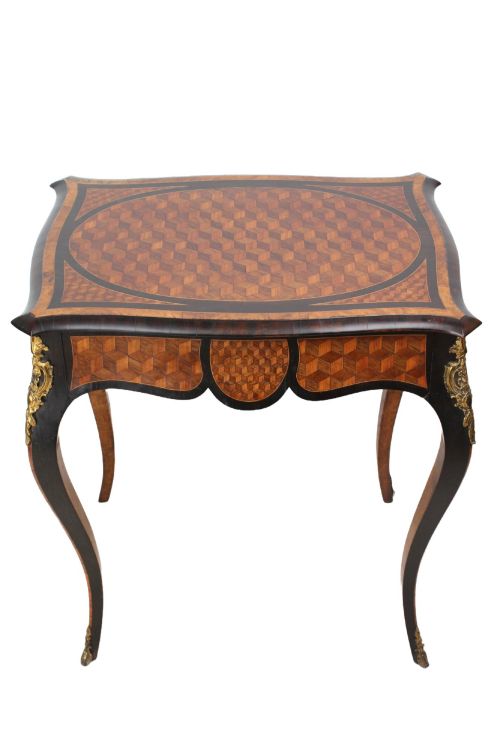
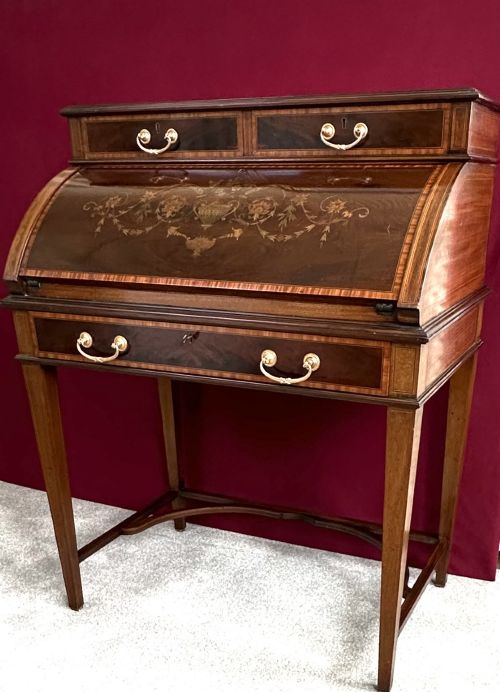
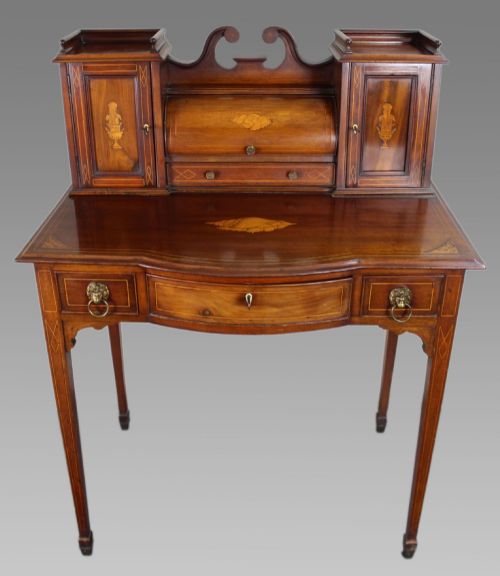
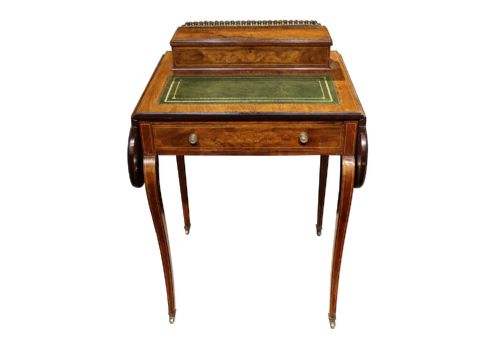
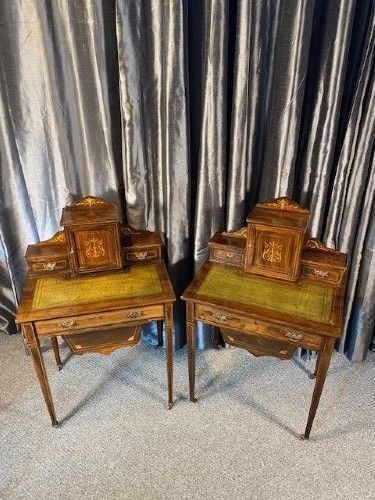
The most common examples encountered on this page date from the late nineteenth century through to the Edwardian era, spanning styles from Sheraton Revival to French Louis XV Revival. Forms range from kidney-shaped desks and bureau de dame models to traditional freestanding writing tables with satinwood or mahogany surfaces.
How they were made
Cabinet makers built these desks using a timber carcase of mahogany, rosewood, or satinwood, often applying contrasting veneers and intricate marquetry panels. Inlaid decoration frequently incorporates floral or classical motifs executed in lighter woods like boxwood and satinwood.
Working surfaces are regularly inset with tooled leather writing panels, while structural details include brass mounts, ormolu accents, and fitted drawers constructed with traditional dovetail joints.
Inlaid Ladies Writing Table Retail Price Guide 2026
Typical asking prices for inlaid ladies writing table among the pieces listed under this phrase on Sellingantiques today, from the lower quarter to the upper quarter. They describe what is for sale here now, not the wider market.
Listings feature satinwood, mahogany, and rosewood timbers alongside brass and ormolu mounts.
What varies in quality
Quality rests upon the precision of the inlay work, the choice of cabinet timbers, and the presence of makers' signatures or stamps from firms like Maple & Co or Edwards and Roberts. Superior examples display crisp marquetry without shrinkage cracks in the veneers and retain original brass fittings and leather inserts.
Construction methods also distinguish standard production from high-end pieces, visible in the hand-cut joinery of internal stationery compartments and the use of solid secondary woods rather than cheaper veneers.
Maple & Co·JAS Shoolbred·Edwards and Roberts·S & H Jewell
The Inlaid Ladies Writing Table Glossary
- Marquetry
- Decorative patterns formed by fitting together small pieces of wood veneer onto a structural carcase. This technique allows for elaborate pictorial designs across the desk top and drawer fronts.
- Bonheur du Jour
- A light lady's writing desk featuring a small cabinet or set of tiers superstructure above the writing surface. The form gained popularity during the eighteenth century and saw revivals through the Victorian and Edwardian periods.
- Carlton House Desk
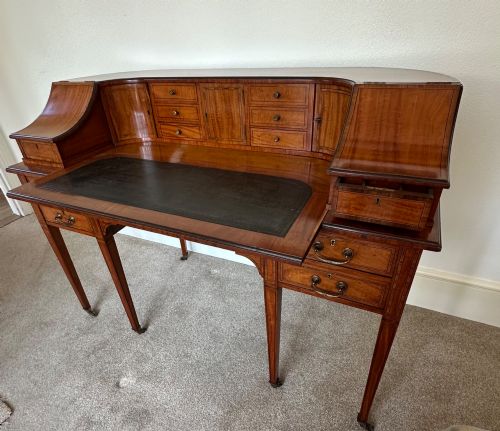
- A distinctive writing table featuring a curved superstructure fitted with drawers and pigeonholes that wrap around the back and sides of the desk. Edwardian makers frequently produced these in satinwood and mahogany.
- Bureau de Dame
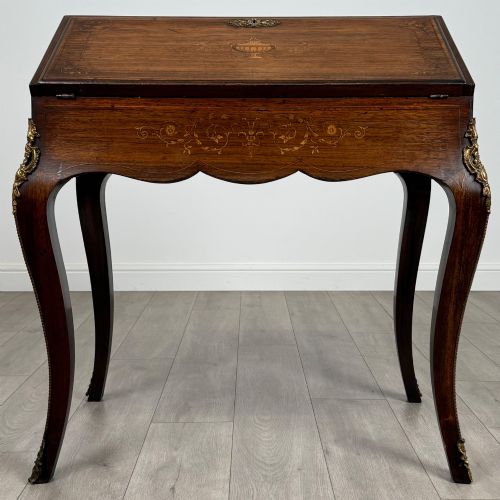
- A feminine sloping-front writing desk, often French in origin, designed for correspondence and light administrative tasks. These pieces frequently incorporate rosewood and kingwood veneers.
- Ormolu
- Gilded bronze mounts and decorative details applied to furniture. It provides metallic contrast against dark rosewood and mahogany surfaces on revival pieces.
Inlaid Ladies Writing Table: Frequently Asked Questions
What is a Carlton house desk?
A Carlton house desk is a specialised writing table featuring a curved, tiered superstructure of small drawers and pigeonholes enclosing the rear of the writing surface. This design offers organised storage for correspondence while maintaining a compact footprint.
Cabinet makers during the Edwardian period revived this eighteenth-century form, frequently utilising satinwood and fine marquetry inlay to create decorative pieces for domestic drawing rooms.
How do I identify an Edwardian desk?
Edwardian desks typically date from 1901 to 1910 and often show influences from the Sheraton Revival style. They tend to feature lighter timbers such as satinwood, subtle stringing, and delicate painted or inlaid floral motifs.
Makers from this era, including Edwards and Roberts, produced refined pieces with fitted stationery interiors and tapered legs ending in brass castors.
Where were ladies writing tables used?
These tables were designed for domestic use in private sitting rooms, bedrooms, or boudoirs where ladies managed household accounts and personal correspondence. Their smaller scale allowed them to sit comfortably against a wall or freestanding in the centre of a room.
The inclusion of fitted interiors and small drawers provided convenient storage for inkwells, stationery, and stamps without requiring a heavy library desk.
What is the difference between a writing table and a bureau?
A writing table provides a flat, open surface for correspondence, sometimes equipped with shallow drawers beneath the top or a small superstructure at the back. A bureau incorporates a sloping fall-front lid that drops down to reveal an enclosed writing surface and internal pigeonholes.
Both forms were produced as ladies writing furniture during the nineteenth and early twentieth centuries, utilising similar inlaid mahogany and rosewood veneers.