
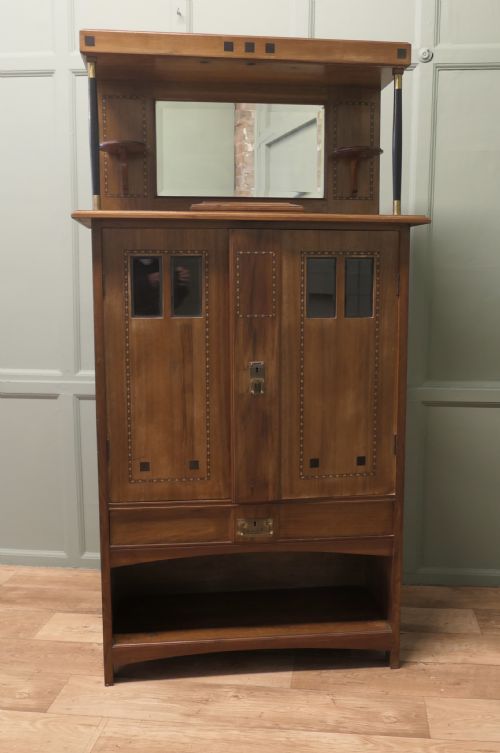
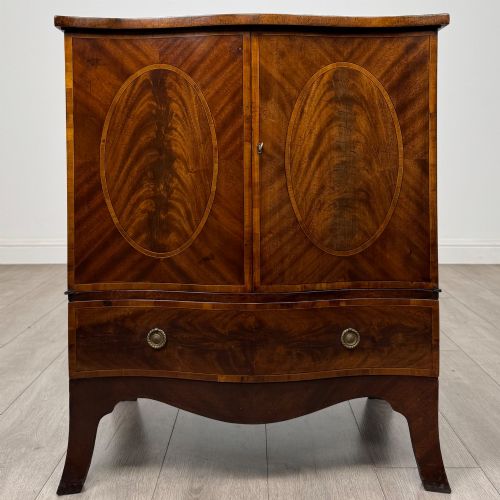
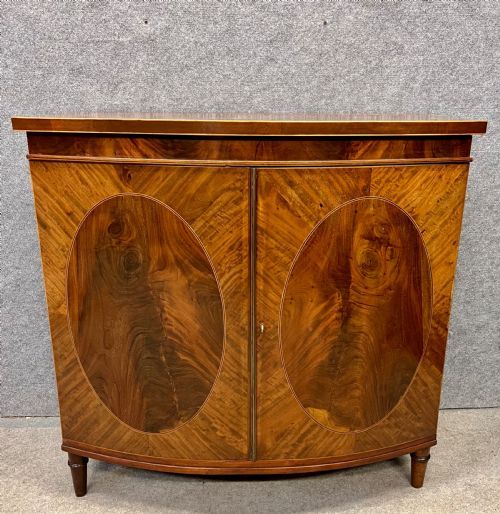
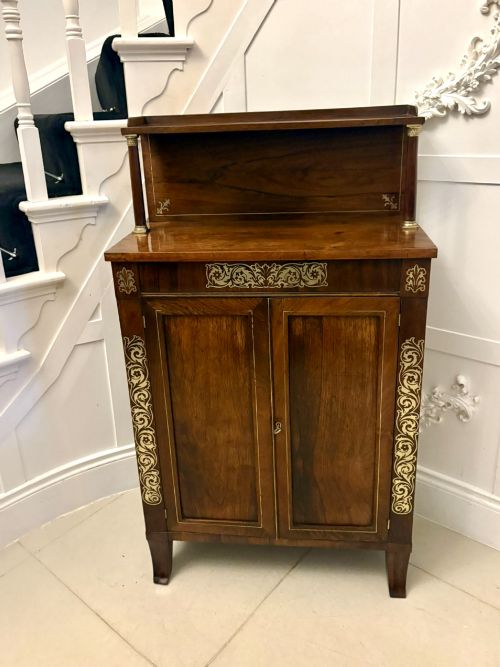
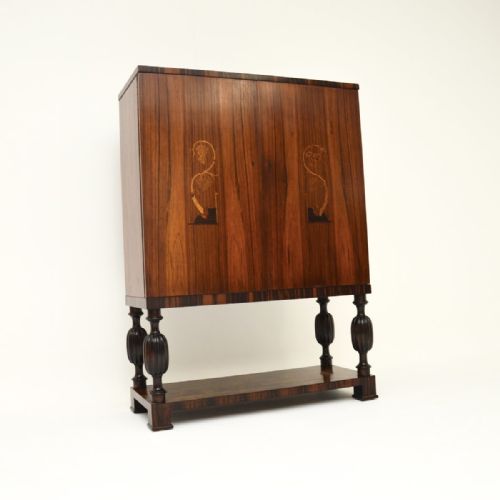
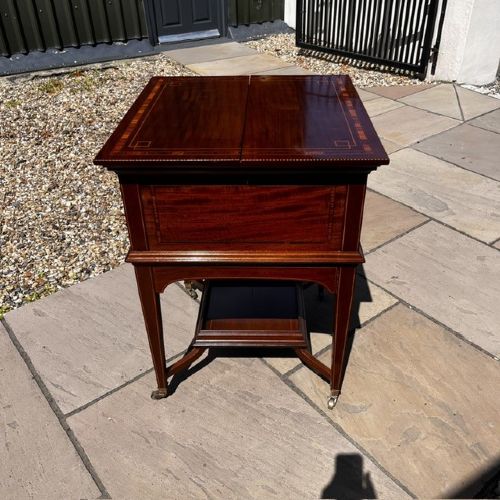
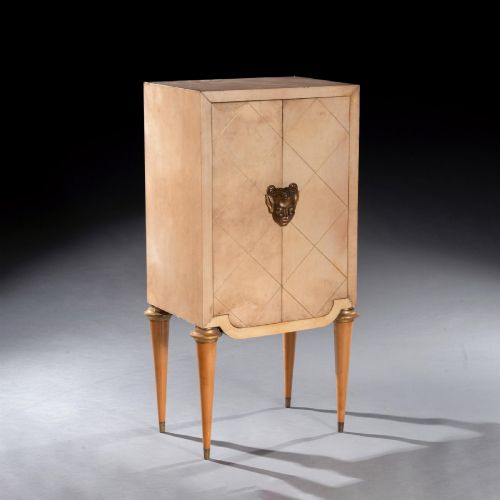
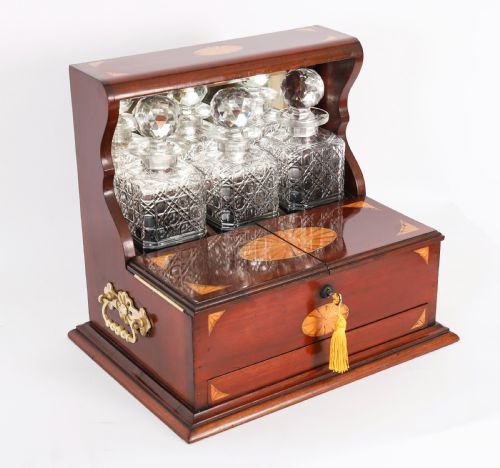



Inlaid Drinks Cabinet
An inlaid drinks cabinet brings together fine cabinetmaking and practical hospitality, offering fitted storage for bottles and glassware across periods from Georgian cellarettes to Art Deco cocktail chests.
Inlaid Drinks Cabinet
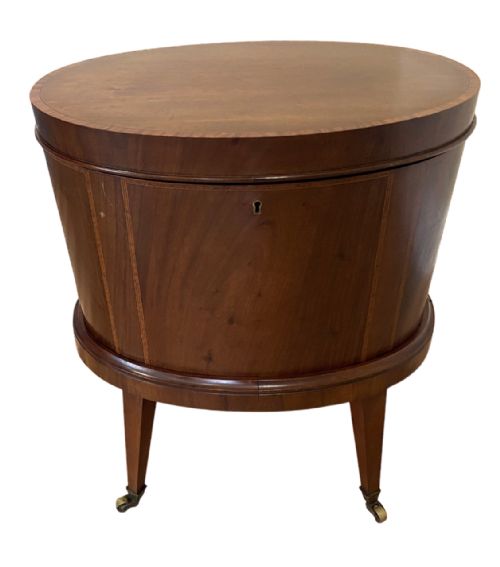
An inlaid drinks cabinet encompasses everything from formal Georgian cellarettes and wine coolers to Edwardian cocktail tables and French marquetry cabinets. Buyers searching for an inlaid drinks cabinet encounter diverse forms designed specifically for the storage and service of wine, spirits and liqueurs.
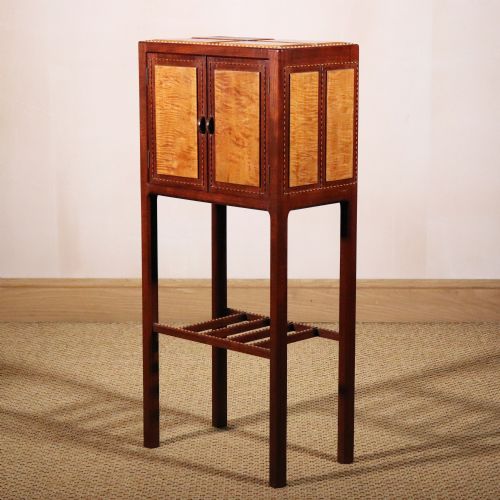
Edwardian and Art Deco examples dominate the selection, often combining mahogany, walnut or rosewood with contrasting satinwood inlay. These pieces range from compact bedside-style cabinets to large fitted sideboards and drop-front cocktail units.
Earlier Georgian and Regency interpretations lean towards architectural cellarettes and wine coolers, whilst continental pieces introduce intricate floral marquetry and exotic veneers. Each variation serves the fundamental purpose of entertaining guests with refined period style.
How they were made
Cabinetmakers constructed the carcase using solid hardwoods such as mahogany, oak or walnut, frequently applying fine veneers of satinwood, rosewood, kingwood and parchment over secondary timbers. The exterior decoration relies heavily on contrasting stringing and pictorial marquetry inlay.
Hardware plays an integral role in construction, incorporating brass handles, locks, hinges and occasionally ormolu mounts to secure fitted interiors. Specialised internal compartments accommodate decanters, glasses and gaming sets securely.
What varies in quality
Quality rests in the precision of the cabinetwork and the crispness of the inlay rather than mere age. Superior examples display seamless veneer matching, tight mitres and robust internal mechanisms that operate smoothly.
The sophistication of the internal fittings distinguishes finer pieces, such as fitted trays, original crystal tantalus sets and clever surprise opening actions. Maker attribution, through labels or distinctive regional construction, further elevates a piece.
Maurice Jallot·Gillows·Whytock & Reid·Epstein
The Inlaid Drinks Cabinet Glossary
- Cellarette
- A lockable container or cabinet designed to hold bottles of wine and spirits near the dining table. They frequently feature lead linings for cooling bottles with ice.
- Marquetry
- The art of applying pieces of veneer to a structure to form decorative patterns and pictorial designs. Craftsmen use various tinted woods to achieve tonal depth.
- Tantalus
- A locked wooden frame holding decanters that displays the contents whilst preventing unauthorized access to the liquor. A small security bar locks the stoppers in place.
- Satinwood
- A hard, durable timber with a characteristic golden-yellow sheen used extensively for contrasting inlay and banding on mahogany furniture.
- Serpentine
- A furniture front or top shaped with a convex centre flanked by concave curves. This undulating outline requires skilled woodworking to execute cleanly.
Inlaid Drinks Cabinet: Frequently Asked Questions
How do I spot an original cocktail cabinet?
Examine the interior layout for purpose-built glass racks, mirrored back panels, pull-out mixing slides and dedicated bottle storage. Original pieces from the Edwardian and Art Deco periods maintain fitted compartments designed specifically for period glassware.
Check the timber and construction methods underneath and behind the cabinet. Period pieces utilise traditional joinery and period-appropriate secondary woods consistent with their stated decade.
Where were cellarettes kept?
Georgian and Regency cellarettes stood directly beneath the sideboard or beside the dining table during formal meals. They provided servants with immediate access to wine without requiring trips to the cellar.
As dining habits evolved, these functional wine coolers developed into freestanding side cabinets and dedicated cocktail units positioned in drawing rooms and reception spaces.
How should I care for inlaid wood?
Protect antique veneers and inlay by keeping cabinets away from direct sunlight and steady sources of artificial heat. Excessive warmth causes timber to shrink and delicate stringing to lift from the surface.
Apply a microcrystalline wax sparingly to maintain the polish and protect the timber pores. Avoid liquid polishes that can seep beneath loose veneer edges.