
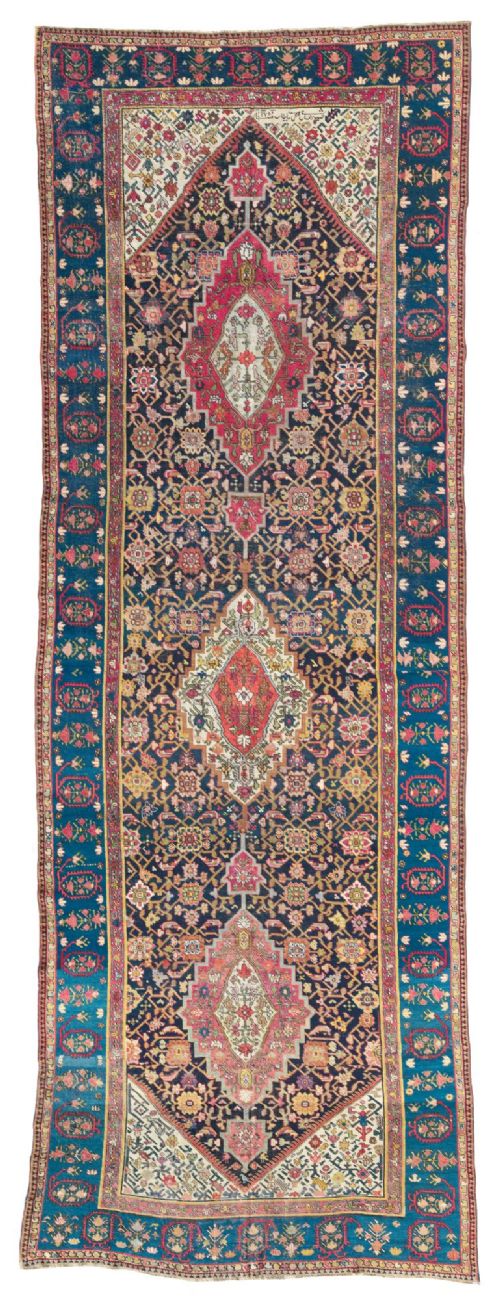
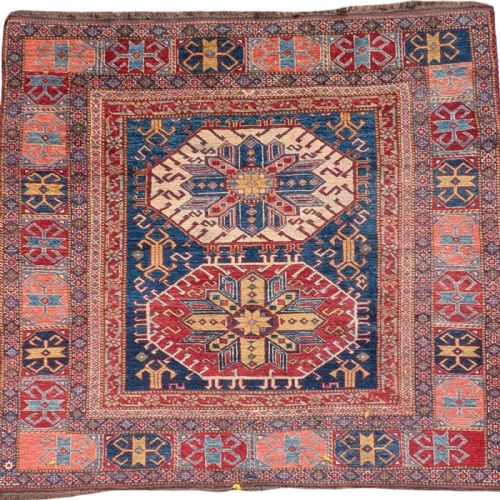
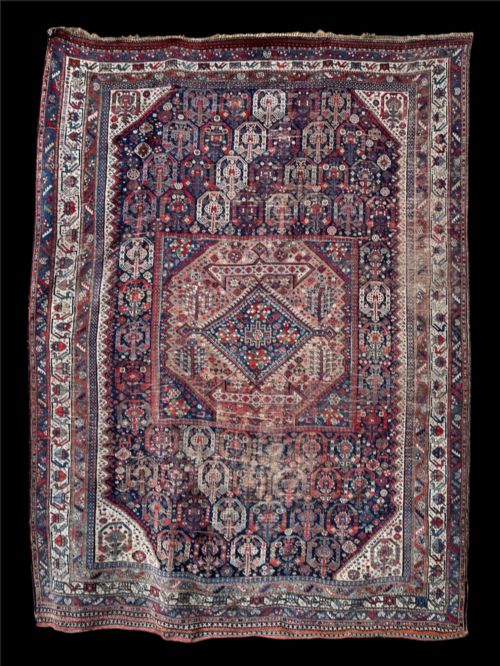
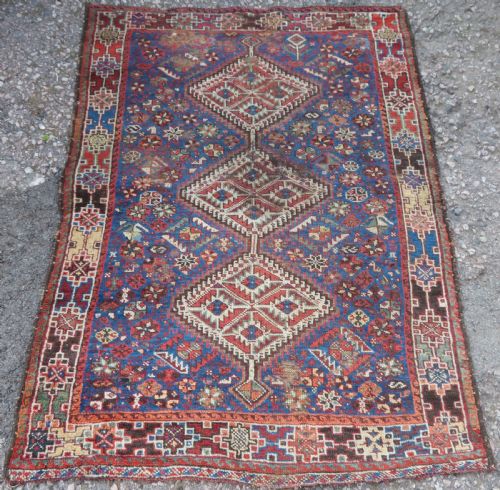


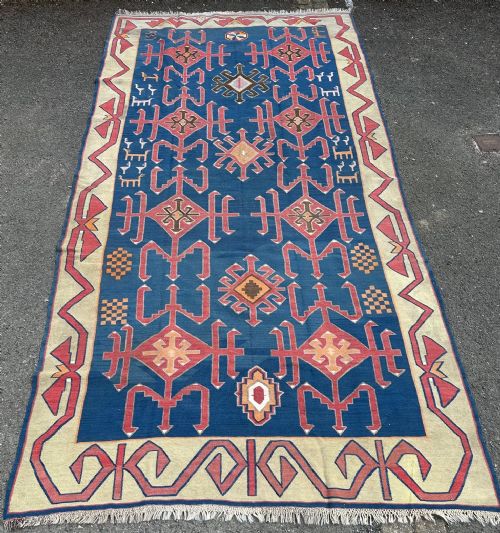
Indigo Tribal Carpet
An indigo tribal carpet brings deep natural dye tones and village craftsmanship into a room.
Indigo Tribal Carpet
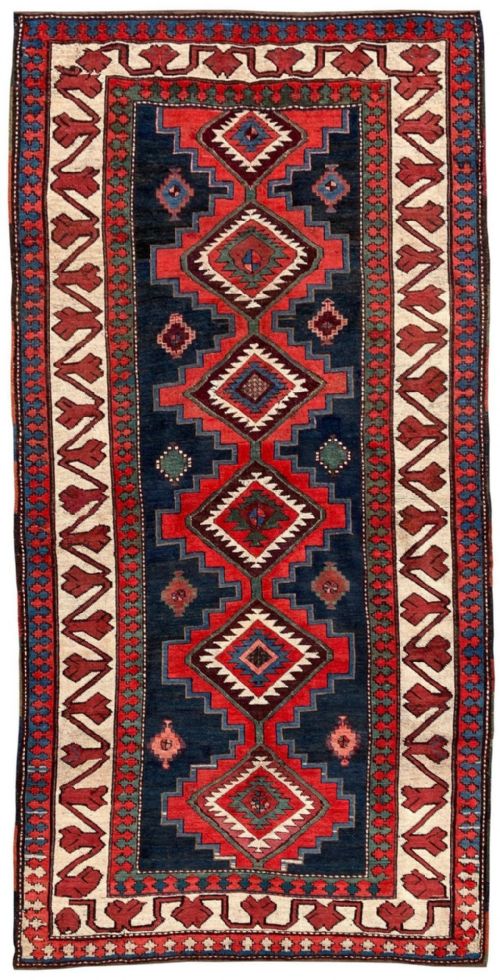
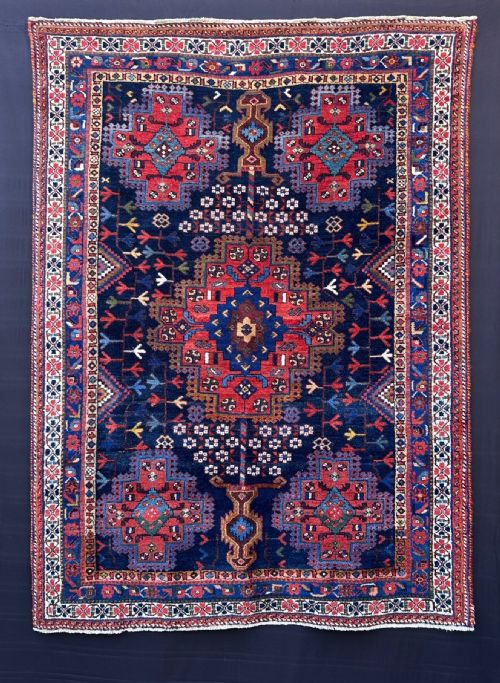
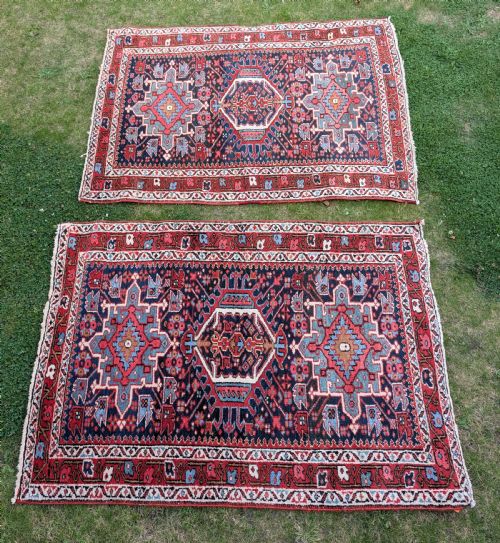
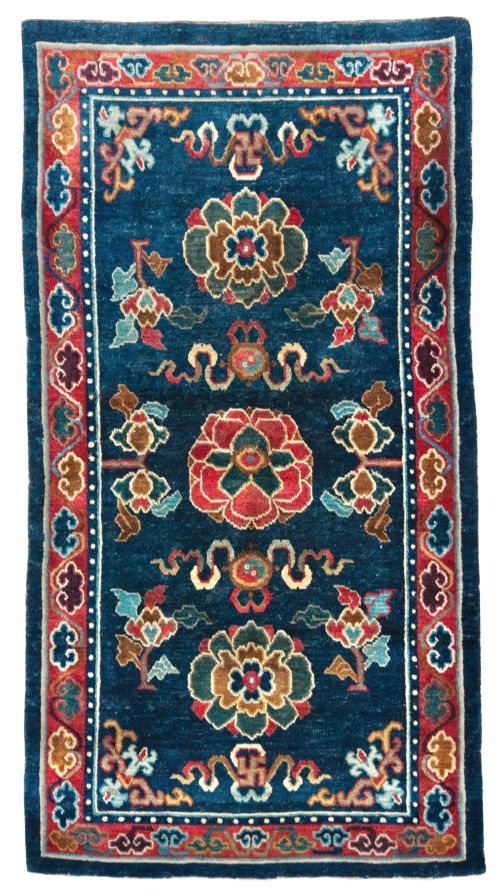
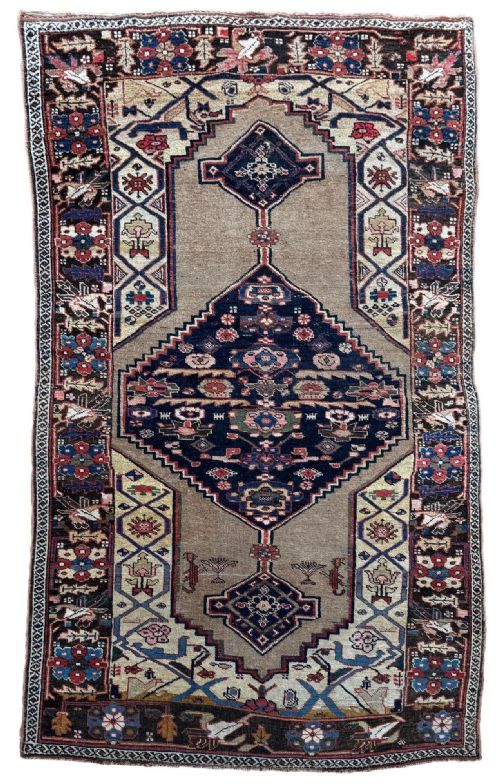
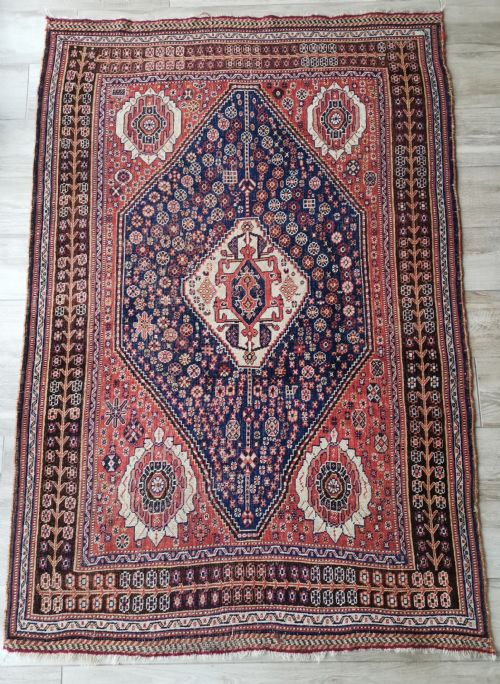
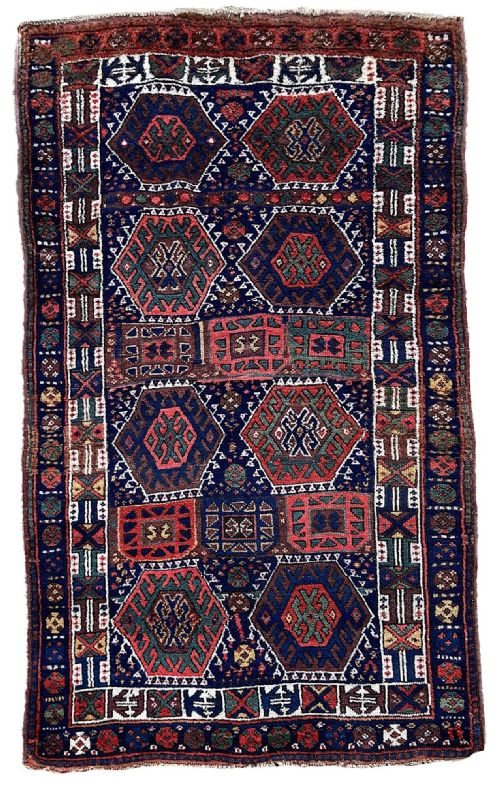
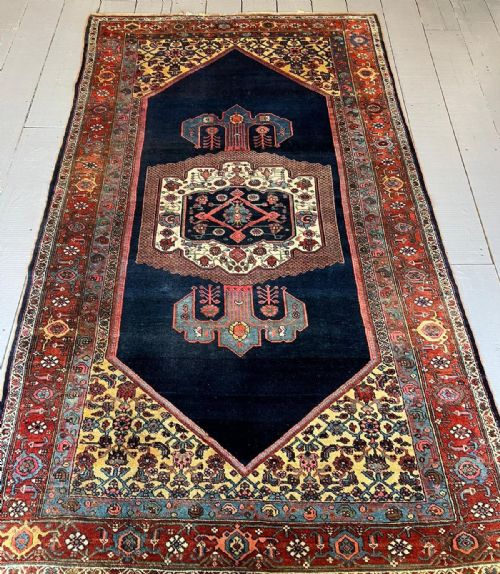
When you search for an indigo tribal carpet, you are looking at hand-woven textiles produced by nomadic and village groups across the Caucasus, Persia, Anatolia, and Central Asia. These pieces range from small Baluch prayer rugs and Yomut torbas to large Kurdish kelleh carpets and Caucasian runners.
The versions you are most likely to meet on this page date from the nineteenth and early twentieth centuries, spanning periods such as 1880, 1900, and 1910. They encompass specific regional styles including Kazak, Afshar, Khamseh, Qashqai, and Karaja.
Many of these floor coverings function as practical utility items from tribal confederacies, featuring geometric medallions, animal motifs, and field patterns woven in wool and cotton. Each specimen carries the distinct design vocabulary of its producing tribe or region.
How they were made
Weavers constructed these textiles using hand-spun wool and cotton foundations, employing wool pile knots or flat-weave techniques depending on whether the piece is a pile rug or a kelim. Natural dyes provided the colour palette, yielding rich indigo blues alongside contrasting earth tones.
The production relied on traditional upright looms set up in tents or village homes, where weavers worked from memory and tribal tradition rather than written patterns. This method resulted in minor irregularities in alignment and sizing that evidence individual handwork.
Some Kazak rugs turn up delightfully crooked, proving the weaver chased a straight line with cheerful abandon.
What varies in quality
The standard of a piece depends on the depth and saturation of the natural dyes, particularly the richness of the indigo ground and how well the secondary colours have aged. Better examples display harmonious colour balance across the field and border without muddy transitions.
Knot density and the crispness of the geometric drawing also distinguish superior weaving. Pieces with precise execution in motifs like Lezghi stars or kepse guls reflect greater mastery by the weaver.
The Indigo Tribal Carpet Glossary
- Kelim
- A flat-woven carpet or rug made without a pile, produced by tightly interweaving warp and weft threads. These textiles are lighter than knotted pile carpets and often feature sharp geometric designs.
- Torba
- A small tribal bag face used by Turkmen groups for storage inside a yurt. They are frequently collected as small format wall hangings or decorative mats.
- Sofreh
- A woven spread or cloth used during meals or dough preparation by nomadic peoples. They often display minimalist tribal iconography related to sustenance.
- Kelleh
- A large format rectangular carpet, longer than it is wide, traditionally made for specific architectural spaces in Persian houses. They require substantial floor space to display properly.
- Warp
- The vertical foundation threads stretched lengthwise on the loom before weaving begins. The fringe of a finished rug is formed by the exposed ends of these threads.
Indigo Tribal Carpet: Frequently Asked Questions
How do I clean an old carpet?
Surface dust should be removed gently using a soft brush or gentle suction without a beater bar. Professional textile conservators should handle wet cleaning to protect natural dyes.
Water exposure can cause fugitive dyes to bleed or weaken old cotton and wool foundations. Avoid chemical detergents and harsh spot treatments entirely.
Can I place these on heated floors?
Underfloor heating can dry out the natural lanolin in antique wool over extended periods. Placing a breathable, natural underlay between the floor and the textile helps mitigate heat transfer.
Monitoring the temperature ensures the antique fibres do not become brittle. Periodically lifting the textile allows air circulation underneath.
How do I identify tribal designs?
Tribal designs rely on repeating geometric motifs, stylized animals, and hooked medallions associated with specific weaving groups like the Kazak, Afshar, or Yomut. Field colours and border arrangements offer further clues to geographic origin.
Local weaving traditions passed down through generations created consistent design grammars. Reference literature helps match specific guls and border patterns to particular tribes.