



Turkmen Style Rug
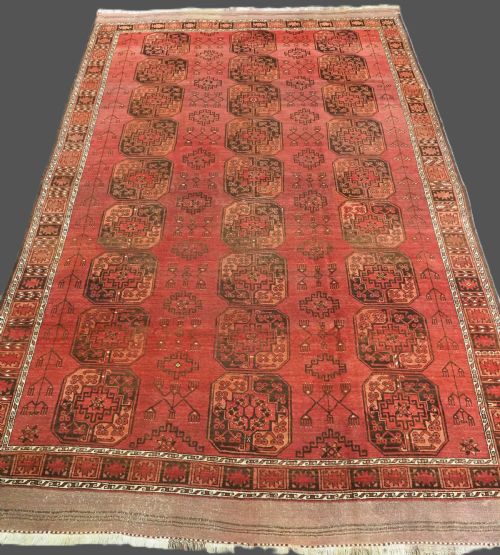
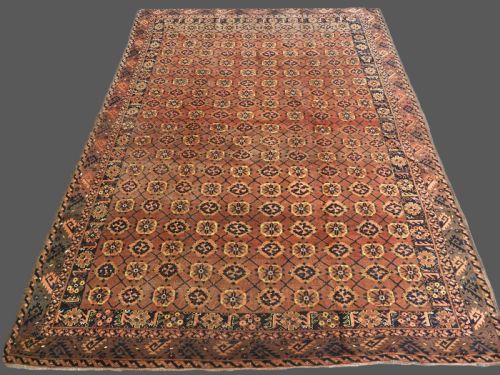
A turkmen style rug brings deep red warmth and geometric tribal character into a room.
Turkmen Style Rug
A turkmen style rug draws on Central Asian tribal traditions, most frequently appearing as main carpets, village rugs, and smaller dowry pieces or torbas. These textiles span from the late nineteenth century into the early twentieth century, reflecting classic weaving patterns from regions associated with Ersari, Tekke, Yomut, and Saryk makers.
Buyers seeking a turkmen style rug will commonly encounter large country house size carpets alongside smaller formats suited for specific floor spaces. The visual language relies heavily on repeating guls, turreted motifs, and strong tribal geometries passed down through generations.
Materials and construction methods
The construction of a turkmen style rug typically relies on wool, hand-spun wool, and sometimes supportive foundations incorporating goat hair or horsehair alongside cotton. Natural dyes provide the characteristic warm red colour palette that defines these antique textiles.
Weavers utilised traditional knotting techniques appropriate for nomadic and village production, ensuring durable textiles designed to withstand daily use. The interplay of wool pile and sturdy foundation fibres accounts for the longevity of these rugs.
Turkmen Style Rug Retail Price Guide 2026
Typical asking prices for turkmen style rug among the pieces listed under this phrase on Sellingantiques today, from the lower quarter to the upper quarter. They describe what is for sale here now, not the wider market.
Listings for a turkmen style rug span production dates from 1880 to 1930, utilising wool, hand-spun wool, cotton, goat hair, and natural dyes.
Assessing quality in tribal weaving
Quality in a turkmen style rug rests on the handling of natural dyes, the precision of the tribal design, and the integrity of the foundation materials. Finer examples display a remarkable depth of red colour and crispness in the repeat guls.
The condition of the wool pile and the structural soundness of the sides and ends also shape the standing of an individual rug. Examples retaining their original borders and structural integrity command greater attention from collectors.
The Turkmen Style Rug Glossary
- Gul
- A repeating medallion or floral motif characteristic of Central Asian and tribal weaving. These forms serve as the primary visual building blocks across the field.
- Torba
- A small storage bag or hanging piece produced by tribal weavers. These items often mirror the design vocabulary found on larger carpets.
- Main carpet
- A large floor covering traditionally woven for domestic use within the tribe. They occupy the upper scale of dimensions for these textiles.
- Foundation
- The underlying structure of warp and weft threads that supports the wool pile. Goat hair and horsehair sometimes strengthen these structural areas.
- Natural dye
- Colour derived from plant or insect sources rather than synthetic chemicals. These dyes yield the rich red hues seen in older examples.
Turkmen Style Rug: Frequently Asked Questions
Where were these rugs made?
These textiles originate from Central Asian and Afghan tribal regions, where nomadic and village weavers produced them for daily use and ceremonial purposes.
The specific designs often link back to tribal groups such as the Ersari, Tekke, Yomut, and Saryk.
How do I style a tribal rug?
A turkmen style rug anchors a room with its rich red colour and strong geometric patterns, working well on both wooden floors and neutral carpets.
Their varied sizes allow them to function as main floor coverings in living spaces or as accent pieces in studies and bedrooms.
What is a wedding dowry rug?
A wedding dowry rug is a specialised textile woven as part of a bride's traditional possessions, often carrying specific symbolic designs and finer workmanship.
These pieces were treasured family items rather than standard commercial floor coverings.
How do I date these carpets?
Dating relies on examining the wool quality, the composition of the natural dyes, and the specific tribal design characteristics.
Most pieces from this tradition date from the late nineteenth century through the early decades of the twentieth century.