
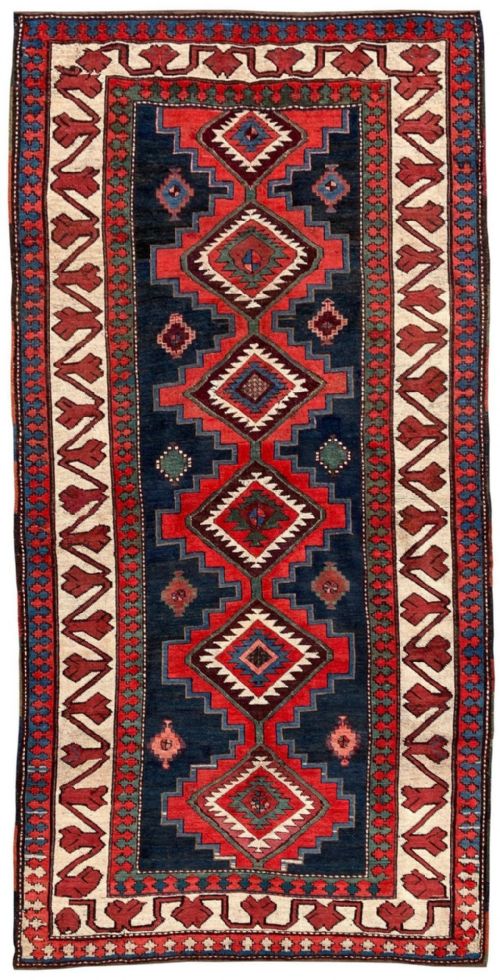
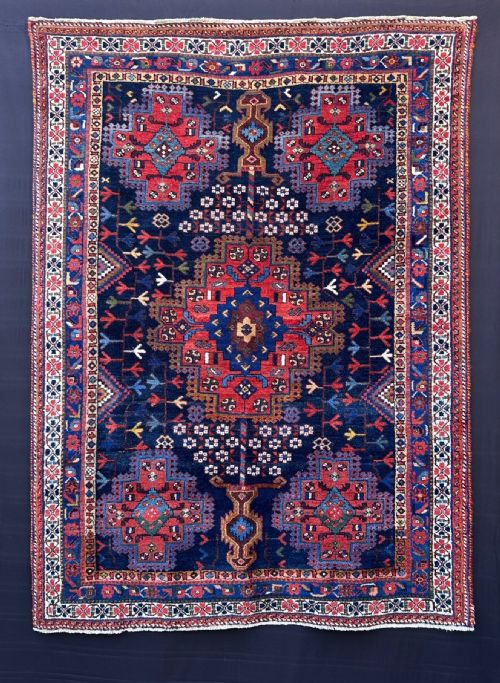
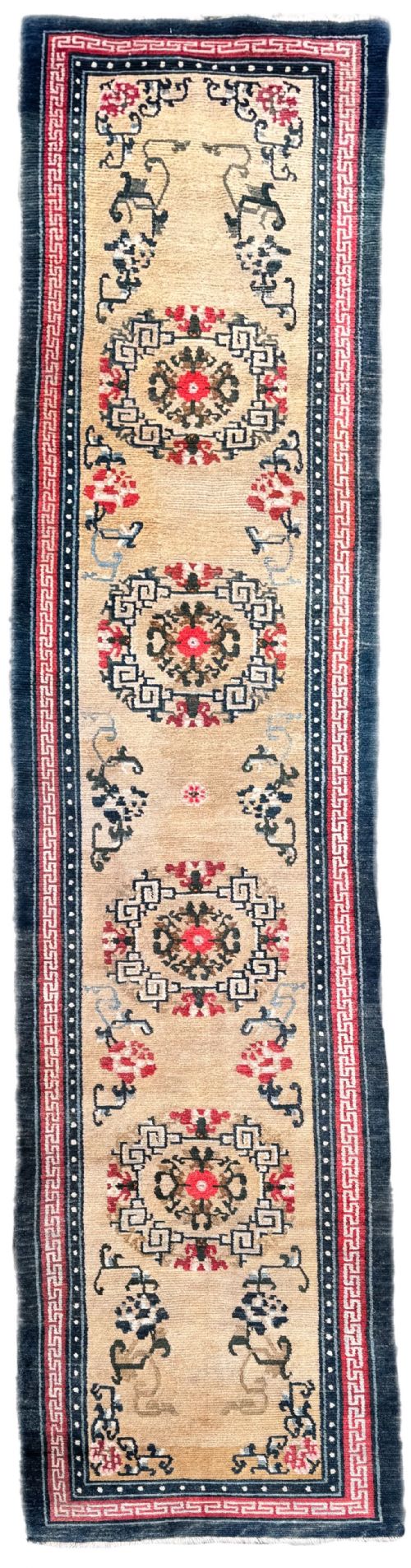
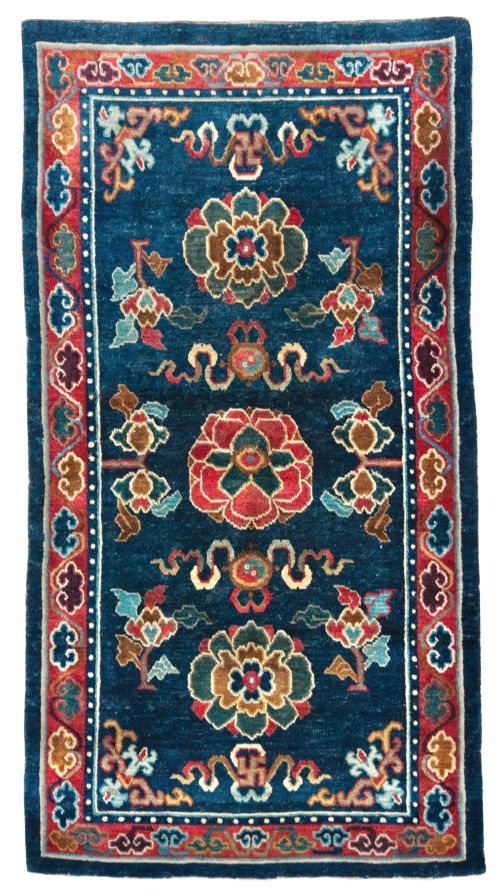
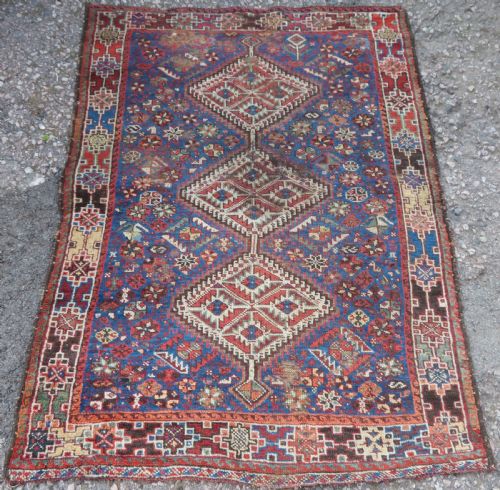
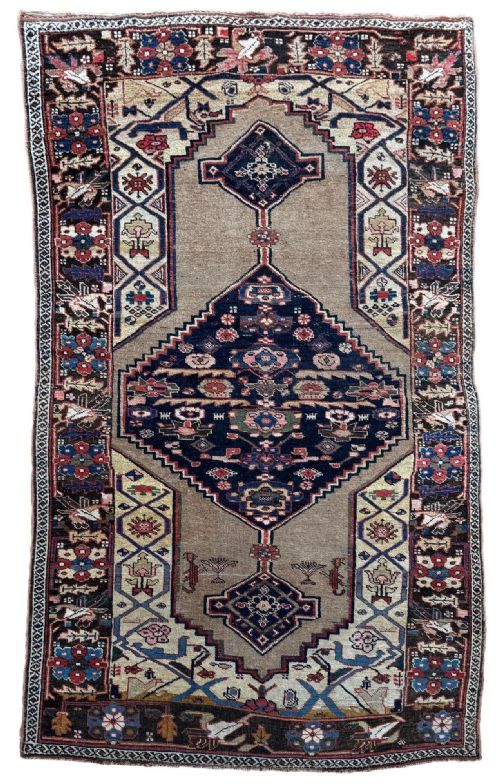
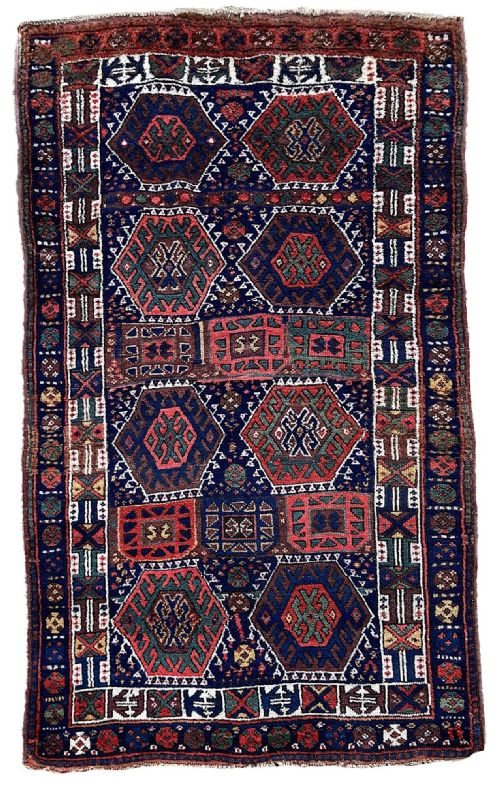

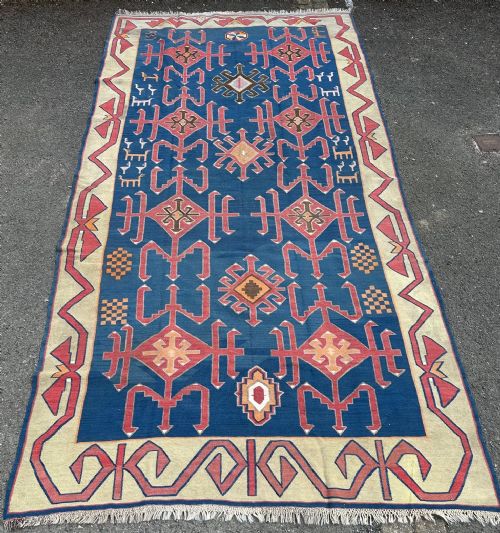
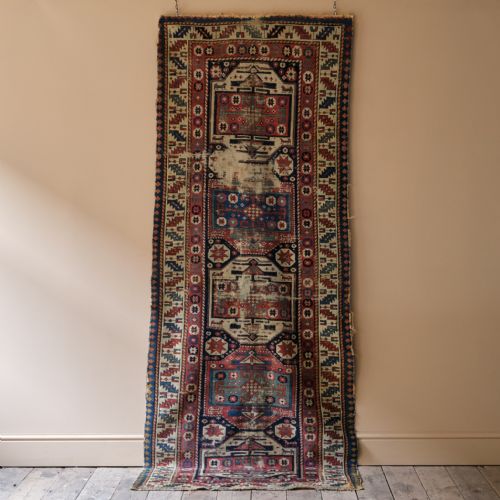

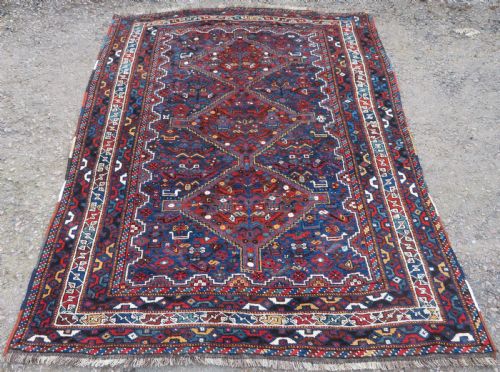
Indigo Blue Oriental Carpet
An indigo blue oriental carpet brings deep saturated ground colour and geometric or tribal iconography into a room.
Indigo Blue Oriental Carpet
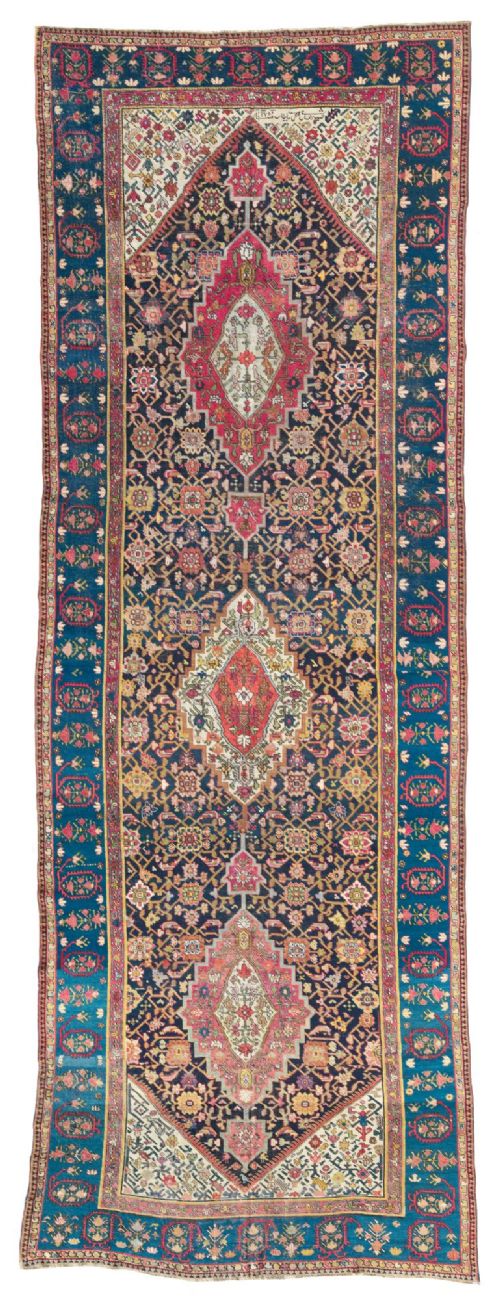
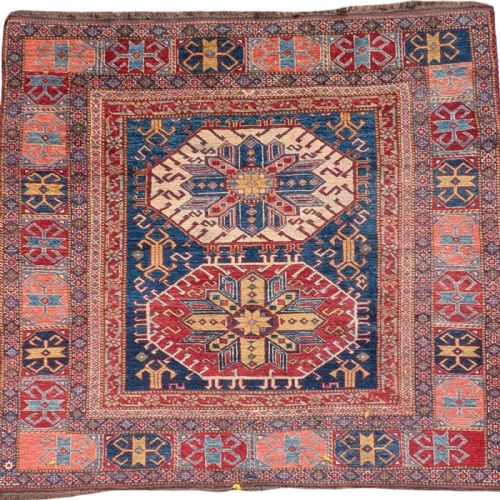
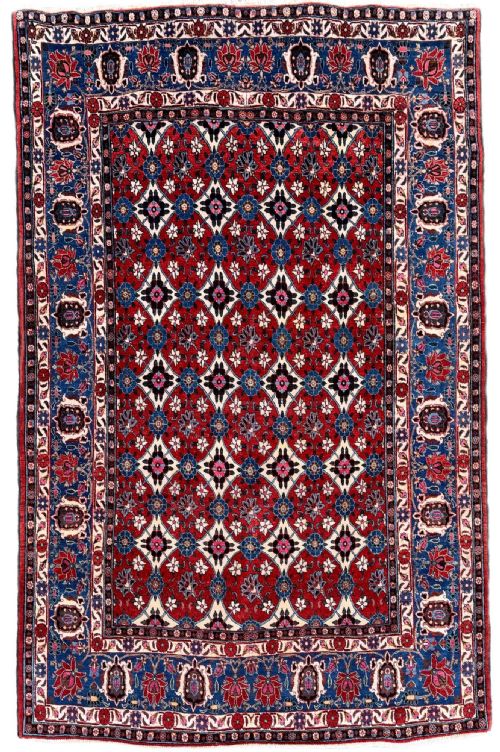
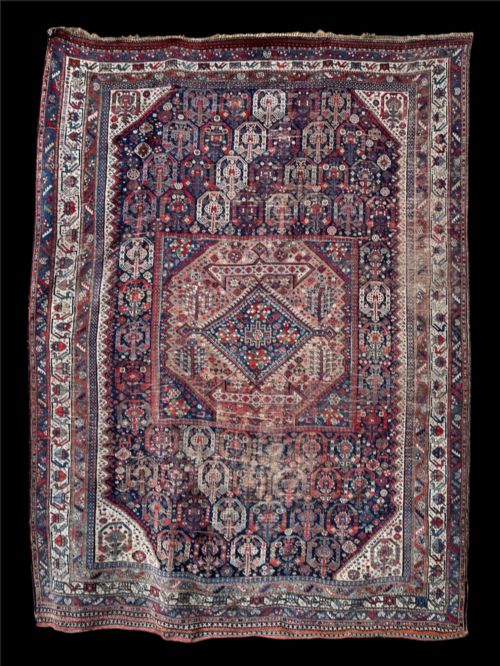
When searching for an indigo blue oriental carpet, you encounter woven textiles originating from Persian, Caucasian, Kurdish, and Tibetan weaving traditions. These pieces span runner formats, area rugs, and large carpets produced across the nineteenth and early twentieth centuries.
The version you are most likely to meet on this page is a tribal or village weaving featuring saturated blue grounds, geometric medallions, or repeating motifs. Regional origins range from Caucasian Kazak and Talish pieces to Persian Afshar, Khamseh, and Kurdish works.
Assessing quality in antique oriental carpets
Quality rests upon the saturation and depth of the natural dye work, particularly the richness of the indigo ground. Superior pieces display complex iconography, precise knot density, and well-balanced tribal designs.
Condition and structural integrity differentiate examples across the range. Even wear across the wool pile and intact original selvedges indicate careful historic preservation.
Geographic origins represented on this page include the Caucasus, Persia, Tibet, and Armenia.
The Indigo Blue Oriental Carpet Glossary
- Indigo
- A natural blue dye extracted from plants, prized for creating deep, light-resistant shades on wool and cotton.
- Medallion
- A central ornamental design motif placed in the field of a carpet, frequently seen in Persian and Caucasian weaving.
- Runner
- A long, narrow carpet format designed for hallways, staircases, or narrow spaces.
- Kilim
- A flat-woven textile produced without a pile, utilising warp and weft interlacings to form geometric patterns.
- Khen
- A traditional pile rug format originating from Tibetan weaving traditions.
Indigo Blue Oriental Carpet: Frequently Asked Questions
What is an indigo blue oriental carpet?
These textiles are hand-woven floor coverings featuring deep blue natural dye grounds, produced by weavers across Persia, the Caucasus, and Tibet during the nineteenth and early twentieth centuries.
They encompass various regional forms, including village rugs, long runners, and tribal main carpets decorated with geometric medallions and symbolic motifs.
How were these antique carpets used?
Historic households utilised these heavy wool textiles primarily as floor coverings in living spaces, reception rooms, and long corridors.
Smaller formats functioned as seating mats, prayer rugs, or hearth rugs, providing both insulation and decorative colour within traditional interiors.
How do I live with an antique carpet?
Place a quality breathable underlay beneath the textile to prevent sliding and cushion the wool pile against heavy foot traffic.
Position the piece away from direct, prolonged sunlight to protect the natural indigo dyes from fading over time.
How do I tell regional carpet types apart?
Examine the specific structural characteristics, edge finishes, and secondary colours alongside the primary medallion design. Caucasian examples often show sharp geometric stars, while Persian tribal pieces feature boteh motifs or intricate field repeats.
Pay attention to the materials used in the foundation, as Kurdish and Baluch items frequently incorporate distinct goat hair or wool warps.