
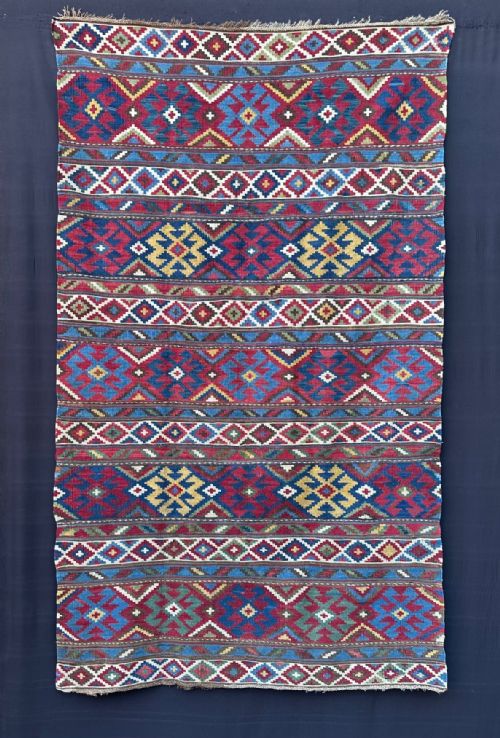


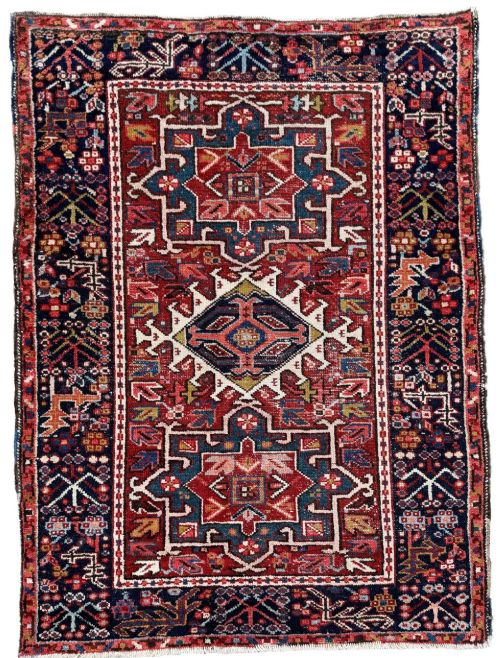
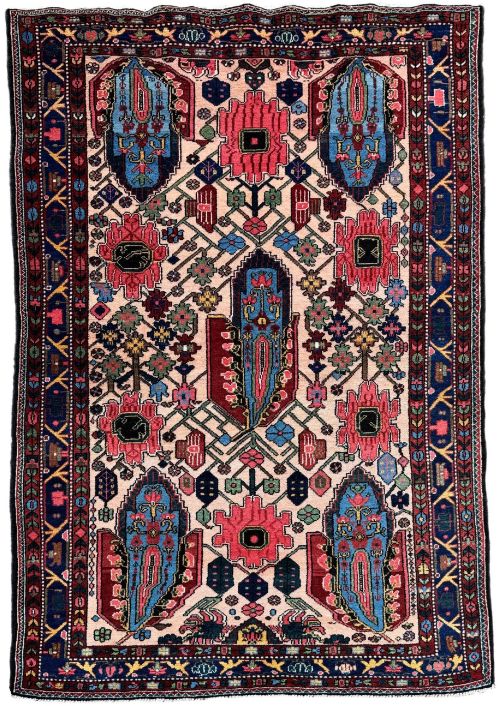
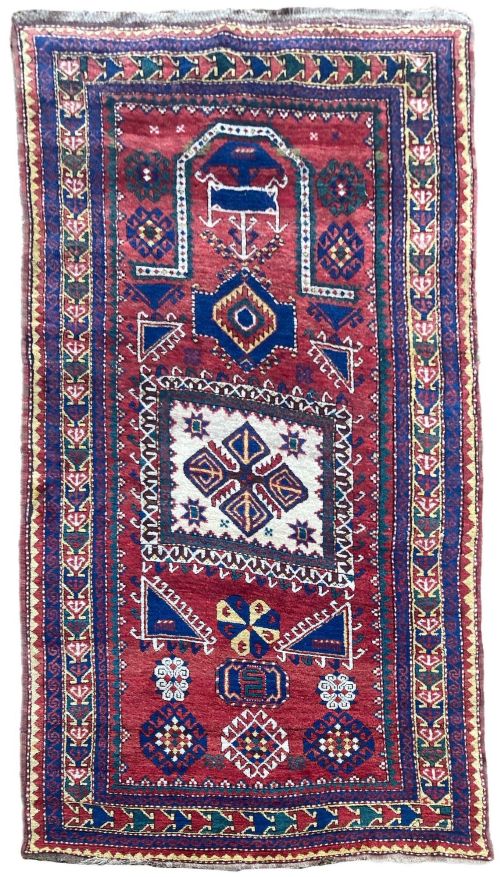
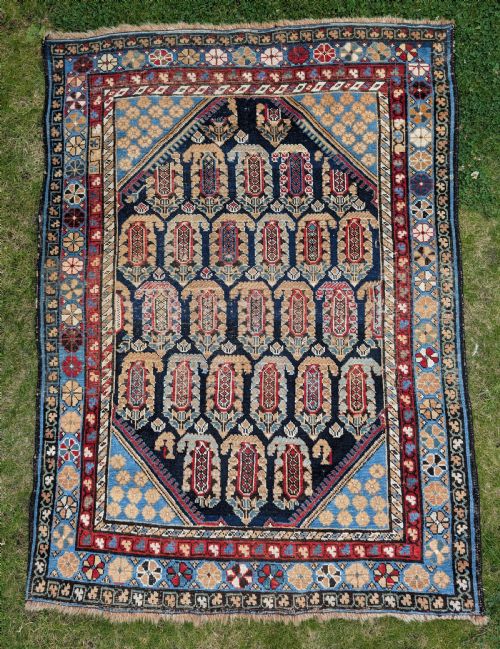
Antique Blue Area Rug
An antique blue area rug brings centuries of woven warmth and dye nuance into a room, offering durability alongside regional storytelling.
Antique Blue Area Rug
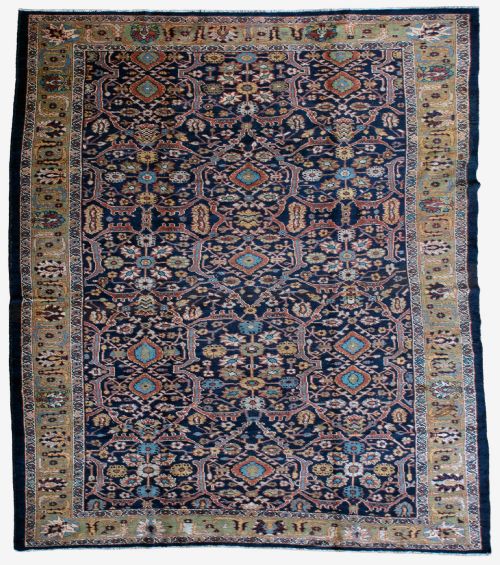
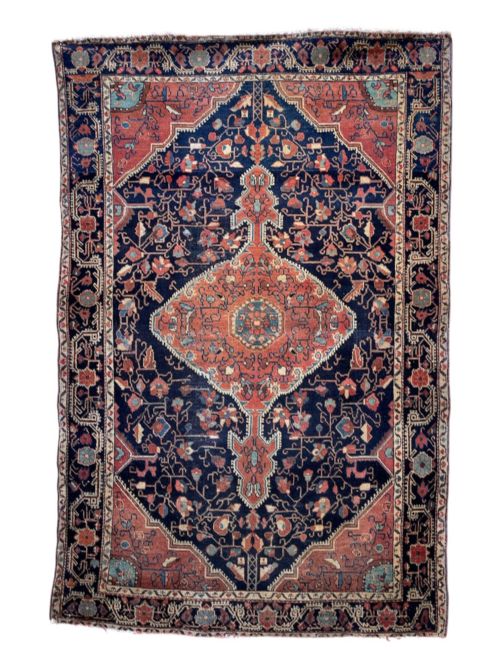
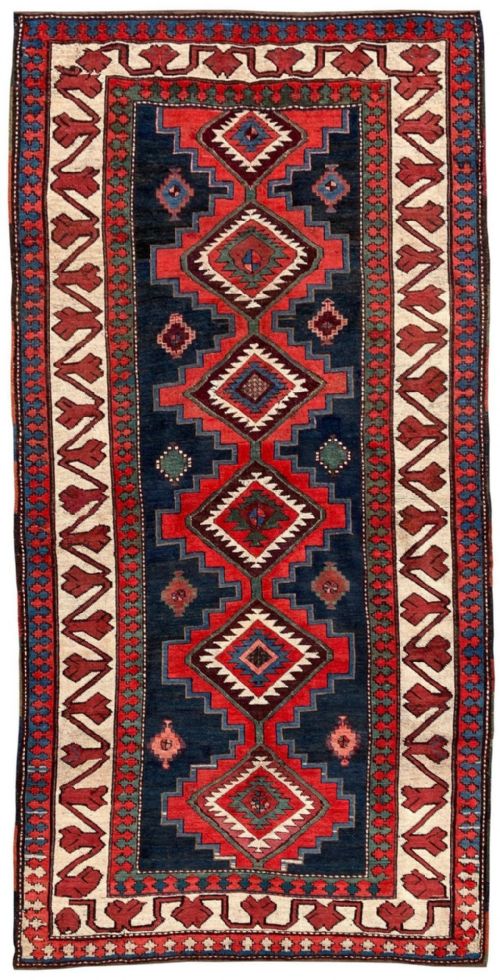
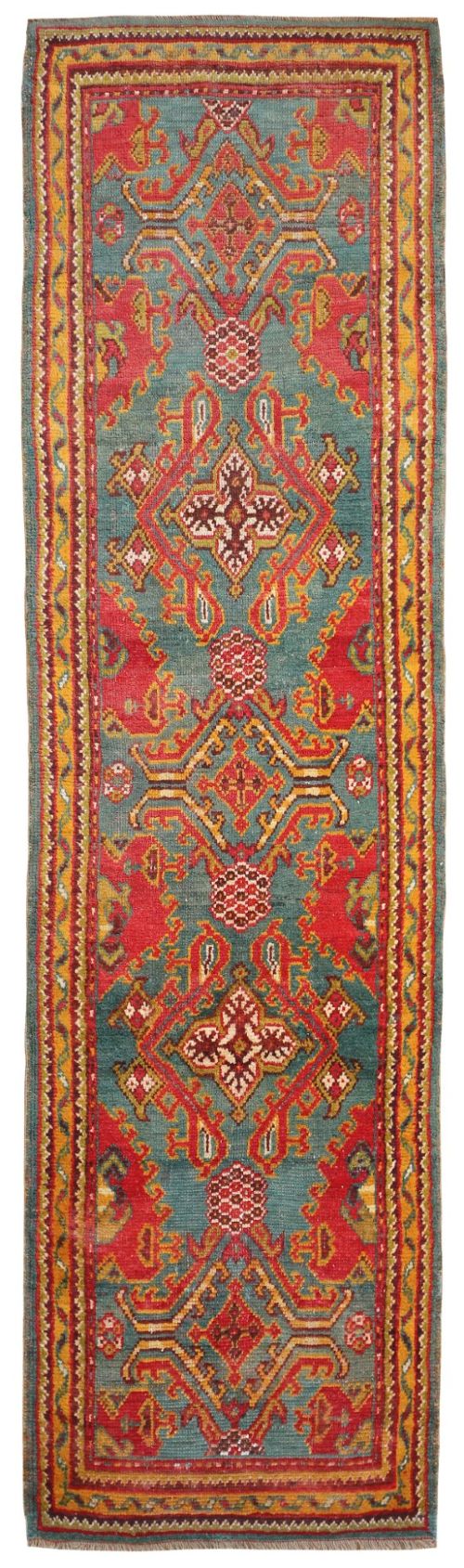
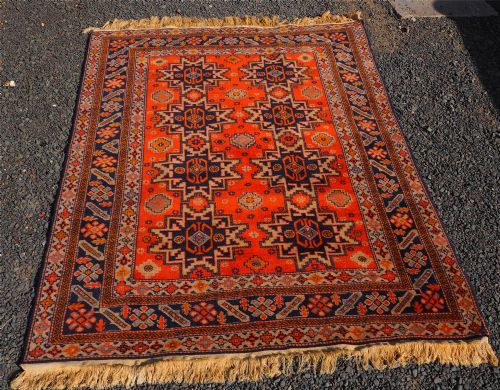
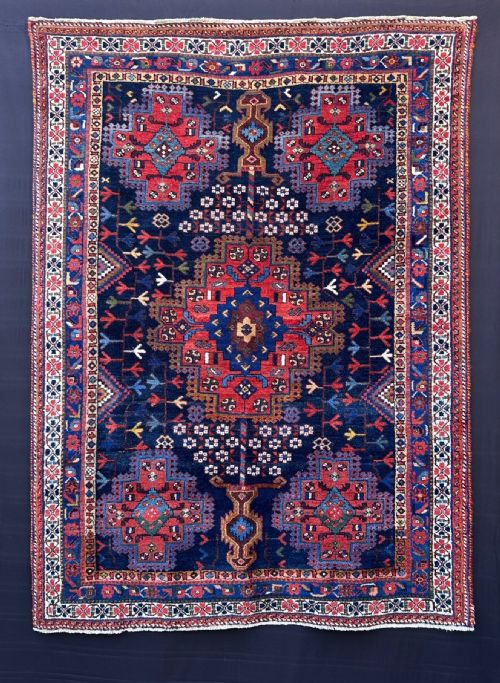
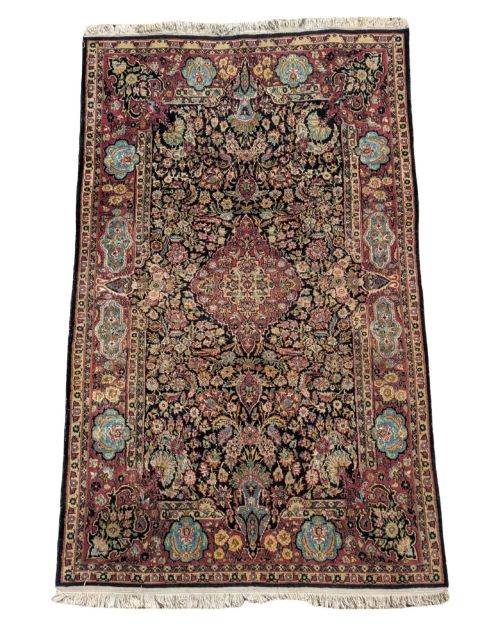
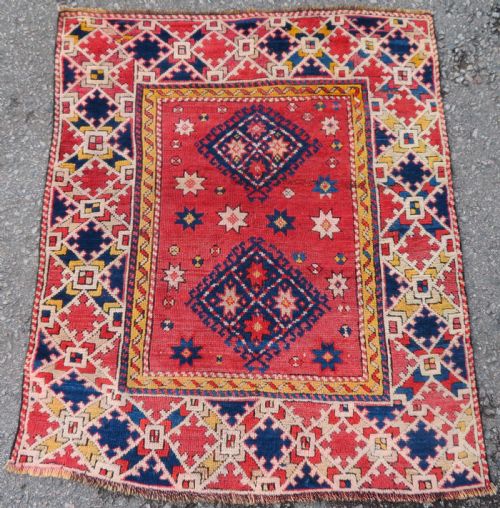
An antique blue area rug encompasses woven floor coverings originating primarily from Persian, Caucasian, and Anatolian traditions, spanning the nineteenth and twentieth centuries. These pieces arrive in formats ranging from small hearth sized examples and prayer rugs to room sized Heriz and Mahal carpets.
Buyers encountering this selection will frequently find Persian and Caucasian regional pieces, including Kazak, Bakhtiar, and Khamseh village weaves. Stylistic expressions lean heavily towards geometric medallions, tribal motifs, and traditional floral layouts executed in various shades of blue.
Origins stretch across specific weaving centres and nomadic confederacies, such as Shirvan, Heriz, and Afshar, each imparting distinct structural traits. Floor coverings in this category function both as practical foot coverings and as historical textile art.
How they were made
Construction relies primarily on wool, cotton, and occasional silk highlights, manipulated through hand-knotted and hand-woven techniques. Hand-spun wool provides the foundation for pile density, whilst cotton often serves for warps and wefts in larger workshop carpets.
Natural dyes dictate the chromatic depth, producing complex variations across the blue spectrum from indigo tones to softer mellow hues. Artisans utilised regional dye stuffs to achieve durable colour saturation that ages gracefully with exposure and wear.
Certain smaller formats are known as hearth sized rugs, designed originally to sit comfortably in front of a coal or wood fire.
What varies in quality
Knot density and structural tightness dictate the fineness of the weave, separating village utilitarian items from sophisticated workshop productions. Higher grade examples demonstrate precise alignment in geometric medallions and consistent pile height across the field.
The complexity and stability of natural dyes influence visual longevity, with superior specimens retaining rich chromatic contrasts. Material selection also plays a part, where fine hand-spun wool or added silk highlights elevate the tactile experience of the piece.
The Antique Blue Area Rug Glossary
- Warp
- The vertical threads stretched parallel on a loom that form the structural skeleton of the rug.
- Weft
- The horizontal threads passed across the warp threads to secure the knots in place.
- Pile
- The vertical cut or loop of yarn that creates the tactile surface and soft upper layer of a woven carpet.
- Medallion
- A central ornamental design motif positioned in the middle of the field.
- Prayer rug
- A small format textile traditionally featuring a mihrab or arch design used for private devotion.
Antique Blue Area Rug: Frequently Asked Questions
How do I identify a regional style?
Regional identification relies on observing specific structural traits, palette choices, and motif arrangements unique to weaving areas like Heriz or Kazak. Examining the border systems and corner designs often reveals the provenance.
Village and nomadic pieces tend to display bolder geometric abstraction, whereas urban workshop carpets show greater curvilinear precision.
What materials are typical for these rugs?
Most examples utilise wool for the main pile and foundation, sometimes paired with cotton warps for added dimensional stability. Finer or highlights-driven pieces may incorporate silk.
Natural dyes provide the characteristic colour palette found across nineteenth and early twentieth century examples.
How should I care for an antique rug?
Gentle regular vacuuming without a rotating power brush helps remove grit that can damage the wool fibres over time. Professional cleaning tailored for antique textiles ensures safety.
Keeping the piece out of direct, harsh sunlight prevents premature fading of natural indigo and associated blue tones.
Are these rugs suitable for high traffic areas?
Sturdy wool construction and tight hand-knotting make many traditional room sized carpets resilient under moderate foot traffic. Thinner tribal runners or delicate silk highlight pieces benefit from placement in quieter zones.
A quality underlay provides crucial cushioning and stops slipping on hard floors.