






Vintage Armenian Carpet
A vintage Armenian carpet brings geometric strength and rich regional symbolism into a room, offering enduring warmth underfoot.
Vintage Armenian Carpet
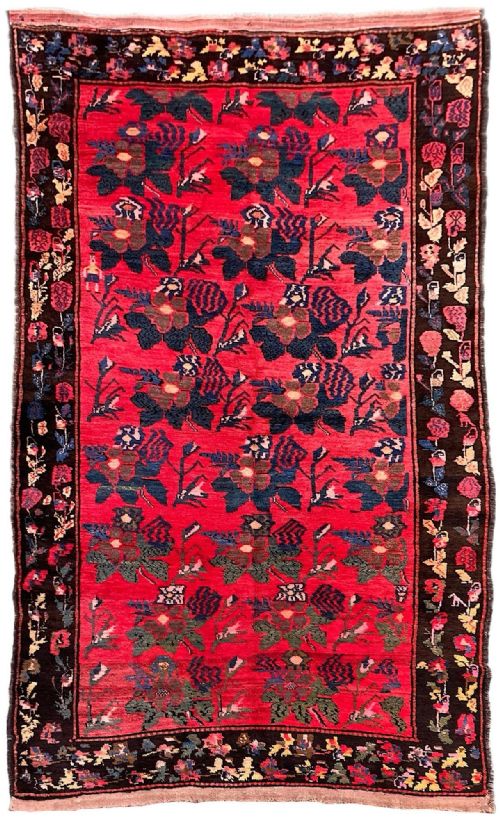
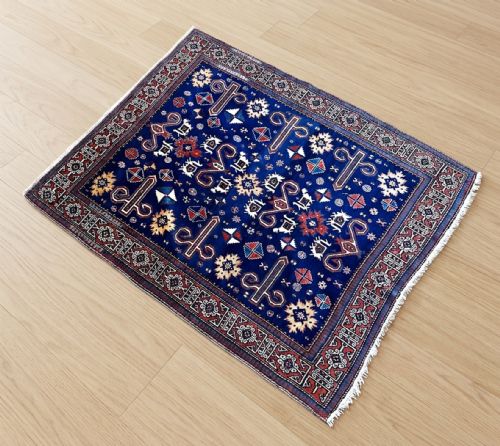
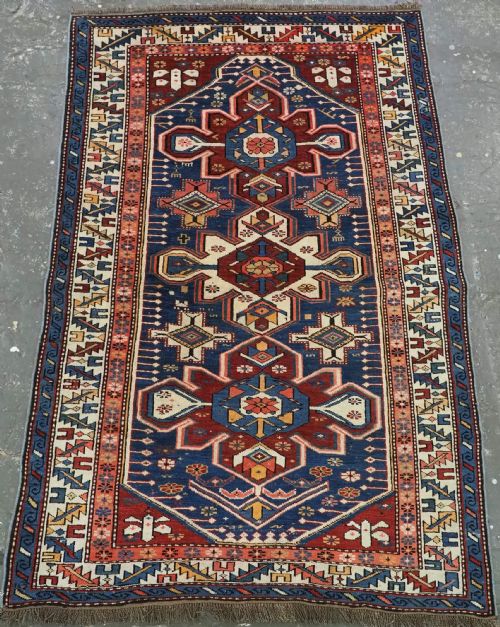
A vintage Armenian carpet encompasses woven wool floor coverings originating from the Caucasus region during the late nineteenth and early twentieth centuries. These pieces carry traditional designs such as triple-lobed medallions, large central motifs, and figurative depictions of people and animals.
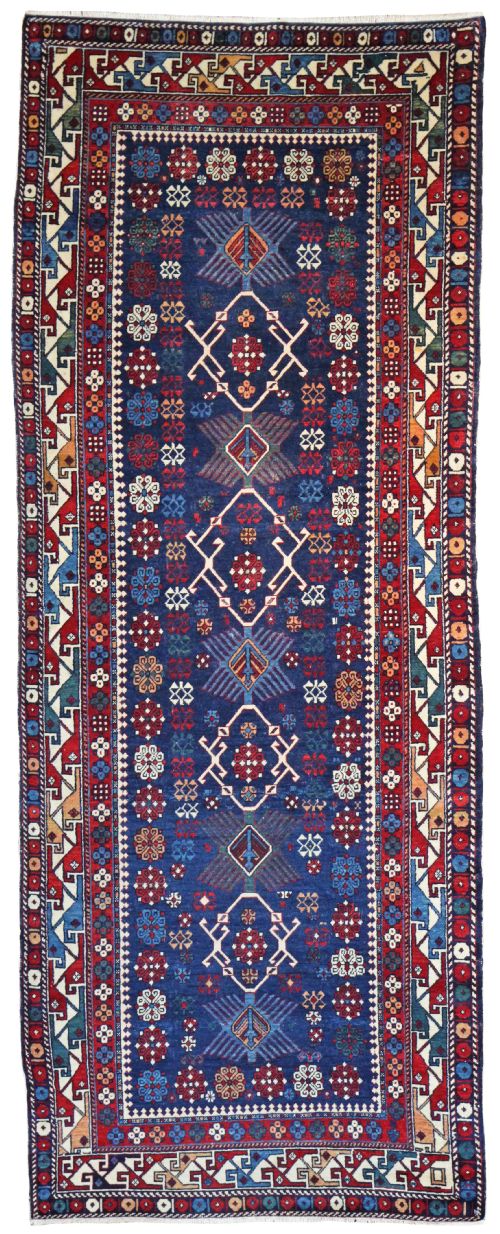
The selections available here span several decades, featuring pieces from around 1870 through to 1930. Buyers frequently encounter regional formats including area rugs, runners, and kilims.
The aesthetic bridges Caucasian and Armenian weaving traditions, often displaying distinctive yellow grounds alongside traditional deep tones. Each rug reflects the specific village or tribal workshop where the weavers sat at the vertical loom.
How they were made
Every vintage Armenian carpet relies entirely on hand-knotted wool construction, demanding months of careful labour by skilled hands. Weavers tied individual knots onto vertical warps before beating each row tight with a heavy comb.
Natural dye stuffs provided the saturated colour palette seen across these rugs, grounding the wool in rich hues that mellow gracefully with age. Flatweave techniques also appear in specific kilim formats, utilising supplementary weft-wrapping to build geometric patterns without pile.
Vintage Armenian Carpet Retail Price Guide 2026
Typical asking prices for vintage armenian carpet among the pieces listed under this phrase on Sellingantiques today, from the lower quarter to the upper quarter. They describe what is for sale here now, not the wider market.
Some nineteenth-century weavers tucked tiny animal figures and bees straight into the wool, leaving cheerful surprises for anyone studying the carpet close up.
What varies in quality
The refinement of a vintage Armenian carpet rests upon knot density and the crispness of its drawn geometry. Tighter knotting allows intricate medallion outlines and figurative elements to render with sharper clarity.
The integrity of the wool foundation dictates structural longevity, while the depth and balance of the dye palette determine visual resonance. Examples retaining scarce ground colours or well-preserved pictorial details command greater attention from those who study regional weaving.
The Vintage Armenian Carpet Glossary
- Medallion
- A large central decorative motif set within the field of a rug. It often forms the primary focal point of Caucasian and Armenian compositions.
- Kilim
- A flatwoven textile produced without a pile by tightly interweaving warp and weft strands. These pieces offer a lighter weight and distinct geometric surface texture.
- Runner
- A long, narrow carpet format designed specifically for hallways, corridors, or staircases. Proportions are stretched significantly in length compared to standard area rugs.
- Warp
- The stationary vertical threads stretched tightly on a loom that form the structural skeleton of the rug. Weft threads are passed horizontally through these foundational strands.
- Pile
- The upright cut ends of the knotted wool yarn that create the soft surface texture of the carpet. Its height influences how the wool responds to light and wear.
Vintage Armenian Carpet: Frequently Asked Questions
Where were these carpets made?
These carpets were woven in the Caucasus region, specifically within historic Armenian centres such as Karabagh, Erivan, and surrounding weaving districts.
Local weavers passed down specific tribal patterns, motifs, and colour combinations through generations, anchoring each piece to a distinct geographical tradition.
How do I care for a vintage wool rug?
Vacuum your rug gently on a low suction setting without a rotating beater bar to protect the delicate wool pile.
Keep the textile out of harsh direct sunlight to prevent fading, and consult a professional specialist experienced in antique woven floor coverings for deep cleaning.
How do I identify a Karabagh rug?
Karabagh rugs frequently feature large medallion designs, pictorial elements such as people and animals, or distinctive botanical motifs like the bee pattern.
They often utilise a balanced palette of saturated tones, reflecting the artistic heritage of the Karabagh region within the Caucasus.
What is an Erivan rug?
An Erivan rug originates from the area surrounding the city of Erivan, displaying classic Caucasian geometric structures combined with local weaving signatures.
These pieces occasionally appear on uncommon background colours, such as yellow, which set them apart from standard dark-ground runners and area rugs.