





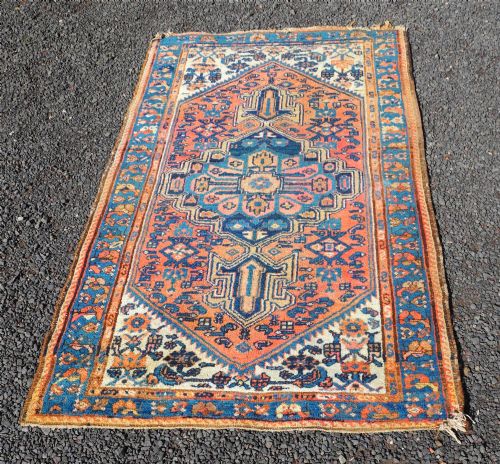

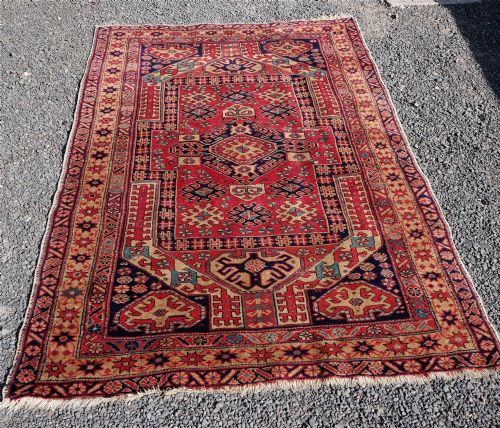
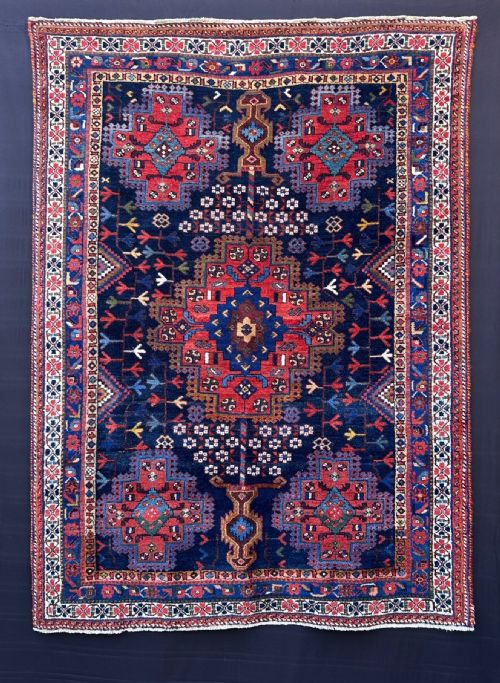
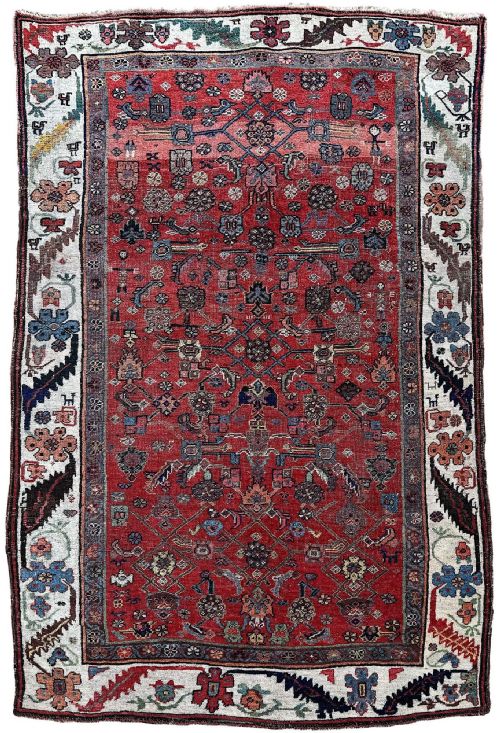
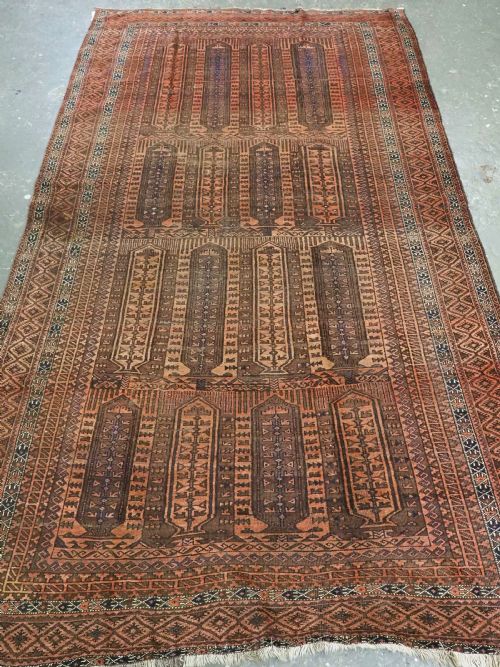
Geometric Persian Wool Rug
A geometric persian wool rug brings structural tribal motifs and rich village dye work straight onto the floor.
Geometric Persian Wool Rug
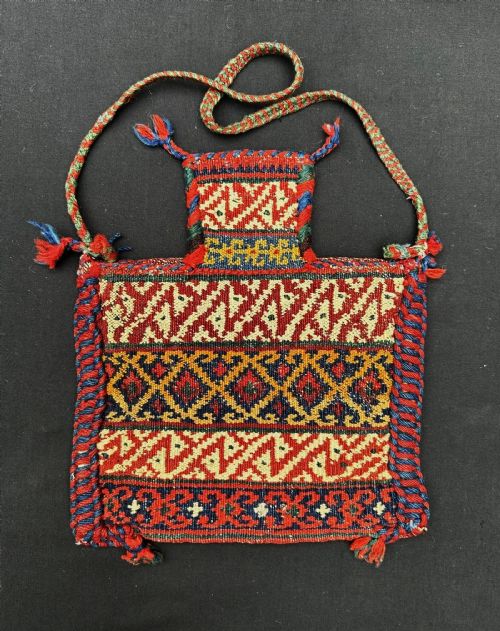
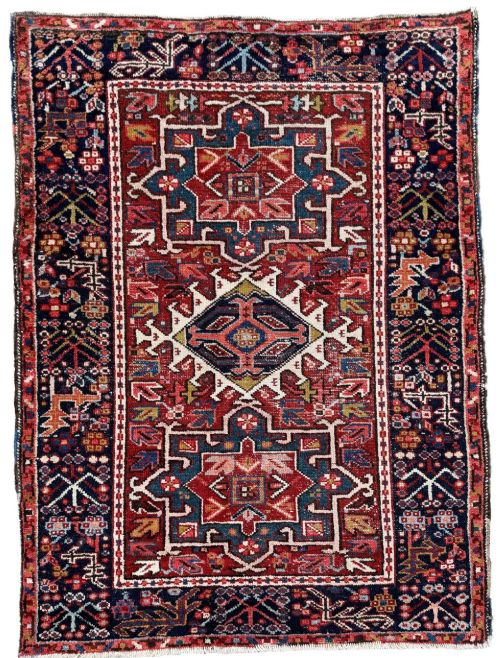
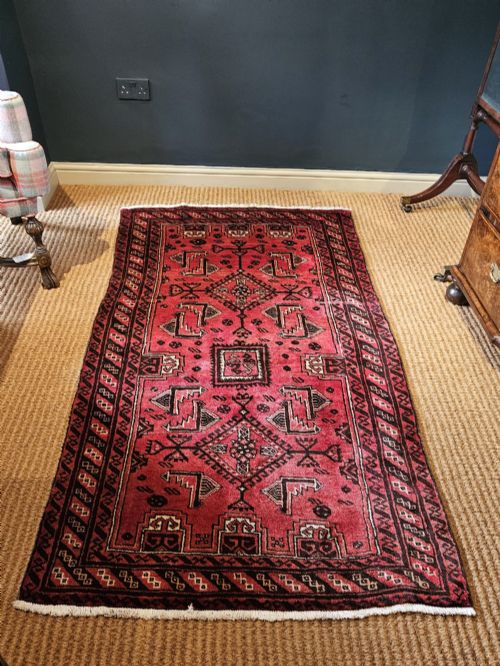
A geometric persian wool rug draws upon centuries of village and tribal weaving traditions originating across various regions of Persia. Buyers exploring this category encounter floor coverings and runners shaped by rectilinear medallion layouts, lattice networks, and repeating tribal guls.
The pieces appearing on this page span several decades from the late nineteenth century through to the mid twentieth century. Village workshops and nomadic confederacies such as the Heriz, Hamadan, Afshar, and Khamseh produced the majority of these hardy floor furnishings.
Materials and construction methods
Weavers utilised hand-spun wool and pure wool foundations combined with cotton warp and weft threads to build durable pile carpets. Certain nomadic pieces also incorporate camel hair within the mix to introduce natural tonal variations without dyeing.
Natural dyes provide the underlying palette for these textiles, yielding deep indigos, warm reds, and earthy tones that age gracefully over time. Skilled hands knotted the wool densely by vertical loom weaving to create resilient surfaces suited for daily domestic use.
Some nomads tucked tiny hooked motifs into corners just to ward off stray glances.
Distinguishing quality across the range
Quality rests upon the crispness of the geometric drawing and the saturation achieved by natural dye baths. Finer knots per square inch allow intricate lattice and medallion outlines to remain sharp and well-defined.
The integrity of the wool pile and the retention of original outer edges dictate the structural longevity of each textile. Examples retaining complete borders and balanced proportions demonstrate superior balance from the weaver's original conception.
The Geometric Persian Wool Rug Glossary
- Gul
- A repeating medallion motif often found in tribal and nomadic carpets. It functions as a primary design element across many weaving traditions.
- Heriz
- A style originating from a major carpet-producing town in northwest Persia. These pieces are recognised by bold rectilinear medallions and sturdy structures.
- Hamadan
- A vast market region in western Persia encompassing numerous villages that produced durable runner and rug formats. The weaving often displays traditional Herati or Heriz-inspired geometric schemes.
- Khamseh
- A confederacy of tribes from south-west Persia known for producing tribal carpets with rich wool and distinctive indigo grounds. The designs incorporate tight geometric repeats and small figurative elements.
Geometric Persian Wool Rug: Frequently Asked Questions
Where were these rugs made?
These textiles originate from various regions, villages, and tribal territories across Persia, including Heriz, Hamadan, and the southern provinces.
Weavers working within specific tribal confederacies and settled rural communities produced these distinct geometric patterns locally.
How do I care for wool rugs?
Regular gentle vacuuming without a rotating brush roll helps keep the wool pile free from dust and trapped particles.
Professional cleaning tailored for antique textiles ensures the natural dyes and wool fibres remain preserved.
What is a runner rug?
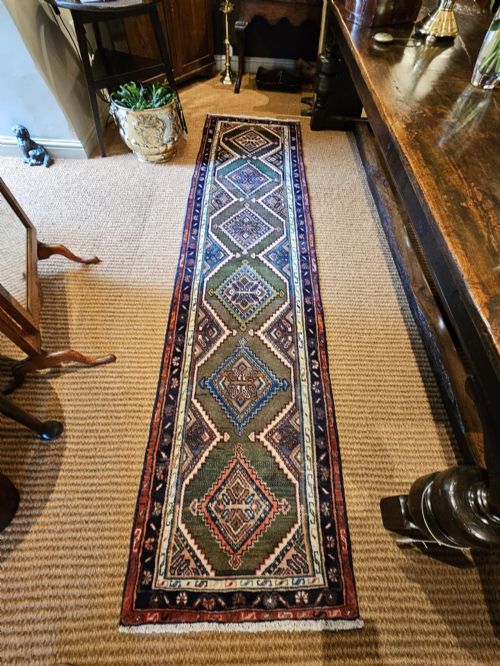
A runner is a long, narrow format carpet specifically designed for hallways, corridors, and staircases.
These pieces provide linear geometric visual interest in narrower architectural spaces throughout a house.
How are different tribal styles identified?
Identifying specific tribal styles relies on examining the repeat motifs, border arrangements, and structural materials present in the weave.
Regional palettes and particular knotting quirks further point towards specific weaving groups such as Afshar or Baluch.