

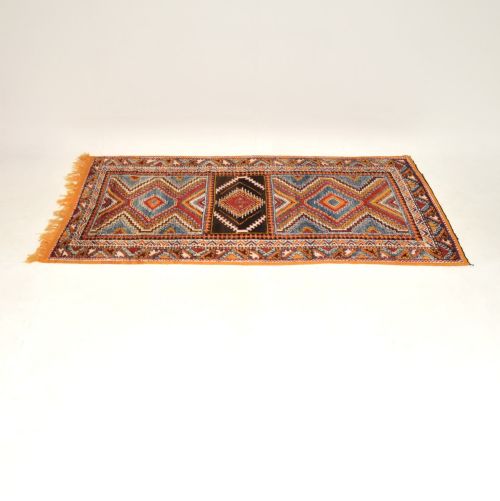
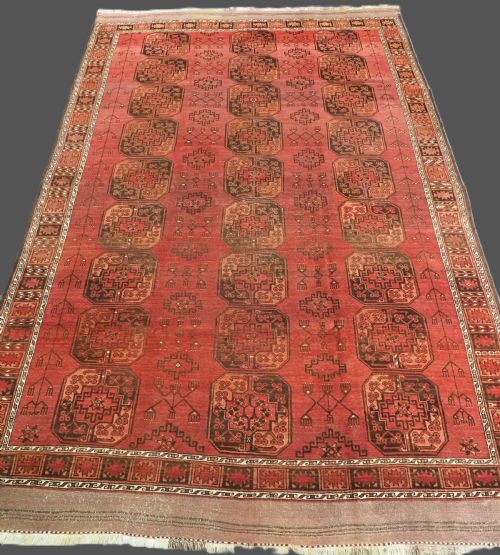
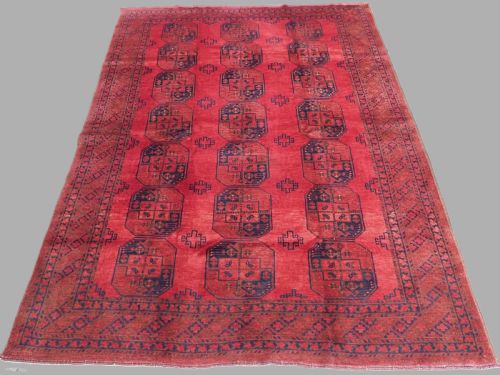
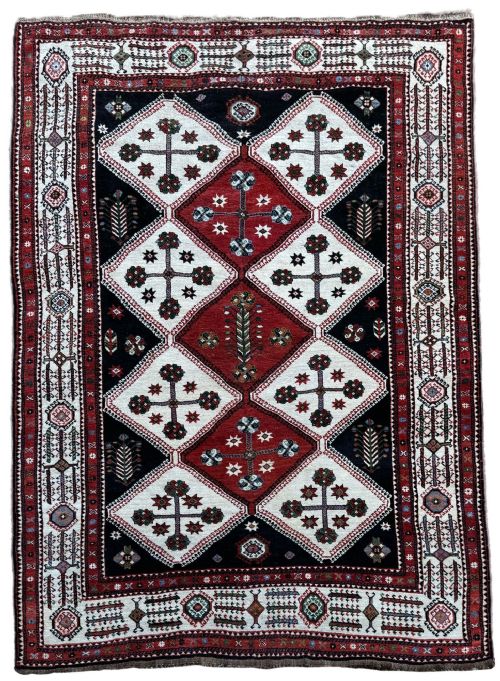

Large Red Wool Rug
A large red wool rug brings deep colour and heavy texture to a room, drawing on Persian and tribal weaving traditions.
Large Red Wool Rug
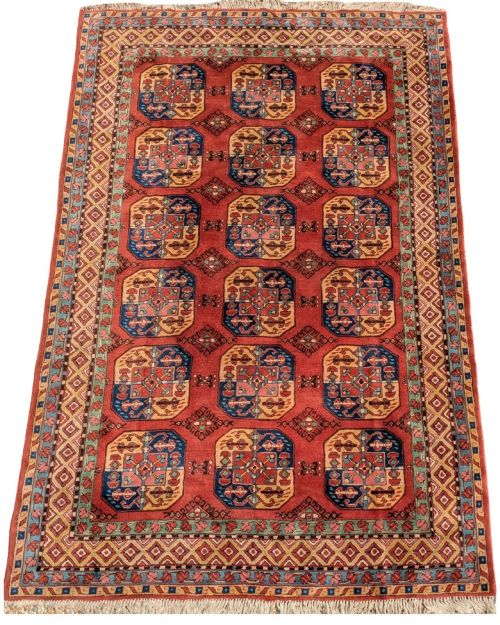
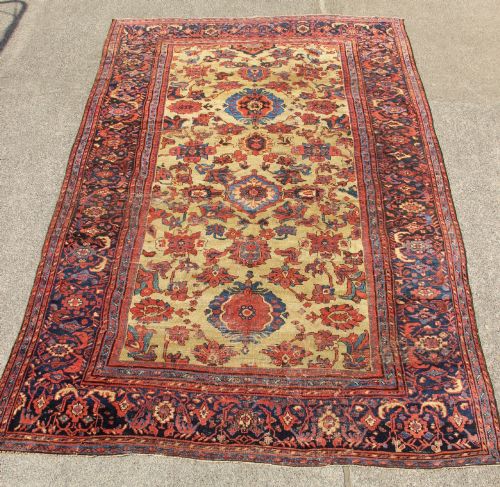
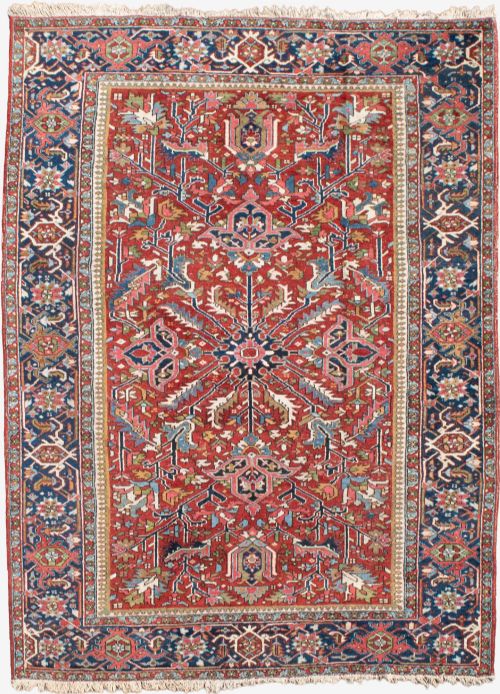
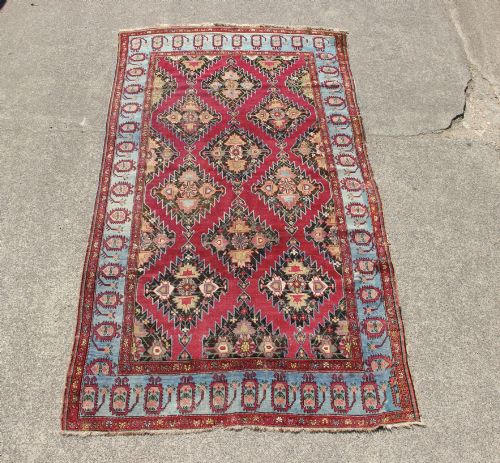
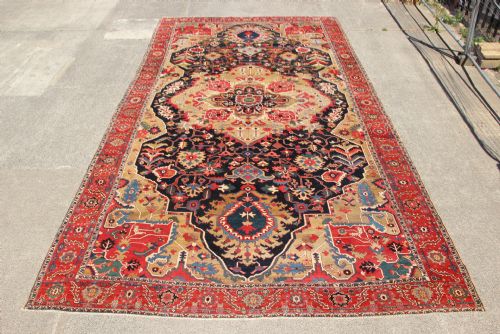
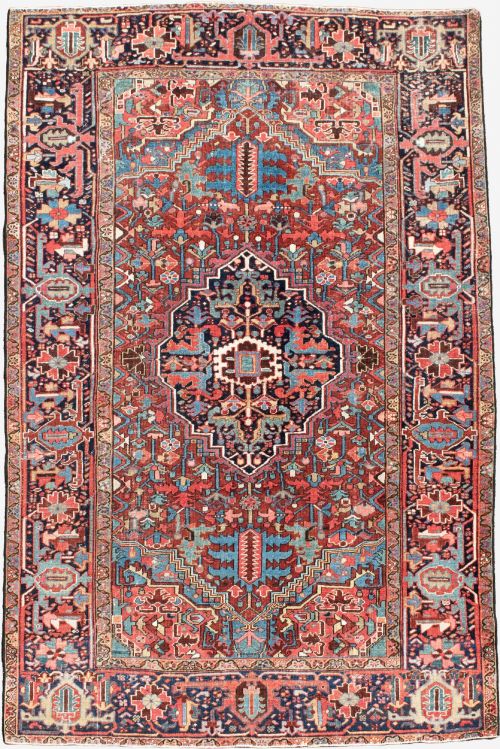
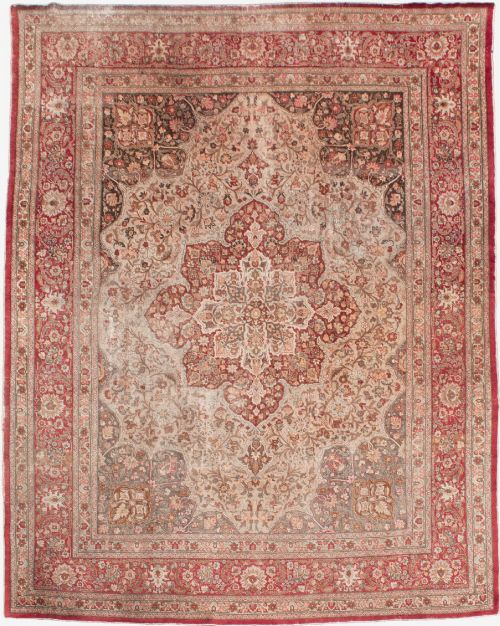
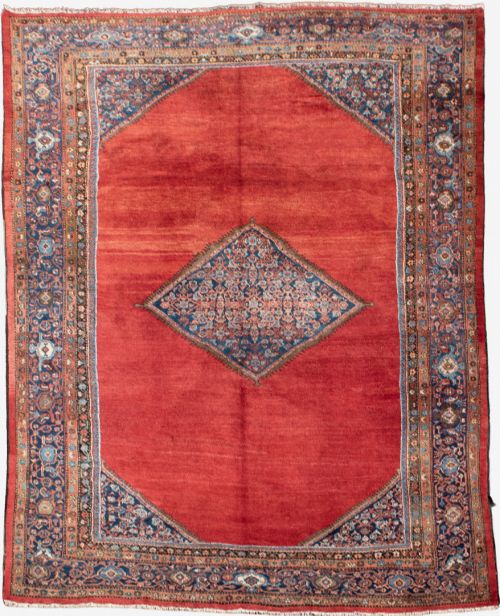
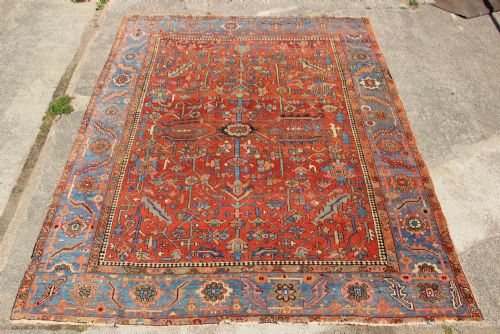
A large red wool rug typically takes the form of room-sized Persian and tribal carpets, with Heriz and Ersari designs appearing frequently across the selection. These floor coverings originate from village and city workshops spanning the nineteenth and early twentieth centuries, offering substantial dimensions for larger spaces.
Buyers encounter formats ranging from geometric village carpets to finely knotted city pieces, all dominated by rich red grounds. The selection centres on antique and vintage examples dating from the mid-nineteenth century up to the 1940s.
Materials and construction
These floor coverings utilise wool piles set on cotton foundations, often incorporating hand-spun wool for durability and varied texture. Natural dyes provide the underlying palette, creating depth and subtle tonal shifts within the red fields.
Weavers tied dense knots by hand, securing the structure with sturdy selvedges and flatwoven ends. This traditional method results in a robust textile capable of enduring decades of foot traffic.
Large Red Wool Rug Retail Price Guide 2026
Typical asking prices for large red wool rug among the pieces listed under this phrase on Sellingantiques today, from the lower quarter to the upper quarter. They describe what is for sale here now, not the wider market.
Listings span from the 1850s to the 1940s, uniting Persian Heriz, Ersari Turkmen, and Afghan tribal weaving traditions in wool and cotton.
Distinctions in quality
Knot density and precision of the geometric or floral drawing separate standard village work from finer city weaving. Finer carpets display crisp outlines in the medallion and border details.
The complexity of the natural dye palette also influences overall standard, as richer abrasche and varied madder tones create greater visual depth across the field.
The Large Red Wool Rug Glossary
- Heriz
- A style of Persian carpet known for bold geometric medallions and robust structures originating from the north-west of the country. These pieces typically feature large-scale motifs in red and indigo.
- Abrasche
- Variations in colour shade within a single field of wool, caused by changes in dye batches or hand-spun yarn. This tonal shift is a natural characteristic of traditional dyeing.
- Gul
- An octagonal medallion motif frequently found in Turkmen and Afghan tribal carpets. These repeating primary patterns anchor the field design.
- Kilim
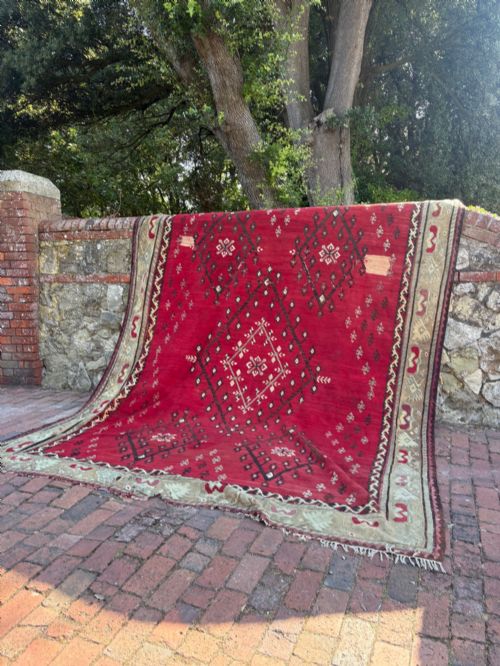
- A flatwoven textile produced without a pile, often utilised for lighter rugs and tribal floor coverings. They offer a thin profile and crisp geometric patterns.
- Madder
- A natural red dye derived from the root of the Rubia plant, widely used in traditional carpet production. It yields durable red hues that age with subtle variation.
Large Red Wool Rug: Frequently Asked Questions
How do I clean a wool rug?
Vacuum gently without a rotating brush to remove surface dust without pulling the wool fibres. Professional specialist cleaning is recommended for deep maintenance to protect natural dyes.
Avoid excessive water or domestic steam cleaners, which can weaken the cotton foundation and alter the pile texture.
Where should I place a large carpet?
Position the piece in a principal living space or dining room where furniture can anchor the edges. Ensure the room has adequate clearance so the central design remains visible.
Keep the textile out of direct, prolonged sunlight to prevent uneven fading of the red wool pile over time.
How do I date an antique rug?
Examine the materials, structure, and dye palette to determine the likely period of manufacture. Hand-spun wool and specific regional knotting styles offer key clues to nineteenth and early twentieth-century origins.
Wear patterns, natural dye variations, and edge finishes also help distinguish older village pieces from later vintage productions.
What is the difference between Heriz and Tabriz carpets?
Heriz carpets feature bold, geometric medallions and sturdy wool built for village use. Their designs rely on strong straight lines and prominent corner spandrels.
Tabriz carpets originate from city workshops and display finer, curvilinear floral patterns with greater knot density. They offer a more formal aesthetic compared to tribal village weaving.