


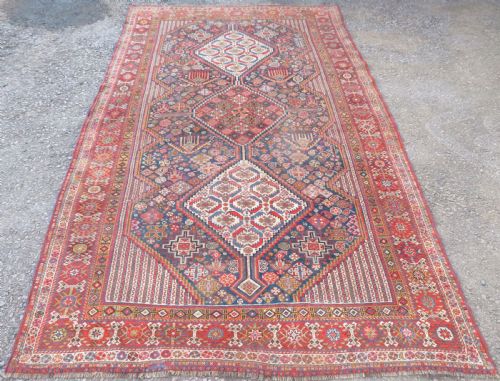


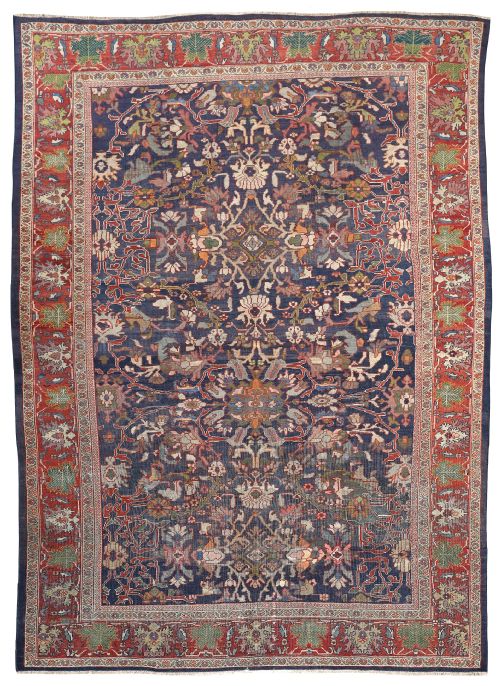


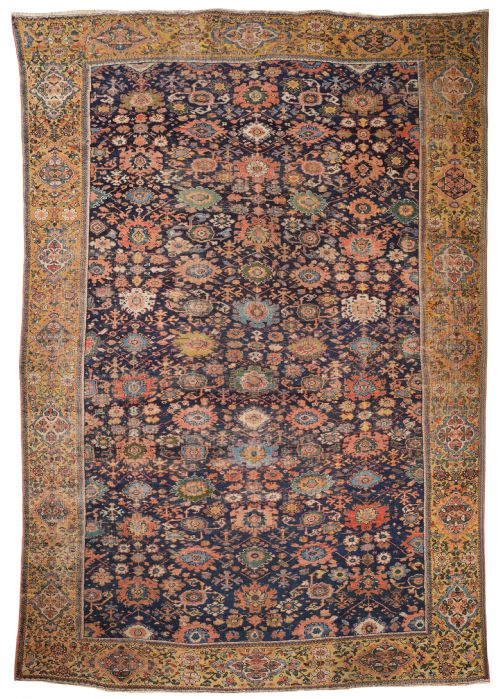
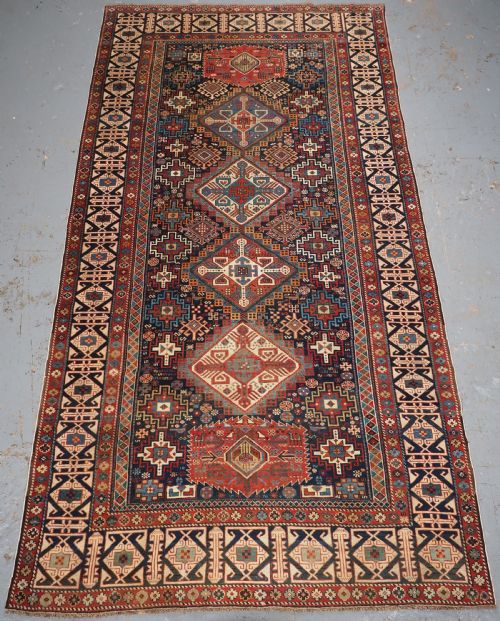
Navy Blue Border Rug
A navy blue border rug grounds a room with traditional Persian pattern and rich indigo framing.
Navy Blue Border Rug
A navy blue border rug is typically a Persian or traditional Persian carpet originating from weaving centres such as Heriz, Kashan, Fereghan, and Lilihan. These pieces date across the late nineteenth and early twentieth centuries, spanning the eighteen-eighties to the nineteen-twenties.
The most common forms seen here are substantial antique carpets and rugs featuring distinct dark framing around central fields. Buyers searching this phrase encounter room-sized furnishings as well as smaller floor coverings from these specific historical periods.
Originating from Persia, these woven textiles combine traditional regional designs with robust construction suited for domestic placement. Each example carries the distinct stylistic traits of its specific weaving district, from Heriz geometry to fine Kashan detail.
How they were made
These floor coverings are constructed primarily from wool and cotton, utilising traditional hand-knotting techniques common to Persian workshops. Wool provides the durable pile surface, while cotton often forms the supportive foundation warps and wefts.
Weavers utilised natural dyes to achieve the deep indigo and navy blue tones found in the characteristic borders, paired with contrasting hues across the field. The materials reflect the traditional rural and workshop output of late nineteenth and early twentieth-century Persia.
Navy Blue Border Rug Retail Price Guide 2026
Typical asking prices for navy blue border rug among the pieces listed under this phrase on Sellingantiques today, from the lower quarter to the upper quarter. They describe what is for sale here now, not the wider market.
These rugs have travelled further than most holidaymakers simply by sitting quietly in European and British rooms for a century.
What varies in quality
Quality separates through the integrity of the wool pile and the precision of the traditional Persian knotting. Finer examples display greater knot density, which allows intricate border and field motifs to remain crisp and well-defined.
The depth and preservation of the dye work, particularly within the navy blue borders, dictates the visual impact of the piece. Well-preserved colour balance across the wool pile distinguishes the most successful furnishing carpets from simpler examples.
The Navy Blue Border Rug Glossary
- Heriz
- A Persian style known for bold geometric medallions and robust construction, originating from the northwest region of the country. These carpets often feature strong structural borders.
- Kashan
- A central Persian weaving city celebrated for producing finely knotted carpets with intricate floral and medallion designs. Pieces from this origin typically show high technical refinement.
- Fereghan
- An antique Persian provenance recognised by durable construction and classic Herati or field patterns. These rugs date predominantly to the nineteenth century.
- Lilihan
- A Persian rug type associated with refined village production from the early twentieth century. They often present distinctive floral compositions.
- Pile
- The upright yarn surface of a rug formed by the ends of knots. This wool layer takes the wear of foot traffic while displaying the pattern.
Navy Blue Border Rug: Frequently Asked Questions
How do I style a navy blue border rug?
Place the rug in a living room or study where the dark border can anchor surrounding furniture. It pairs well with traditional wooden floorboards and classic interior schemes.
Allow the patterned field to sit centrally in the room to display the traditional Persian design properly.
What era are these rugs from?
The available examples date from the late nineteenth century through to the nineteen-twenties. This period encompasses traditional Persian production from various distinguished weaving districts.
Each piece reflects the specific aesthetic and technical standards of its decade of origin.
Are these rugs made of wool?
Yes, the pieces utilise wool for the tactile pile surface that forms the decorative design. Cotton is frequently employed alongside wool to create a stable foundation.
This combination of materials ensures the structural durability characteristic of antique Persian carpet making.
How do I identify a Heriz rug?
Heriz rugs are identified by their bold geometric layouts and prominent central medallions. They typically feature strong, architecturally inspired borders that frame the field.
The robust wool pile and distinctive regional palette separate them from other Persian provenance types.