




Antique Kashan Rug
An antique kashan rug brings centuries of Persian weaving tradition into a room through intricate floral motifs and fine materials.
Antique Kashan Rug
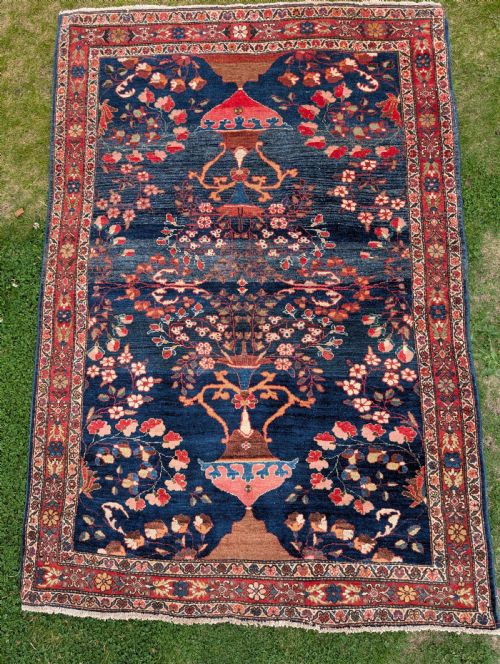
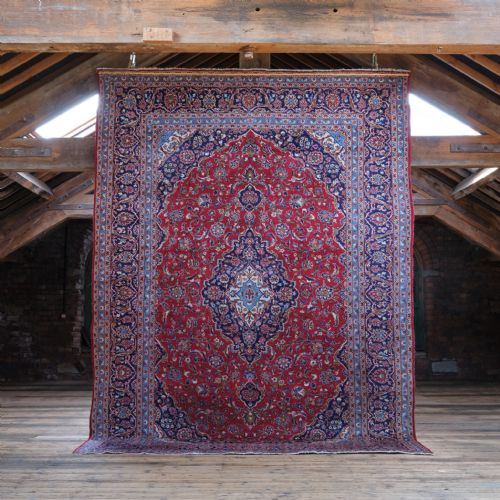
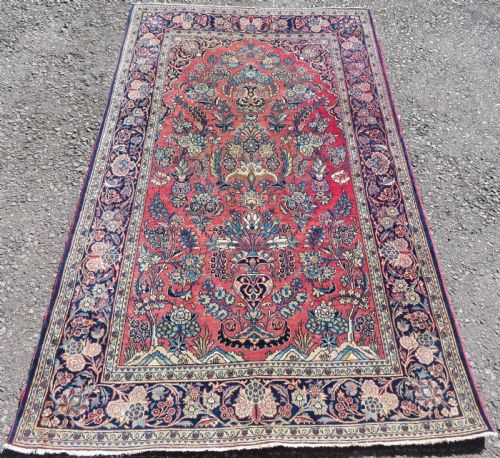
An antique kashan rug represents a central Persian tradition originating from the Isfahan Province, taking the form of area rugs, large carpets, and smaller prayer mats. Buyers encounter pieces spanning several decades from the late nineteenth century into the twentieth century.
The designs incorporate traditional Persian patterns, flower and vase motifs, tree of life compositions, and figurative portraits depicting historical figures. Most examples originate from Persia, alongside examples attributed to Indo-Persian traditions.
Makers and workshops varied in output, with specialised names producing specific portraiture or pictorial carpets. Pieces range from standard room-size area rugs up to large carpets exceeding five metres in length.
Materials and Construction Techniques
The construction relies on hand-knotted techniques using natural fibres, predominantly wool, cotton foundations, and occasional silk additions. Master workshops utilised high-grade materials including soft kurk wool and fine silk yarns.
Weavers worked intricate knot counts to achieve detailed pictorial borders, bird motifs, and complex floral fields. Foundation warps andwefts commonly consist of cotton, supporting dense wool piles.
Antique Kashan Rug Retail Price Guide 2026
Typical asking prices for kashan rug among the pieces listed under this phrase on Sellingantiques today, from the lower quarter to the upper quarter. They describe what is for sale here now, not the wider market.
Distinctions in Execution and Material
Knot density and fineness of weave separate standard room pieces from master workshop productions. Higher execution levels display intricate curves in floral scrolls and crisp outlines in figurative portraiture.
Material selection dictates tactile quality, shifting from standard commercial wools to superior soft kurk wool or pure silk highlights. Subtle abrash variations in dye lots create depth across the field.
Mohtasham·Haroon·Ateshoglou
The Antique Kashan Rug Glossary
- Abrash
- Subtle tonal variations or horizontal bands of colour shift across the field caused by different dye batches.
- Kurk wool
- High-grade fleece gathered from the neck and shoulders of sheep, yielding an exceptionally soft pile.
- Prayer rug
- A format featuring a mihrab or arch design intended for devotional placement.
- Souf
- A technique utilising flat-woven background areas that contrast against raised pile motifs.
- Warp
- The vertical foundation threads running lengthwise through the carpet to support the knots.
Antique Kashan Rug: Frequently Asked Questions
How do I identify a prayer rug?
Prayer formats are distinguished by an arched architectural motif known as a mihrab at one end. This design directed the user toward Mecca during daily devotions.
Such pieces usually measure in smaller area dimensions to facilitate personal placement on floors.
What materials were used?
Weavers utilised natural fibres consisting mainly of sheep wool and cotton foundations. Finer examples incorporated soft kurk wool or delicate silk threads.
Foundation structures rely on cotton threads to maintain stability across large carpet formats.
How do I date an antique piece?
Dating relies on stylistic markers, historical portraits, structural wear, and documented workshop origins. Pieces span from the late nineteenth century through the early decades of the twentieth century.
Archival comparisons help isolate specific production eras based on knotting style and palette.
Where were these woven?
Production centred primarily in Kashan within the Isfahan Province of central Persia. Some related examples also emerged from Indo-Persian weaving traditions.
Central Persian workshops supplied both domestic markets and international trade.