



Hamadan Village Rug
These hamadan village rug examples bring authentic Persian tribal character into a room through honest wool construction and traditional regional designs.
Hamadan Village Rug
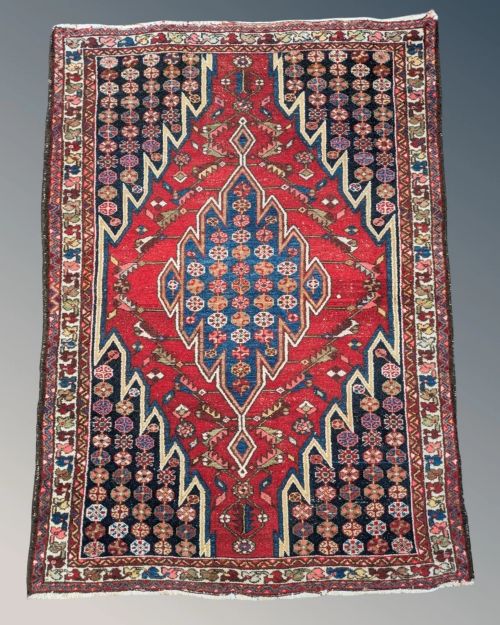
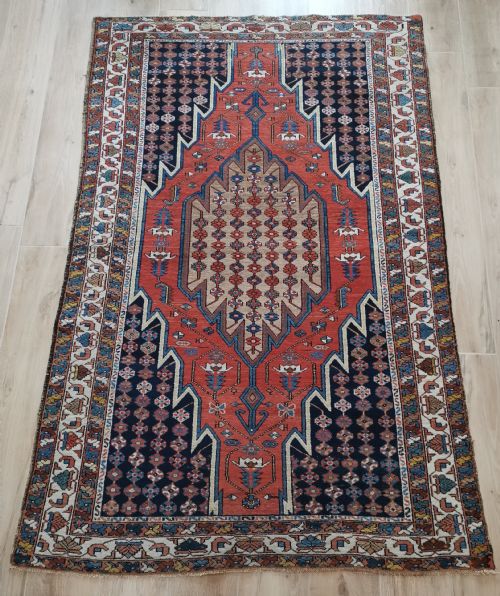
When someone searches for a hamadan village rug, they are looking at hand-knotted floor coverings originating from the various weaving settlements and towns across the vast Hamadan region of northwest Persia. These pieces date predominantly from the early decades of the twentieth century, including the period around 1900 to 1930, capturing a time when village workshops and nomadic weavers produced distinct domestic floor coverings. The version most commonly met on this page is the room-size or small area rug featuring traditional Persian motifs, often woven by Kurdish or other regional weavers within the greater Hamadan sphere.
The aesthetic of a hamadan village rug draws heavily on local vernacular traditions, displaying patterns that range from floral lattices and shrub designs to botehs and classical Herati layouts. Alongside standard village pieces, related regional types like Mazlaghan, Malayer, Khanabad, and Gharaghan rugs frequently appear under this broader classification due to overlapping design characteristics and geographical origins. Buyers encounter formats varying from small mats to hallway runners, reflecting the practical domestic output of Persian village households from the 1900s through the 1930s.
Materials and technique
A hamadan village rug relies fundamentally on a sturdy foundation of cotton for the warp and weft threads, providing structural stability to the heavy textile. Handspun wool forms the thick pile that characterises these regional pieces, offering both durability and resilience for everyday floor use.
Weavers knotted the wool pile onto the cotton or wool foundation by hand, employing traditional techniques handed down through generations of Persian and Kurdish makers. The resulting fabric yields a dense, substantial handle typical of north-west Persian village production from the early twentieth century.
Hamadan Village Rug Retail Price Guide 2026
Typical asking prices for hamadan village rug among the pieces listed under this phrase on Sellingantiques today, from the lower quarter to the upper quarter. They describe what is for sale here now, not the wider market.
A lone tribal figure occasionally wanders into the geometric landscape of an antique village rug, keeping company with traditional botehs.
What varies in quality
The quality of a hamadan village rug depends largely on the fineness of the knotting and the clarity with which the regional design is executed across the field. Tighter foundation structures and more precise rendering of motifs such as floral lattices or shrub patterns distinguish superior examples from simpler village output.
Another measure of quality lies in the depth and softness of the wool pile and the harmonious balance of the vegetable or natural dyes utilised by the weaver. Well-preserved pieces retain a thick, plush pile and expressive secondary border details that elevate the overall presence of the textile.
The Hamadan Village Rug Glossary
- Boteh
- A traditional Persian motif resembling a almond, pear or flame shape filled with floral or geometric details. It appears frequently in regional village weaving.
- Herati
- A repeating floral pattern composed of a central rosette enclosed by leaves and flanked by curved fish-like motifs. This design is common in north-west Persian carpets.
- Warp
- The vertical threads stretched tightly on the loom that form the structural skeleton of the rug. The fringe is typically a continuation of these threads.
- Weft
- The horizontal threads passed back and forth across the warp threads to bind the knots in place. Together, warp and weft create the foundation grid.
- Pile
- The upright cut ends of the wool knots that form the soft surface of the rug. A thick pile provides comfort and protects the structural foundation underneath.
Hamadan Village Rug: Frequently Asked Questions
What is a hamadan village rug?
A hamadan village rug is a hand-knotted floor covering made by weavers in the towns and villages surrounding Hamadan in north-west Persia. These textiles date mostly from the early twentieth century and showcase traditional regional patterns.
They reflect the domestic weaving traditions of diverse local populations, including Kurdish groups working in the greater Hamadan region. Each piece displays distinct local motifs rendered in durable wool.
How were these rugs used?
These rugs served as practical, hard-wearing floor coverings for homes, providing insulation and comfort on hard floors. Their sturdy wool pile and robust construction suited heavy daily foot traffic in domestic hallways and living spaces.
Over decades of use, they functioned as central decorative and functional elements within Persian households. Today, they continue to serve as durable area rugs and hallway runners in modern interiors.
How do I live with an antique rug?
Living with an antique rug involves placing a quality underlay beneath it to prevent slipping and reduce friction against the floor. This simple step protects the cotton foundation and extends the life of the wool pile during everyday use.
Position the rug out of direct, harsh sunlight to protect the natural dyes over time. Regular gentle vacuuming without a rotating brush roll keeps the thick wool pile clean without stressing the antique fibres.
How can I tell regional types apart?
Distinguishing regional types within the Hamadan group requires examining specific design motifs, border arrangements, and structural nuances. Pieces originating from related centres like Mazlaghan, Malayer, or Gharaghan often feature distinct palette choices and characteristic drawing styles.
Noticing the specific treatment of border guards, such as Baluch-influenced borders, helps identify the sub-region of production. Comparing the handling of floral lattices and medallion layouts clarifies the specific village or tribal origin.