


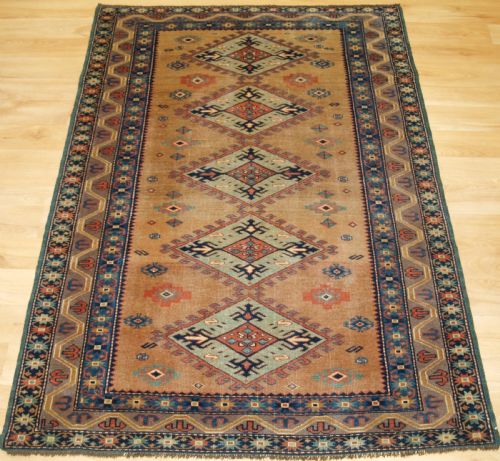


Tan Wool Carpet
A tan wool carpet brings earthy warmth and rich tribal character to a room, offering durability and heritage through handwoven designs.
Tan Wool Carpet
When you search for a tan wool carpet, you are looking at handwoven rugs, runners, and flatweaves originating from nineteenth and early twentieth-century village and nomadic traditions.
The selections on this page span styles such as Persian Tribal, Caucasian, Baluch Tribal, and Anatolian Tribal, reflecting regional weaving techniques from areas including Iran, Afghanistan, and Turkey.
You will most commonly encounter older pieces utilising natural hues alongside specific regional patterns like prayer rugs and runners produced around the eighteen-seventies up to nineteen-thirty.
How they were made
These carpets are constructed primarily using wool, cotton, camel hair, and hand-spun wool, reflecting the traditional pastoral resources available to the weavers.
Makers employed mixed techniques and fine weaves to create durable floor coverings, utilising materials suited to nomadic and village production methods.
Tan Wool Carpet Retail Price Guide 2026
Typical asking prices for tan wool carpet among the pieces listed under this phrase on Sellingantiques today, from the lower quarter to the upper quarter. They describe what is for sale here now, not the wider market.
Several pieces incorporate camel wool, giving camels a direct role in your floor decor long after their travels ended.
What varies in quality
The distinction between tiers rests upon the fineness of the weave, the softness of the colours achieved, and the integrity of the original structure.
Finer wool preparation and skilful handling of mixed materials separate standard village examples from superior tribal pieces.
The Tan Wool Carpet Glossary
- Runner
- A long, narrow carpet format traditionally used in hallways or corridors. These pieces fit specific architectural spaces.
- Prayer rug
- A small rug featuring a mihrab design used for personal devotion. The motif directs the user during daily prayers.
- Sofreh
- A dining kilim or spread used by nomadic tribes for domestic meals and food preparation. It is a flatwoven textile with specific cultural functions.
- Flatweave
- A carpet woven without a pile, creating a flat textile surface. Techniques include kilim construction.
Tan Wool Carpet: Frequently Asked Questions
How do I clean a wool carpet?
Vacuum gently without a rotating brush to protect the fibres. Professional cleaning suited to antique textiles is recommended for deeper maintenance.
Avoid excessive moisture and harsh chemical detergents. Regular gentle care preserves the natural lanolin in the wool.
Where were these carpets made?
The pieces originate from regions across the Middle East and Caucasus, including West Persia, Anatolia, and Afghanistan.
Local tribes and village workshops produced them using traditional regional designs and materials.
Can I use an antique runner in a hallway?
Runners fit narrow spaces such as hallways and corridors effectively. Ensure you use an appropriate underlay to prevent slipping and reduce friction.
Consider the traffic levels in your home when placing older flatweaves or pile rugs in high-use areas.
How do I identify a tribal rug?
Tribal rugs typically feature geometric motifs, stylized animal forms, and designs passed down through specific nomadic groups. The use of hand-spun wool and camel hair further points to traditional making.
Regional palettes and distinctive weaving structures distinguish Caucasian and Persian tribal styles from city-produced carpets.