




Imari Style Porcelain
Imari style porcelain brings together rich cobalt blue, iron red, and gilt decoration across plates, bowls, chargers, and vases from Japanese, Chinese, and British makers.

Imari Style Porcelain
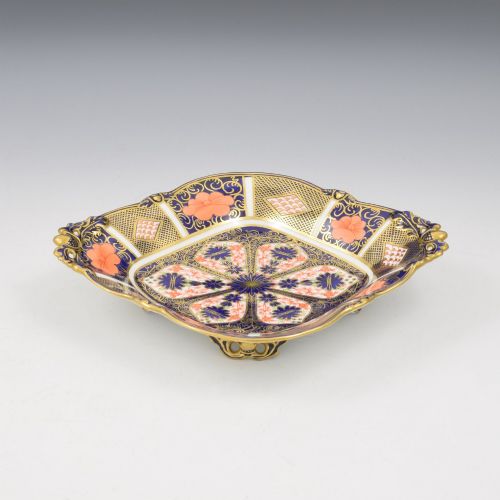
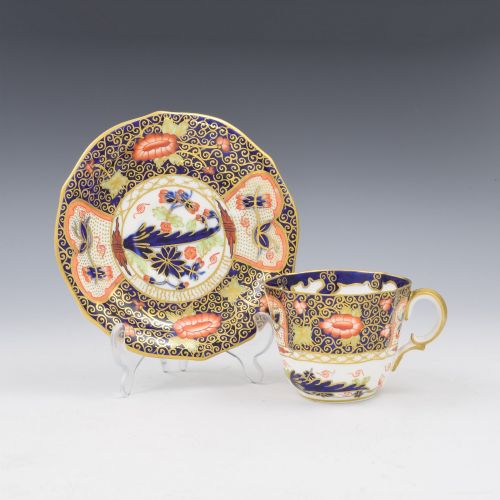
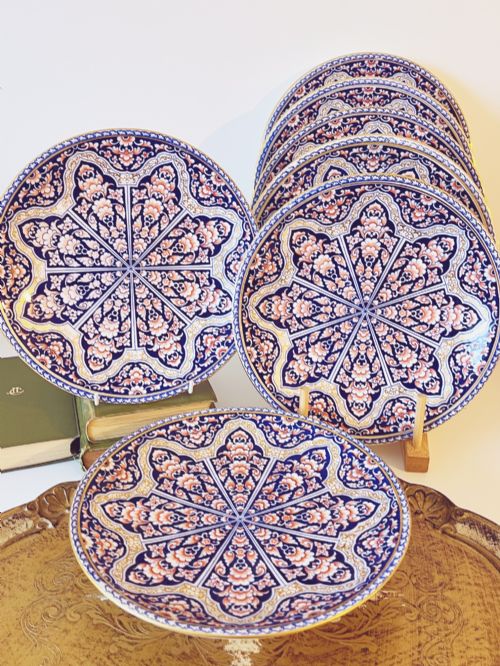
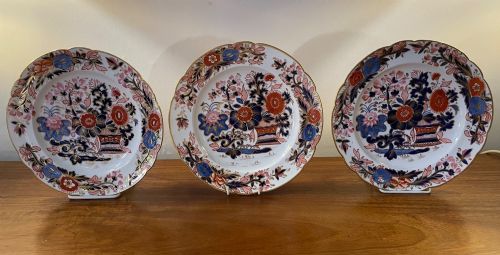
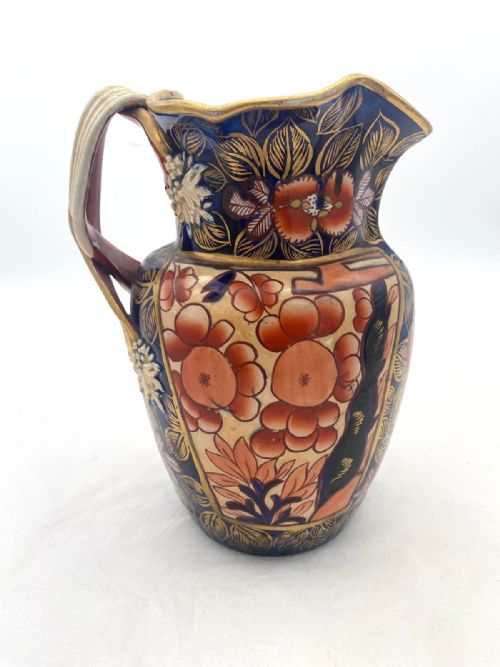
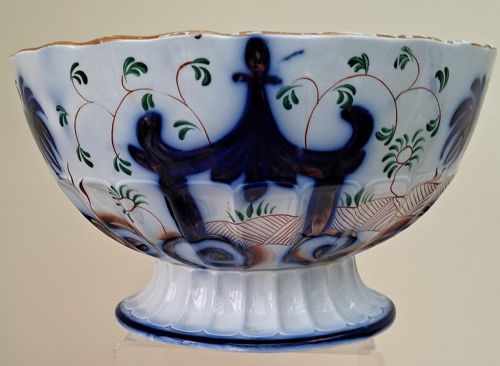
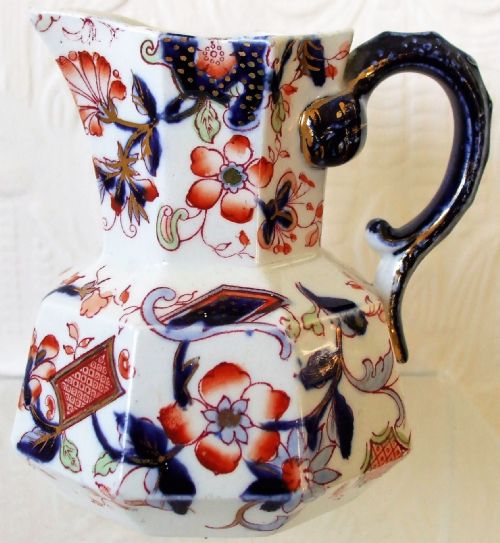
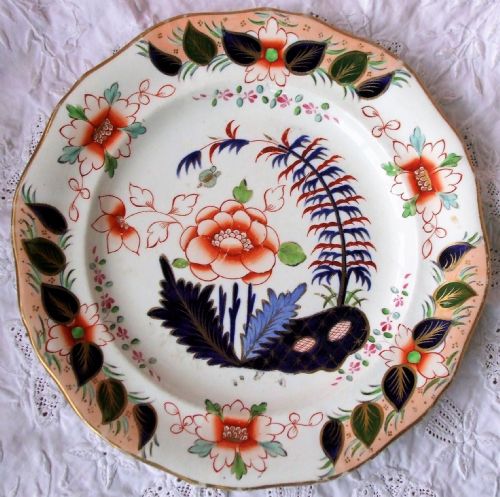
When you search for imari style porcelain, you encounter decorative plates, bowls, chargers, and vases spanning the eighteenth, nineteenth, and early twentieth centuries. The selection includes original Japanese pieces alongside British interpretations produced by factories such as Royal Crown Derby and Mason's.
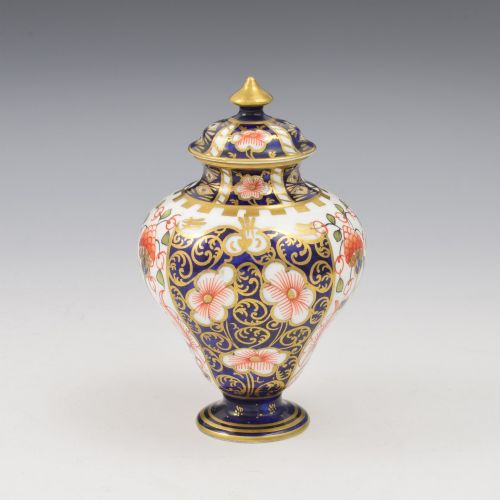
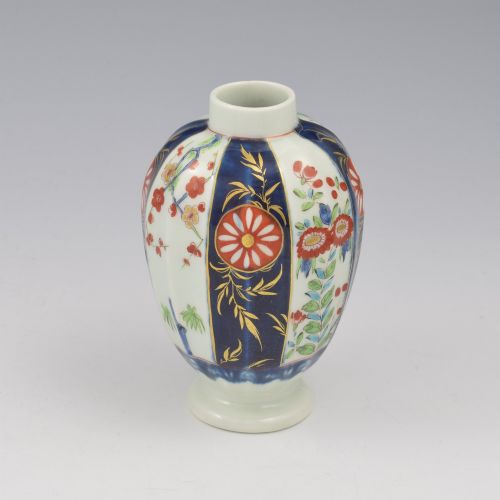
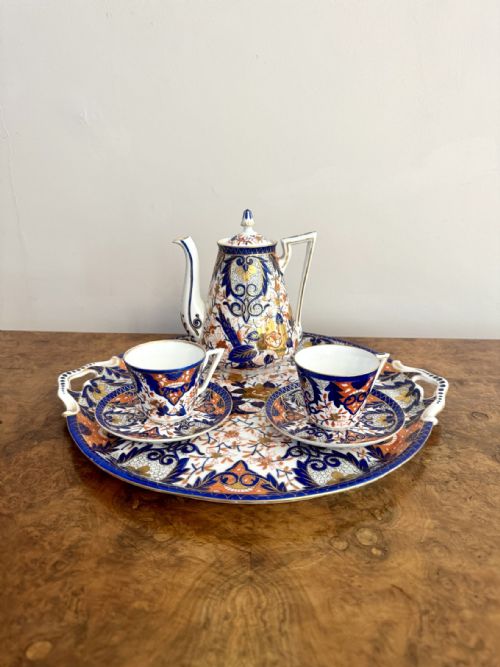
The objects take many functional and decorative forms, ranging from dessert services and coffee cups to large scalloped chargers and miniature vases with covers. British iterations sit alongside imported Asian wares, reflecting a cross-cultural dialogue in ceramic design that endured for centuries.
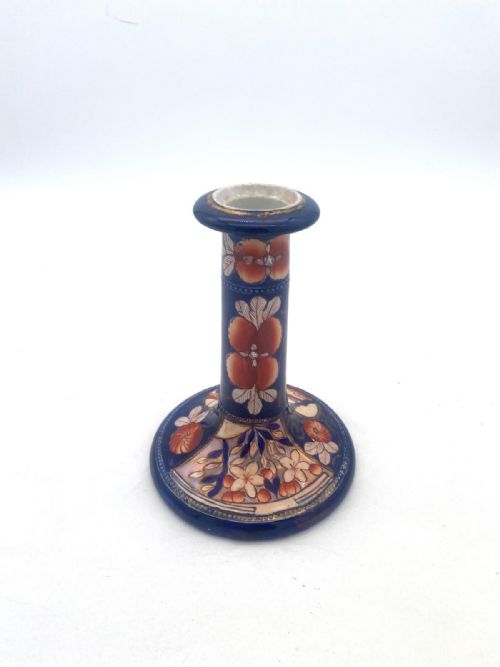
Buyers meet both Japanese export wares and English bone china or ironstone versions adopting the distinctive palette. These pieces offer strong decorative presence through contrasting underglaze blue and iron red enamel, often heightened with gold leaf.
How they were made
The pieces rely on porcelain, ironstone, and earthenware bodies shaped into plates, bowls, and hollowware before receiving underglaze cobalt blue painting. Potters then fired the ceramic, applied iron red and supplementary enamels over the glaze, and added gold leaf details in subsequent low-temperature firings.
Makers utilised transparent glaze to seal the body and protect the painted iron red and blue pigments. Gold leaf was frequently layered over the enamel to provide metallic contrast characteristic of both Japanese originals and European adaptations.
Forms range from miniature vases and spoon warmers to large chargers and extensive dessert services.
What varies in quality
The distinction between tiers rests upon the crispness of the underglaze blue painting and the precision of the hand-applied iron red and gold leaf enamel work. Superior examples display dense, well-balanced compositions where the gilding remains crisp and intact across the ceramic surface.
Form and edge treatment also divide the range, with scalloped edges, hexagonal profiles, and intricate pierced mouldings requiring higher technical skill from the potter. Weight, potting thickness, and the clarity of the porcelain or ironstone body further separate standard production wares from exceptional studio or factory outputs.
Royal Crown Derby·Mason's Ironstone·John Davenport·Keeling and Co.·Samson of Paris·Chamberlain Worcester·Flight Barr and Barr·Stevenson and Hancock·Ridgways China
The Imari Style Porcelain Glossary
- Imari palette
- A decorative colour scheme featuring underglaze cobalt blue, iron red enamel, and gilt highlights. This combination originates from Japanese export ceramics and was widely copied by European potteries.
- Ironstone
- A heavy, durable type of earthenware developed in the nineteenth century. It provides a robust body for heavily patterned plates and jugs.
- Garniture de cheminee
- A matched set of three or five vases or jars designed for display on a mantelpiece. These sets were popular in the nineteenth century.
- Charger
- A large decorative plate intended for display rather than dining use. Chargers often feature complex hand-painted motifs across a broad surface.
- Underglaze blue
- Cobalt pigment applied directly to the raw ceramic body before glazing and firing. This technique protects the blue colour beneath a glassy seal.
Imari Style Porcelain: Frequently Asked Questions
How do I identify Japanese imari from British imari?
Japanese pieces typically employ lighter porcelain bodies with hand-painted motifs rooted in traditional East Asian iconography. British versions often utilise dense ironstone or bone china and incorporate factory backstamps or specific registry marks.
The potting style, clay composition, and specific nuances in the iron red and blue pigments reveal the geographic origin of each ceramic piece.
Are imari chargers meant for daily dining?
Chargers are large decorative plates designed primarily for display on walls, tables, or mantelpieces rather than active service. Their broad surfaces and delicate enamel work make them unsuited for regular use.
Smaller plates, bowls, and tea sets from the same tradition saw domestic service, but chargers remained ornamental centerpieces.
What is the significance of the iron red colour?
Iron red provides the signature warm contrast against the cool underglaze blue in imari decoration. Applied over the glaze during a secondary firing, it forms a stable pigment that accepts gilding overlay.
This specific red hue anchors the visual composition and distinguishes imari pieces from standard blue and white ceramics.
How should I care for antique imari porcelain?
Maintain these pieces by dusting gently with a soft cloth and washing by hand in warm water only when necessary. Avoid dishwashers and harsh detergents to protect the delicate surface enamel and gold leaf.
Display items away from direct sunlight and sudden temperature shifts to preserve the integrity of the glaze and pigments.