



Imari Ceramic Vessel
An imari ceramic vessel brings rich iron-red, cobalt blue and gilt palettes into a room, combining centuries of Japanese and European design traditions.
Imari Ceramic Vessel
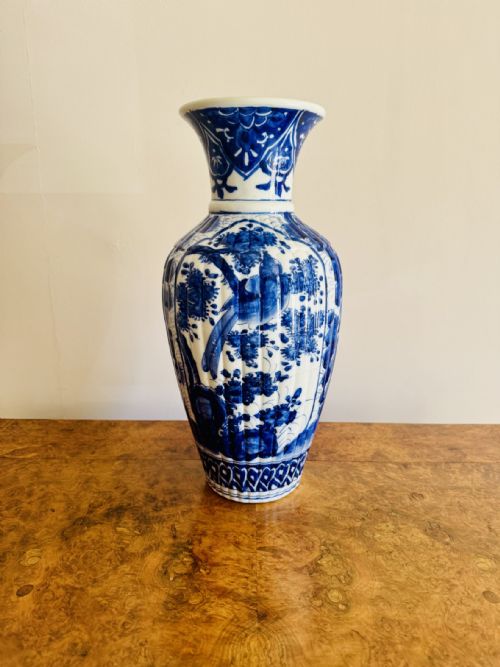
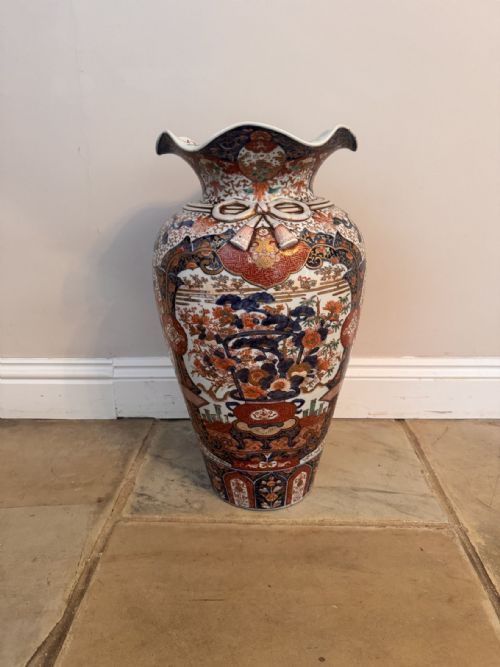
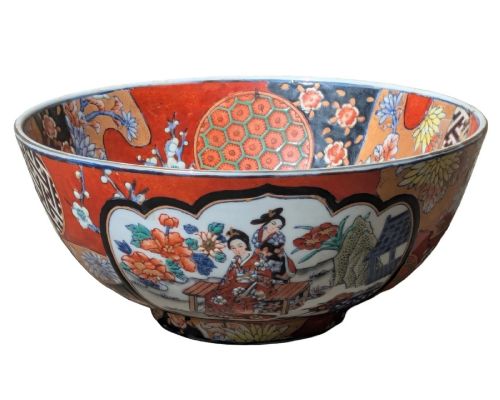
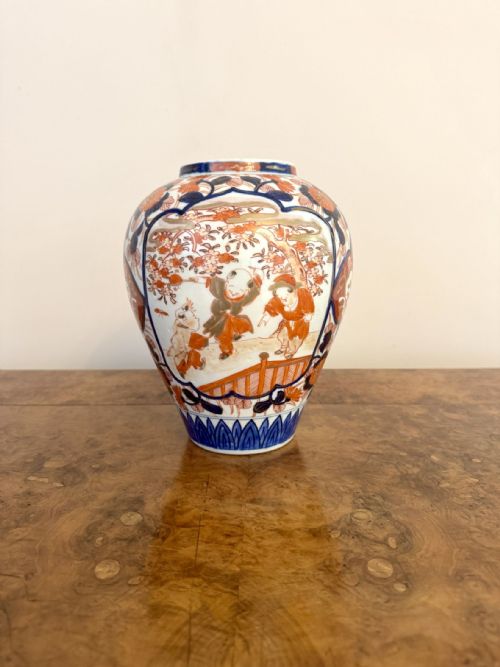
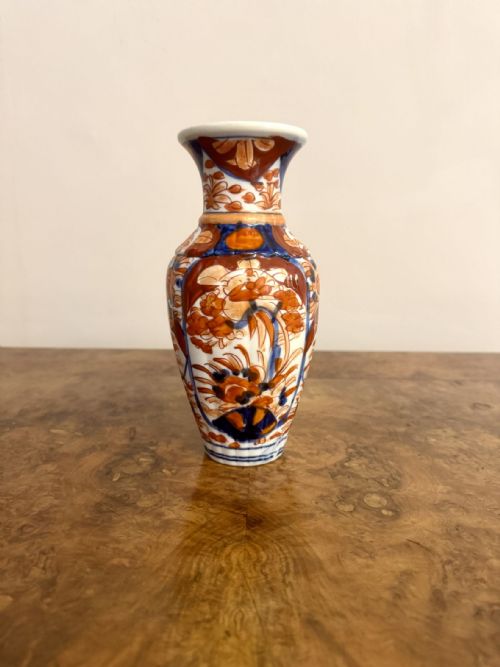
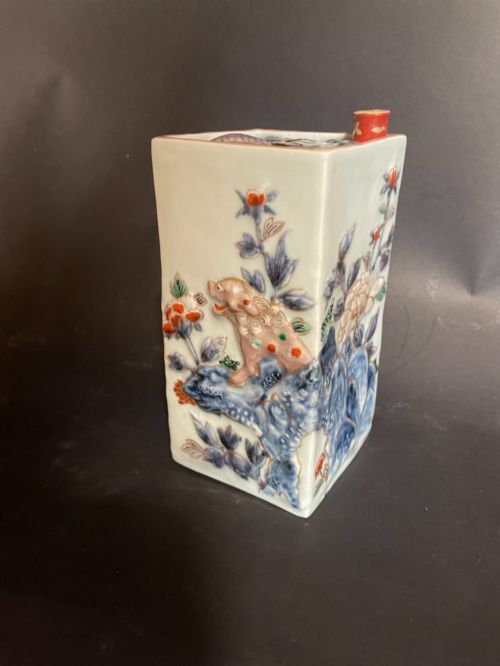
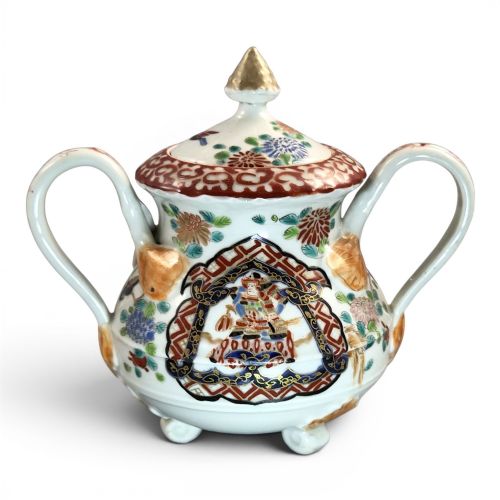
When searching for an imari ceramic vessel, collectors encounter a wide variety of forms originating from Japan and later European potteries. The most common examples seen here are floor-standing and table vases, decorative bowls, lidded ginger jars, and incense burners dating from the seventeenth century through the early twentieth century.
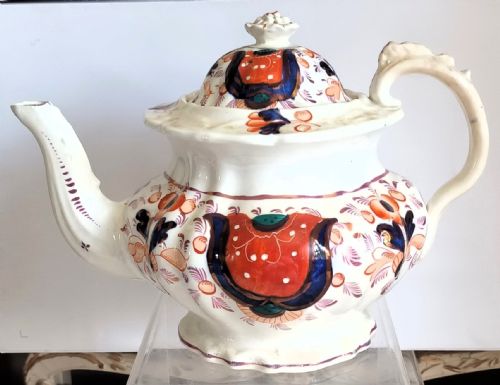
Japanese pieces dominate the selection, spanning the Edo and Meiji periods alongside later Showa examples. Alongside these are British interpretations from factories such as Royal Crown Derby, Spode, and Mason's, which adopted the distinctive palette and patterning.
Forms range from simple bottles and sugar bowls to large jardinieres and specialised items like sake flasks and koros. Each piece displays the characteristic interplay of cobalt underglaze blue and iron-red enamel, often highlighted with gilt details.
How they were made
Potters shaped these vessels using porcelain, bone china, or earthenware, depending on the origin and period of manufacture. Bodies were thrown on the wheel or moulded into forms such as hexagonal, octagonal, and boat-shaped profiles.
Decoration relied on a combination of underglaze cobalt blue and overglaze enamel pigments. Artisans applied gold leaf and gilt accents over the fired glaze to provide the characteristic metallic richness associated with the style.
The listings span from the 17th century through the 1930s, featuring porcelain, earthenware, and bone china across Japanese and British traditions.
What varies in quality
Quality in an imari ceramic vessel rests on the precision of the hand-painted brushwork and the clarity of the underglaze blue. Finer examples display crisp delineation in the iron-red and cobalt pigments without blurring or bleeding across the glazed surface.
The application of gold leaf and overglaze enamels also separates standard production from superior pieces. Heavier, more secure gilding and well-balanced forms indicate the work of skilled workshops and established makers.
Royal Crown Derby·Fukagawa·Spode
The Imari Ceramic Vessel Glossary
- Imari
- A style of ceramic decoration originating in Japan and characterised by a palette of cobalt blue, iron-red, and gold. European factories later adopted these specific visual traits.
- Koro
- A traditional Japanese incense burner typically featuring a pierced cover and supported on legs. These vessels often include matching lids and decorative handles.
- Meiji Period
- A Japanese historical era spanning from 1868 to 1912 noted for prolific ceramic exports. Pieces from this era frequently exhibit intricate detailing and vibrant enamels.
- Arita
- The Japanese town and production centre where imari porcelain originated. Kilns here supplied much of the export ware during the Edo period.
- Jardiniere
- A large ornamental pot or vessel designed to hold plants or flowers. Examples in this category often feature robust proportions and heavy potting.
Imari Ceramic Vessel: Frequently Asked Questions
How do I identify Japanese imari from British copies?
Japanese pieces typically rely on porcelain bodies made in Arita, featuring hand-painted iron-red and cobalt blue underglaze decoration from the Edo or Meiji periods.
British versions from factories like Royal Crown Derby or Spode often use bone china or earthenware bodies with distinct factory marks stamped or painted on the base.
What periods do these ceramic vessels cover?
The selection spans from seventeenth-century Arita wares up to early twentieth-century Edwardian and Showa period productions. Most examples date from the nineteenth century.
Meiji period pieces from Japan and Georgian or Victorian items from British potteries form the largest portion of the available range.
How were incense burners used historically?
Koros functioned as traditional Japanese incense burners designed for burning aromatic woods or resins during ceremonies or daily domestic life.
Their pierced covers allowed scented smoke to drift freely while keeping the burning material contained safely within the porcelain body.
Are all imari vessels made of porcelain?
While the majority of Japanese pieces use hard-paste porcelain, European factories utilised alternative ceramic compositions.
Listings include bone china, earthenware, and ironstone alongside traditional porcelain bodies, depending on the maker and the period.