
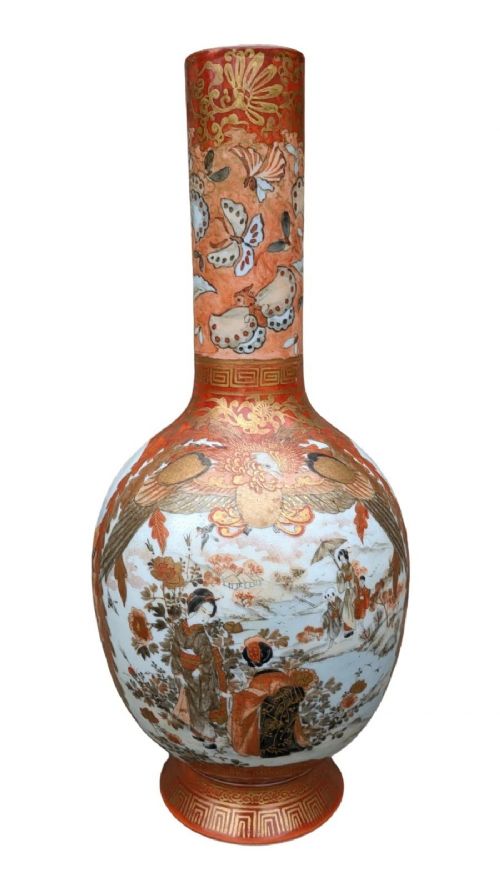
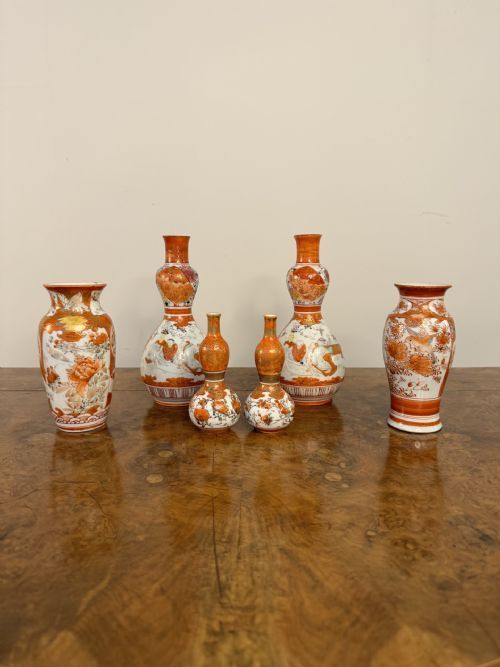


Gilded Porcelain Bottle Vase
These gilded porcelain bottle vase examples combine refined ceramic forms with rich metallic embellishment, offering an instant touch of historic elegance.
Gilded Porcelain Bottle Vase
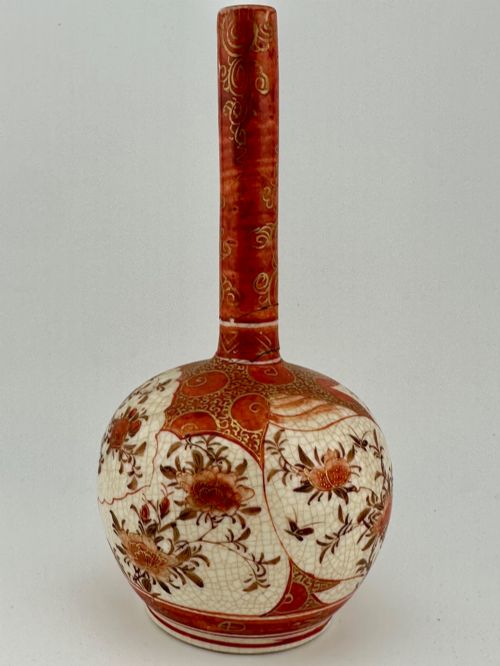
A gilded porcelain bottle vase combines an elongated neck with a rounded body, dressed in metallic leaf or paint. These vessels appear across various eras, ranging from early nineteenth century English porcelain to Meiji period Japanese imports.
The pieces on this page span several historical periods, including Victorian, Edwardian, and Regency examples. Buyers encounter both English manufactories and continental or Japanese export workshops.
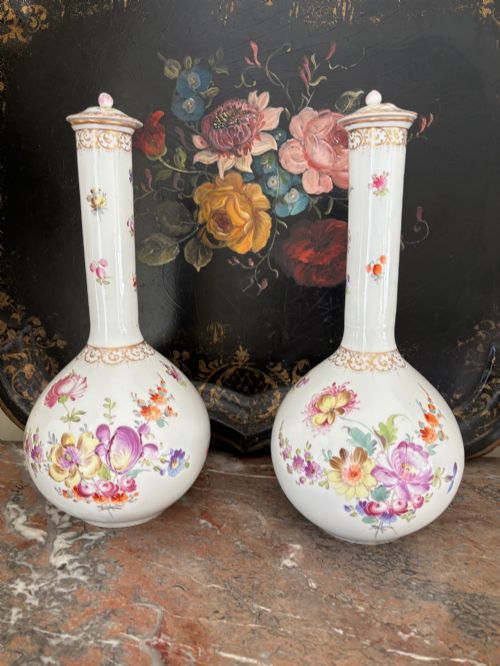
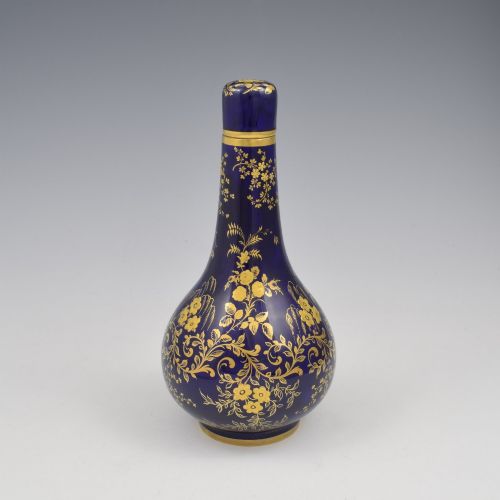
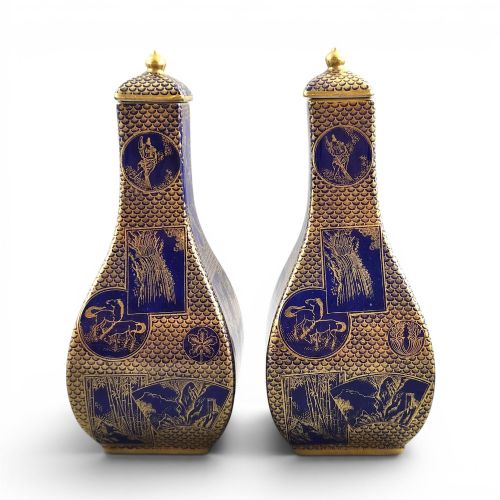
Form and decoration vary widely, from miniature scent bottles to large garniture sets and bulbous display pieces. Hand painted floral motifs and deep blue grounds frequently accompany the metallic decoration.
Materials and production methods
Potters shaped these vessels from refined ceramic pastes including ironstone and traditional porcelain before applying smooth glaze. Artisans then added hand painted enamel details alongside gold leaf, gilt, or liquid gilding.
Firing techniques fixed the vitreous enamels and metallic layers to the ceramic body, creating durable surfaces that retain their lustre. Many workshops combined blue grounds with applied gold to highlight specific contours of the vase.
The listings span multiple eras, including Victorian, Edwardian, and Regency periods, utilising materials such as porcelain, enamel, and gold leaf.
Assessing quality in execution
Quality rests upon the precision of the hand painting and the crispness of the gilt application. Finer examples display meticulous brushwork in floral panels and even coverage of gold leaf without rubbing.
The weight and refinement of the porcelain body also distinguish finer output, alongside the artistic success of the decorative scheme. Superior pieces maintain harmonious proportions between the slender neck and the bulbous base.
The Gilded Porcelain Bottle Vase Glossary
- Gilding
- The application of gold leaf or gold paint to the surface of the porcelain. This technique accents specific decorative details or creates solid metallic borders.
- Ironstone
- A patented ceramic body known for its durability and stone-like strength. It provided a robust alternative to softer earthenwares during the nineteenth century.
- Imari
- A style of Japanese export porcelain featuring iron red, underglaze blue, and gold ornamentation. These pieces heavily influenced European ceramic design.
- Garniture
- A set of three or more matching vases designed for display together on a mantelpiece or sideboard. They often share identical decorative motifs and scale.
- Meiji Period
- A Japanese historical era lasting from eighteen sixty-eight to nineteen twelve. Ceramics from this time often show exceptional technical skill for export markets.
Gilded Porcelain Bottle Vase: Frequently Asked Questions
What is a gilded porcelain bottle vase?
A gilded porcelain bottle vase is a ceramic vessel featuring a narrow neck and rounded body, accented with gold leaf or metallic paint. These items were produced by various European and Japanese manufactories across the nineteenth and early twentieth centuries.
Collectors prize them for their decorative presence and the combination of hand painted artistry with metallic enrichment.
How do I date these vases?
Dating relies on identifying factory marks, stylistic traits, and the specific materials used in the ceramic body and glaze. Victorian and Regency pieces often bear specific manufacturer stamps or painted pattern numbers.
Comparing the floral motifs and gilding style to documented examples helps narrow down the period of manufacture.
How were they used historically?
These vessels served primarily as decorative ornaments for mantelpieces, tables, and cabinets within prosperous homes. Some smaller variants functioned as scent bottles or rose water sprinklers.
Larger examples often formed part of matched garniture sets designed to decorate prominent rooms.
How do I care for gilded porcelain?
Care involves gentle dusting with a soft, dry cloth to prevent scratching the delicate enamel and metallic surface. Avoid using chemical cleaners or submerging the pieces in water, as this can damage old gilding.
Display them away from direct sunlight and areas prone to sudden temperature changes.