


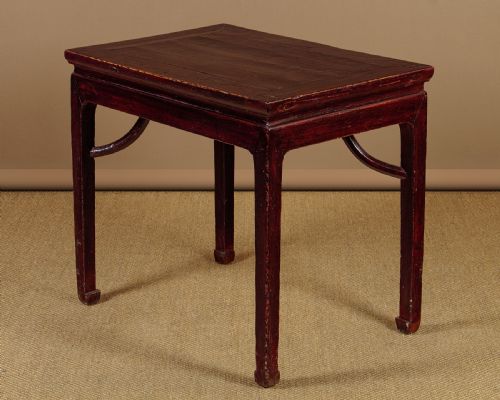


Hardwood Console Table
These hardwood console table pieces combine dense tropical timbers with intricate carving, offering striking utility for an entrance hall or living space.
Hardwood Console Table
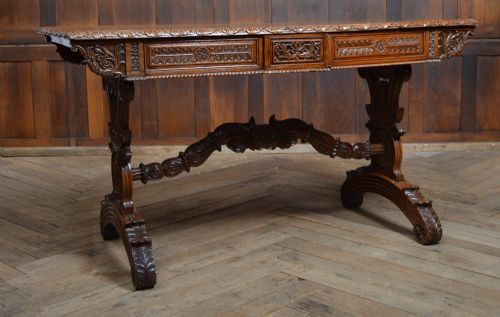
When you search for a hardwood console table, you encounter a diverse range of furniture spanning the eighteenth, nineteenth, and early twentieth centuries. The selection encompasses regional forms such as Chinese altar tables, Anglo-Burmese colonial designs, and Victorian interpretations.
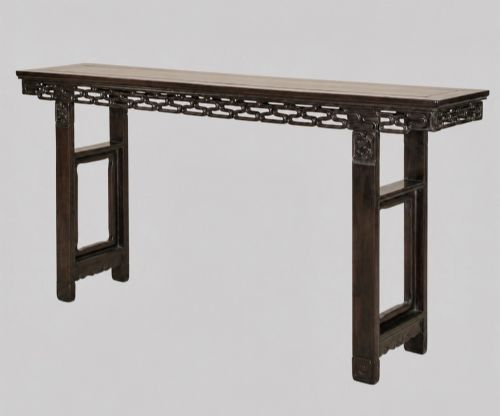
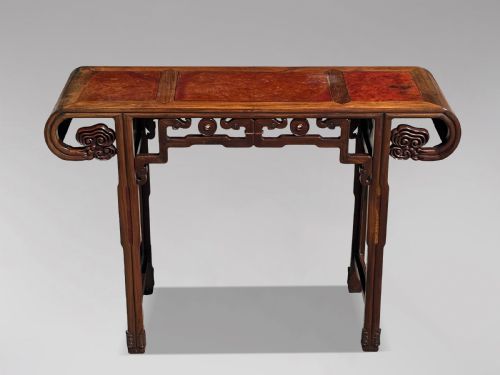
The most common examples on this page are nineteenth-century Chinese pieces, particularly Qing Dynasty altar tables and demi-lune console tables. These surface formats often feature rectangular or curved tops intended to sit flat against a wall.
Makers utilised various native timbers to construct these tables, ranging from domestic elm to dense exotic woods like hongmu, padauk, and amboyna. Alongside dedicated console tables, the selection includes related forms such as side tables, centre tables, and library tables.
Materials and construction
Cabinetmakers built these tables using dense hardwoods, including hongmu, padauk, and elm, which provided the structural stability needed for heavy use. Workshops also incorporated contrasting materials such as marble inset panels and mother-of-pearl inlay to decorate the primary timber surfaces.
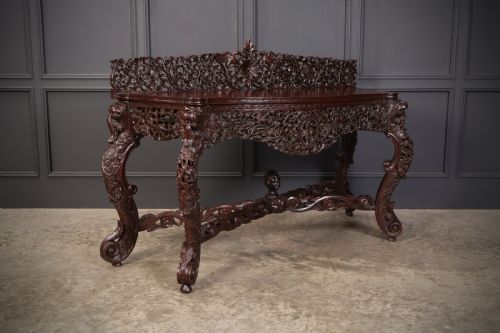
Carpenters relied on traditional joinery methods to assemble frames, legs, and tops without relying on modern metal fasteners. Carvers then applied deep relief carving directly to the hardwood frames, depicting motifs such as dragons, foliage, and geometric scrolls.
Materials recorded across the inventory include dense tropical timbers such as hongmu, padauk, and amboyna, alongside regional elm.
Judging the work
The standard of a hardwood console table depends heavily on the crispness and depth of the carved ornamentation on the apron and legs. Finer examples display sharp, well-defined details in the timber, whereas lesser pieces show softer, shallower incision work.
The choice and figuring of the wood dictate much of the visual weight, with dense hongmu and amboyna surfaces holding greater presence than plainer elm. Additionally, the integration of inset marble panels or mother-of-pearl work separates standard utility furniture from more ambitious workshop productions.
The Hardwood Console Table Glossary
- Hongmu
- A traditional Chinese term describing various dense, durable tropical hardwoods used in fine cabinetmaking. These timbers possess natural weight and rich colouration.
- Altar Table
- A rectangular table originating in China, characterised by upturned ends or recessed legs. They served ceremonial functions before finding utility as domestic console surfaces.
- Padauk
- A heavy, durable reddish-brown tropical timber favoured by colonial and Eastern workshops. It takes a fine carved finish and ages to a deep patina.
- Demi-Lune
- A half-moon shaped furniture form designed to stand flat against a wall. These tables frequently appear as console or hall furniture.
Hardwood Console Table: Frequently Asked Questions
What is a hardwood console table used for?
These tables traditionally stood against walls in halls, reception rooms, or temples to display decorative objects or ceremonial items. Today, they serve a similar purpose in modern interiors, providing a narrow surface for lamps, vases, and daily accessories.
Because of their shallow depth, they fit well in narrow corridors and transitional spaces where standard dining or writing tables would obstruct movement. Their sturdy hardwood construction ensures they easily support heavy lamps and ceramics.
How do I identify Chinese altar tables?
Altar tables usually feature an elongated rectangular top, often with distinctive upturned flanges at the short ends. Their legs are frequently set slightly inward from the corners, supporting a carved apron underneath.
These pieces emerged from religious and domestic traditions in China before being adapted for export markets. Their proportions remain distinct from standard western console tables due to this specific heritage.
What woods were used for these tables?
Makers utilised a variety of dense timbers, including regional Asian hardwoods like hongmu and padauk, alongside domestic Chinese elm. Workshops also incorporated exotic accents such as amboyna wood and mother-of-pearl inlay.
These materials were chosen for their natural strength, dark colouration, and capacity to hold intricate relief carving. Over time, exposure to light deepens the natural patina of these timbers.
Where should I place a console table?
Console tables suit entrance hallways, living rooms, and dining spaces where floor space is limited. Their flat backs allow them to anchor securely against a wall without protruding too far into the room.
Pairing a console table with a mirror or a painting creates a balanced focal point in a domestic interior. Their decorative carved aprons and marble tops ensure they contribute visual interest from multiple angles.