
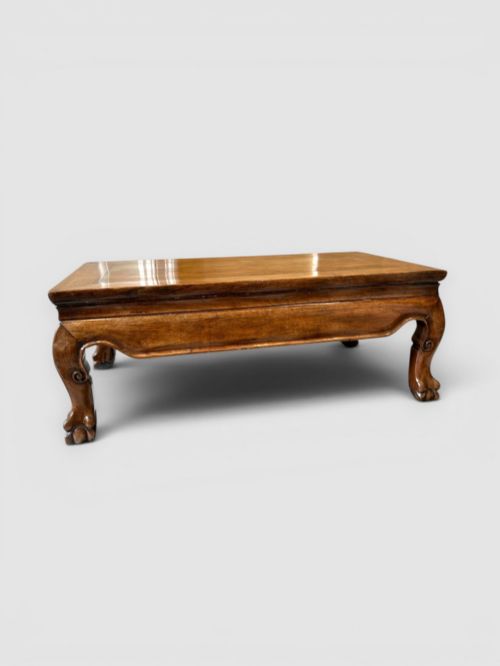


Chinese Ming Style Table
These pieces built in a chinese ming style table tradition offer enduring architectural restraint and clean lines for modern interiors.
Chinese Ming Style Table
When you search for a chinese ming style table, you look for low coffee tables, side tables, stands and stools derived from classical forms. The evidence shows these pieces originating across the eighteenth and nineteenth centuries, as well as the early twentieth century.
You are most likely to meet low coffee tables, corner leg tables, and opium tables on this page. These items often feature traditional square, rectangular, circular or hexagonal formats designed for functional placement in living spaces.
How they were made
Joinery forms the backbone of these pieces, utilising dense hardwoods, huanghuali, rosewood and elm. Timber selection dictates the weight and structural integrity of each frame.
Makers incorporate burr wood panels and glass inserts to accent plain wooden surfaces. Traditional construction methods rely on precise framing rather than modern metal fasteners.
The listings on this site record items spanning the eighteenth, nineteenth and early twentieth centuries.
What varies in quality
The refinement of the timber grain and the depth of the finish determine the upper tier of these pieces. Dense rosewood and huanghuali display a natural patination that lesser elm or general hardwood lacks.
Proportion and the restraint of the joinery separate superior examples from standard provincial work. Clean lines and balanced corner leg assemblies indicate higher workshop competency.
The Chinese Ming Style Table Glossary
- Opium table
- A low rectangular or square table traditionally used for serving tea or smoking. These low forms sit close to the floor with recessed legs.
- Burr wood
- Wood featuring distorted grain growth that creates intricate swirling patterns. It is sliced into decorative panels for table tops and stool seats.
- Jardiniere stand
- A tall or low occasional table designed to hold plant pots or decorative bowls. They share the same joinery techniques as standard side tables.
Chinese Ming Style Table: Frequently Asked Questions
What is a chinese ming style table used for?
These low tables function well as coffee tables or display surfaces in contemporary rooms. Their understated profile suits minimalist and traditional interiors alike.
Low coffee tables and opium tables provide stable surfaces for lamps, books and decorative objects. Stools and stands offer versatile placement options as occasional furniture.
How do I identify a ming style table?
Look for clean rectangular or circular lines and visible architectural joinery without heavy ornamentation. The emphasis rests on the natural beauty of the timber.
Materials range from elm and general hardwood to rosewood and huanghuali. Forms include corner leg tables, low coffee tables and hexagonal stands.
Are these tables heavy?
Density varies according to the species of wood used in construction. Rosewood and huanghuali pieces possess significant weight due to the dense nature of the timber.
Elm and general hardwood items can be lighter while maintaining structural rigidity. Traditional joinery distributes weight evenly across the frame.
Can I use these tables as coffee tables?
Many pieces listed as low tables or opium tables match modern coffee table heights. Their proportions adapt easily to seating areas.
Square, rectangular and circular formats offer practical surface areas for daily use. Low profiles keep sightlines open across a room.