




Oriental Hardwood Console
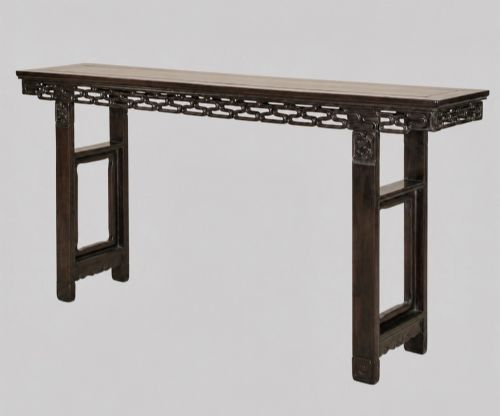
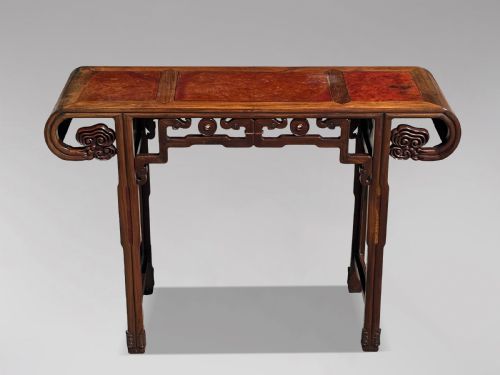
An oriental hardwood console brings sculptural weight and rich grain to a hallway, with altar tables and demi-lune forms most often found here.
Oriental Hardwood Console
When you search for an oriental hardwood console, you encounter tables designed for display, ceremony, and practical use across dining rooms and halls. The pieces appearing here span the eighteenth, nineteenth, and early twentieth centuries, reflecting diverse regional workshops.
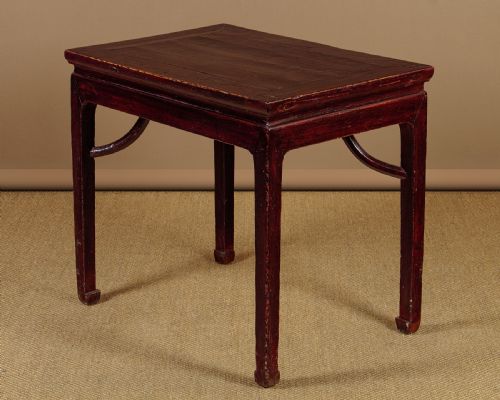
Altar tables and rectangular centre tables dominate the selection, alongside demi-lune hall tables and occasional trestle forms. Many pieces originate from Qing Dynasty China, while others show Anglo-Indian Colonial or Burmese influences.
Elm, hongmu, amboyna wood, and dense dark hardwoods provide the structural foundation for these heavy tables. Several examples feature inset marble panels or carved decoration depicting traditional motifs.
Construction and Materials
Cabinetmakers utilised dense Asian hardwoods such as hongmu and elm, prized for their structural stability and deep natural grain. Planks were joined using traditional timber framing techniques that accommodated seasonal expansion without metal fasteners.
Surface finishes range from clear polish that highlights the wood figure to rich black lacquer and detailed relief carving. Inset panels of rouge marble frequently form the table tops, adding a cool, smooth contrast to the timber frames.
Judging Quality
Quality rests in the crispness of the hand carving and the selection of timber figures for prominent surfaces like table tops. Heavier, denser woods indicate superior material choice, while tight joinery ensures the piece remains rigid over generations.
The integration of decorative elements, such as inlaid marble panels and pierced aprons, demonstrates the skill of the original workshop. Finer examples retain their original surface patination and proportion, balancing decorative weight with structural grace.
The Oriental Hardwood Console Glossary
- Altar Table
- A long, narrow table traditionally used for ceremonial offerings, featuring upturned flange ends or carved aprons.
- Demi-Lune
- A half-moon shaped table designed to sit flat against a wall, frequently used in pairs as console tables.
- Hongmu
- A category of dense, fragrant Asian hardwoods often translated as red wood, used extensively in fine antique furniture.
- Trestle Table
- A table structure where the top is supported by end assemblies rather than four individual corner legs.
- Chinoiserie
- European decorative style reflecting Chinese artistic influences, though distinct from authentic Qing Dynasty pieces.
Oriental Hardwood Console: Frequently Asked Questions
Where should I place a console table?
These tables suit narrow hallways, entryways, and living spaces where a shallow surface is required for lamps or decorative objects. Their sculptural forms allow them to stand against plain walls or anchor a room grouping.
Because many examples feature detailed carvings or marble inserts, positioning them away from direct heat sources preserves the timber and finish over time.
How do I care for antique hardwood furniture?
Dust the timber regularly with a soft, dry cloth and avoid applying modern silicone polishes that build up over time. Natural wax can be applied sparingly to nourish dry wood.
Keep the tables away from direct sunlight and drastic humidity changes to prevent the dense hardwoods and inset marble panels from cracking.
What is the difference between an altar table and a console?
Altar tables typically feature distinctive recessed legs and upturned flanges at the short ends, originating from ceremonial placement in Chinese homes. Consoles are built primarily for wall placement in domestic rooms.
Both serve similar display functions in modern interiors, though altar tables often present a more architectural and elongated silhouette.
Are these tables heavy to move?
Asian hardwoods like hongmu and elm are exceptionally dense and heavy materials, making these tables sturdy and substantial. Moving them generally requires two people to lift rather than drag the piece.
The substantial weight contributes to their stability on uneven floors without needing wall anchors.