
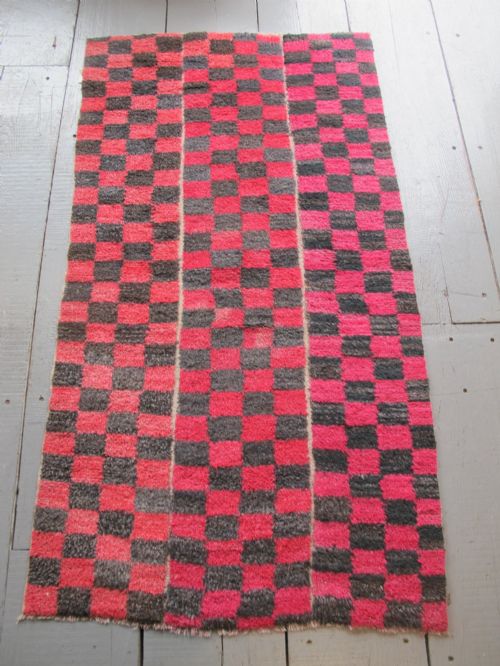


Handwoven Wool Mat
These handwoven wool mats bring warmth and tribal pattern into a room through textiles made by village weavers.
Handwoven Wool Mat
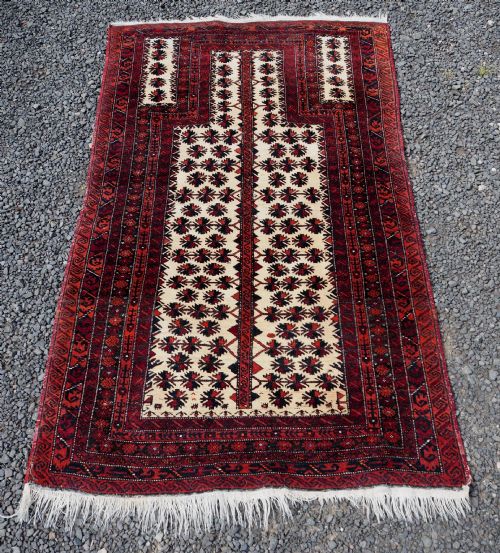
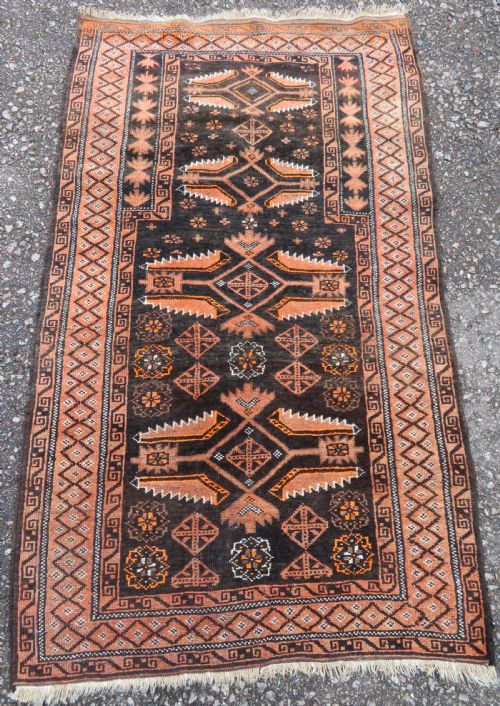
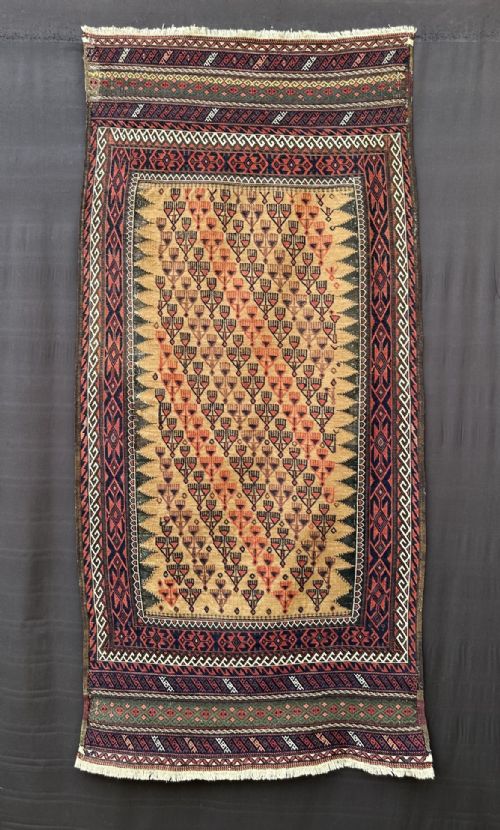
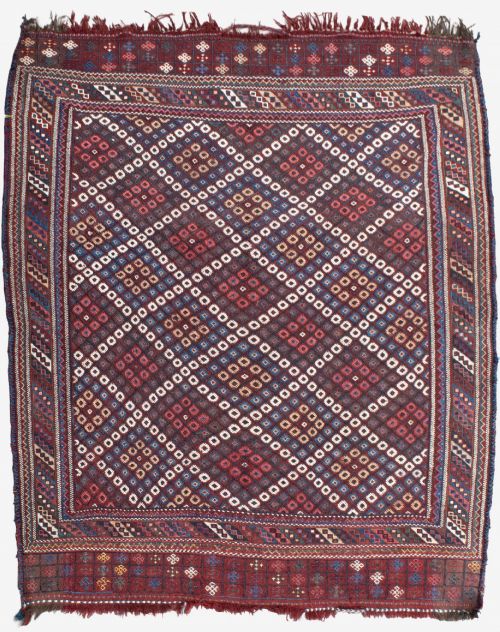
A handwoven wool mat search gathers floor coverings and flatweaves produced by nomadic tribes and village communities across Persia, Anatolia, the Caucasus, Afghanistan, and Tibet. The pieces meeting this description range from compact prayer rugs and meditation squares to utilitarian bread sofrehs and animal saddle covers, mostly dating from the nineteenth and early twentieth centuries.
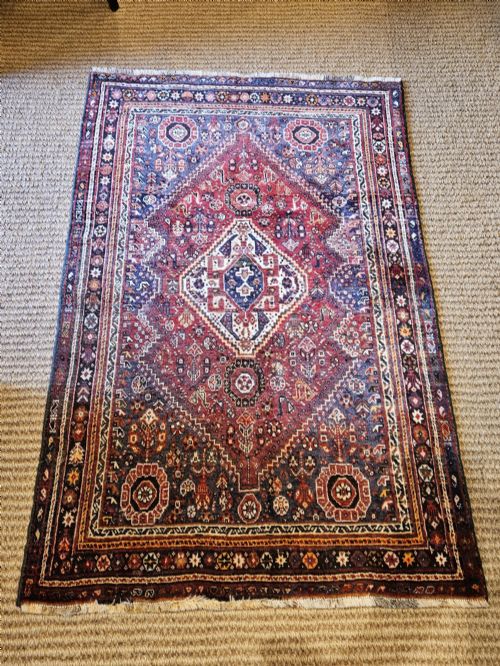
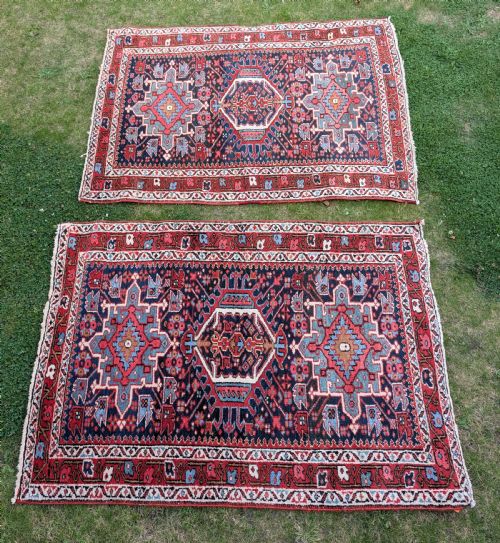
Village and tribal formats dominate the selection, bringing geometric motifs, medallion layouts, and animal designs directly from weavers working within specific regional traditions. Buyers encounter everything from small Konya yastics and Baluch prayer rugs to room-size Yalameh carpets and Afshar tribal weaves.
Materials and construction methods
Weavers constructed these textiles using hand-spun wool, Tibetan wool, camel hair, and cotton, often securing structural integrity with leather reinforcements and foundation warps. Natural dyes provided the foundational palette for motifs that grew out of Persian, Caucasian, Anatolian, and Turkmen tribal heritage.
Makers employed various techniques, combining piled knotting with flatweave kilim ends and mixed-technique structures, particularly visible in nomadic items like bread sofrehs and prayer rugs.
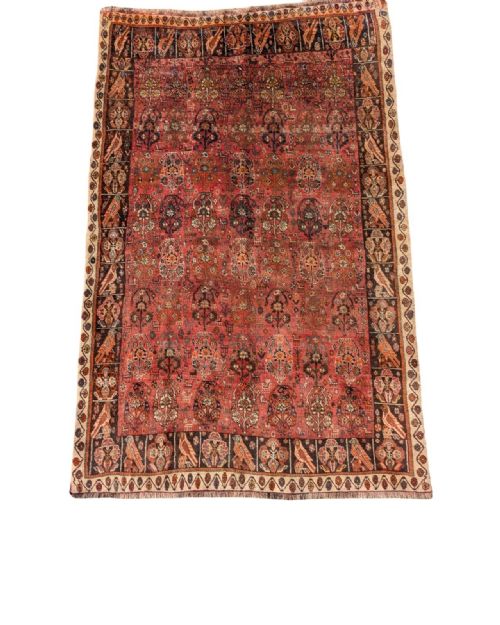
Several pieces preserve the energetic presence of animals and peacocks woven directly into the wool by village makers.
Distinctions in construction and design
Quality separates examples by the fineness of the knotting, the complexity of the tribal design, and the survival of the original kilim ends and selvedges. Stronger colour saturation and the use of natural dyes rather than synthetic replacements elevate certain tribal pieces above standard village production.
The precision of the wool preparation and the tightness of the weave determine durability, while unusual ground colours or specific tribal attributions mark out pieces of distinct collector interest.
The Handwoven Wool Mat Glossary
- Sofreh
- A utilitarian textile used for spreading during meals or bread preparation, woven by nomadic groups such as the Afshar and Timuri tribes. These flatweaves and piled pieces often display striking minimalist or geometric compositions.
- Prayer rug
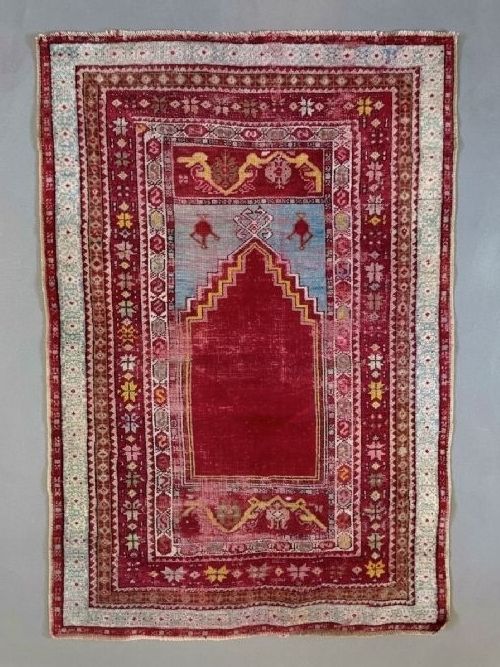
- A small format textile featuring a mihrab or arch design indicating the direction of prayer, common in Anatolian, Persian, and Caucasian weaving traditions. Weavers produced these for personal devotional use.
- Yastic
- A small Turkish cushion cover or pillow rug, typically woven in regions like Konya with dense pile and compact proportions. They served functional domestic purposes in village households.
- Kilim end
- The flatwoven portion at the top or bottom of a rug, preceding the knotted pile section. The presence of long or intact kilim ends indicates a well-preserved textile.
- Flatweave
- A textile constructed without pile by interweaving warp and weft threads together, resulting in a smooth surface structure. Examples include sofrehs and various tribal covers.
Handwoven Wool Mat: Frequently Asked Questions
Where were these mats made?
These textiles originate from nomadic and village communities across Persia, Anatolia, the Caucasus, Afghanistan, and Tibet. Local weavers produced them for domestic use, ritual prayer, or daily sustenance.
Production centres include specific tribal regions such as Kerman, Konya, and the borderlands of north-east Persia and north-west Afghanistan, each maintaining distinct regional motifs and weaving techniques.
How do I care for wool rugs?
Keep these textiles out of direct sunlight to prevent natural dye fading, and vacuum them gently without using a rotating brush roll. Professional cleaning suited for antique wool is essential when dust accumulates within the pile.
Allowing air circulation underneath the mat prevents moisture retention, particularly when placed on solid flooring surfaces.
What is a sofreh?
A sofreh is a flatwoven or piled cloth used historically by nomadic groups for eating, kneading dough, or wrapping bread. Their designs often feature stark geometric layouts and tribal symbols.
These utilitarian pieces reflect the daily domestic rituals of tribes like the Afshar, Timuri, and various Persian nomads.
How do I identify a prayer rug?
Prayer rugs feature a distinct architectural motif known as a mihrab, which represents an arch or niche pointing in a specific direction. Makers across Anatolia, the Caucasus, and Persia utilised this design for personal devotion.
These pieces typically measure in smaller formats suited for kneeling, often finished with detailed borders and symbolic corner motifs.