



Shiraz Wool Rug
When you search for a shiraz wool rug, you are looking at tactile tribal weaving from south-west Persia that brings rich colour and enduring character to any floor.
Shiraz Wool Rug
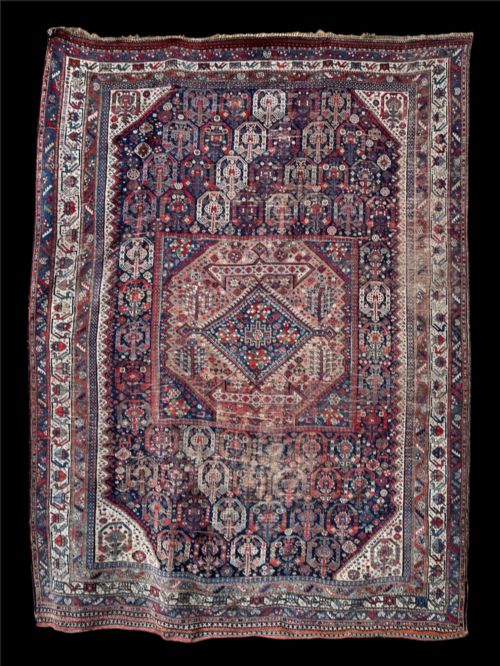
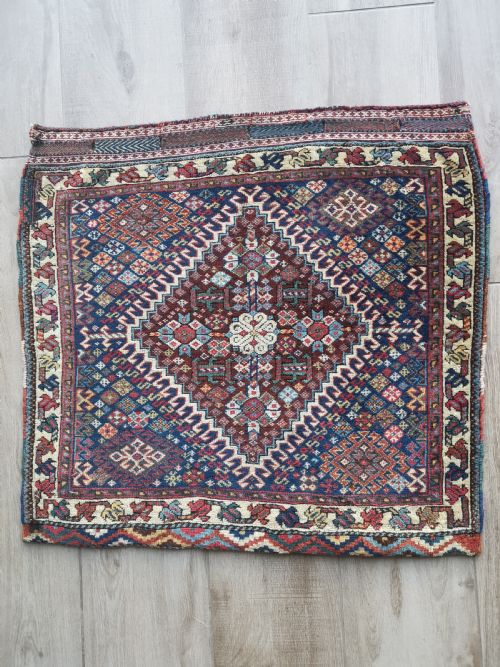
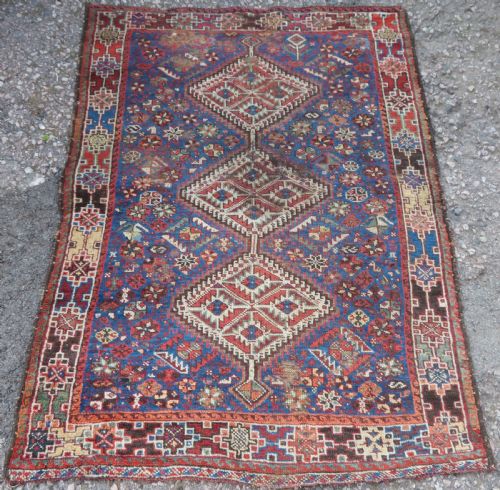
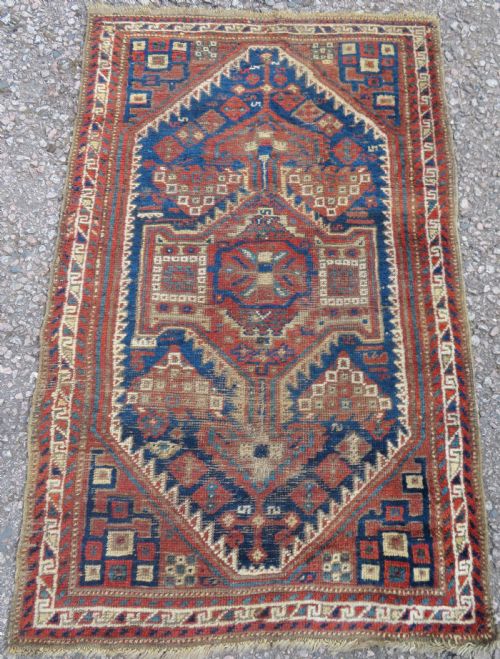
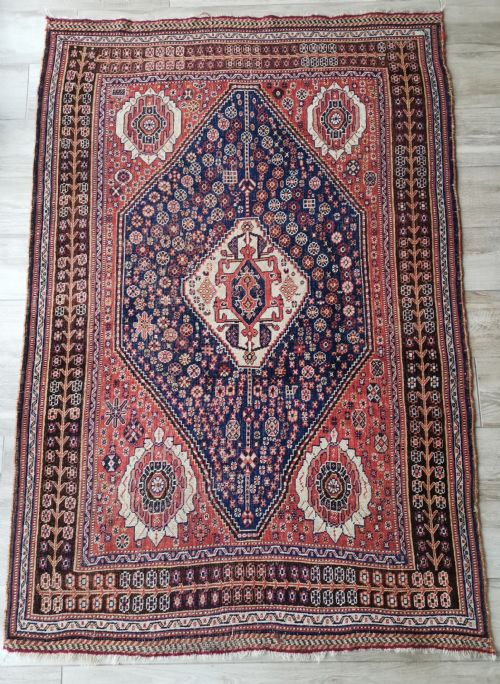
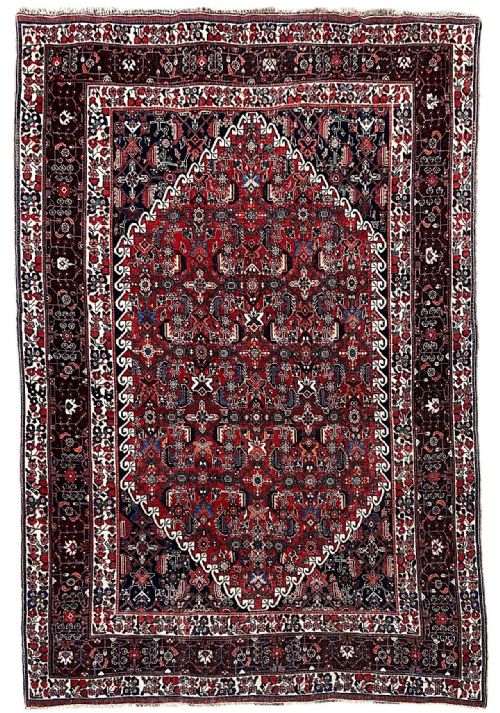
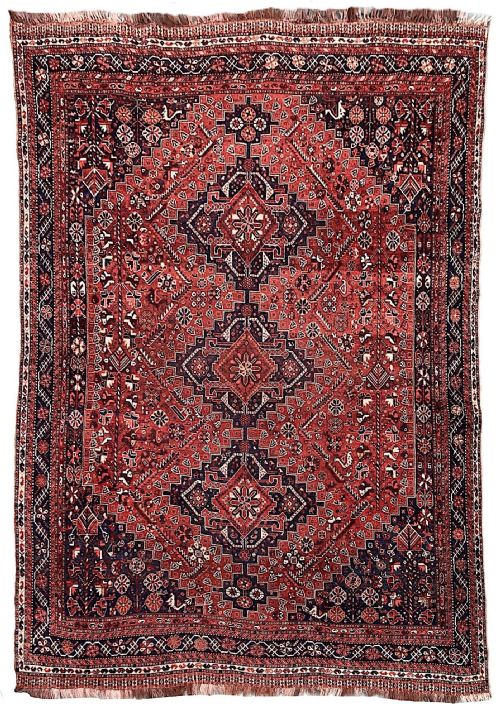
A shiraz wool rug encompasses traditional woven carpets, smaller area formats and nomadic bag faces produced by tribal groups in south-west Persia. These pieces include specific regional iterations bearing names such as Qashqai and Khamseh, reflecting the diverse confederacies of the region.
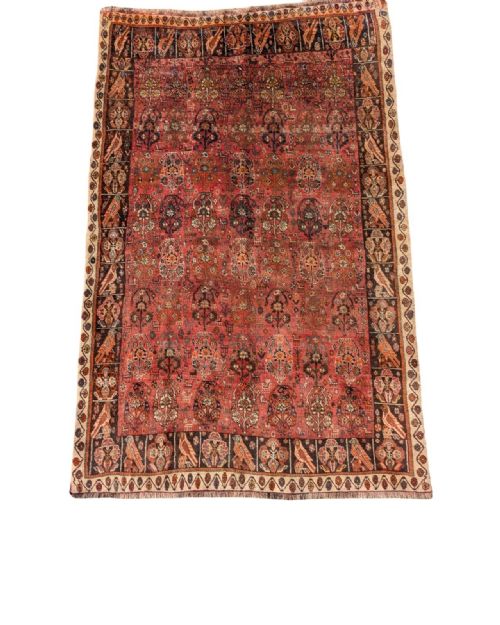
The objects span from the nineteenth century into the early decades of the twentieth century, presenting formats that range from intimate saddlebags to substantial main carpets. The designs frequently incorporate geometric medallions, animal motifs like peacocks and traditional field patterns.
Most examples meet on this page originate from tribal and village workshops, displaying the characteristic aesthetics of south Persian nomadic weaving. Buyers encounter both utilitarian floor coverings and smaller decorative fragments created for daily pastoral life.
Materials and construction
The foundation of a shiraz wool rug relies on natural wool for the pile and structure, frequently supported by cotton foundations in later village and tribal pieces. Spinners and weavers utilised locally sourced animal fibres that accepted dyes readily and provided a dense, resilient surface.
Makers employed natural dyes to achieve deep saturation, creating the rich palette characteristic of south Persian carpets. Hand-weaving techniques governed the production, securing the pile firmly within the warp and weft threads to withstand generational use.
Peacocks occasionally strut across the wool field, reminding us that nomadic weavers liked to stitch their local wildlife into the daily commute.
Assessing quality in tribal carpets
Quality in a shiraz wool rug rests upon the fineness of the weave, the clarity of the design motifs and the preservation of the pile. Denser knots allow complex geometric patterns to appear sharp and distinct across the field.
The vibrancy and depth of the natural dyes separate standard utility pieces from exceptional examples. A harmonious balance of colour throughout the medallions and borders indicates careful preparation and superior material selection by the maker.
Qashqai·Khamseh·Baharlu·Kashkuli
The Shiraz Wool Rug Glossary
- Medallion
- A central decorative motif placed in the middle of the rug field. These geometric shapes often anchor the overall composition of tribal carpets.
- Bagface
- The front decorative panel of a nomadic storage sack or saddlebag. These smaller textiles are often removed and mounted or used as compact floor rugs.
- Warp
- The vertical threads stretched tightly on the loom that form the structural skeleton of the carpet. The weft threads are passed horizontally across these foundations.
- Pile
- The upright yarn surface of the rug formed by knotted wool loops. The height and density of this layer determine the tactile weight and durability of the textile.
- Khamseh
- A confederacy of diverse tribes in south-west Persia known for distinctive dark grounds and intricate geometric weaving. Their output shares regional traits with neighbouring Qashqai work.
Shiraz Wool Rug: Frequently Asked Questions
How were these rugs used originally?
Nomadic tribes utilised these textiles as functional floor coverings, sleeping mats and animal trappings for transport during seasonal migrations.
Smaller formats like bag faces served practical storage needs within tribal camps before surviving as collectible fragments today.
How do I care for a tribal rug?
Protect the wool pile by vacuuming gently without a rotating brush and keeping the textile away from direct, harsh sunlight.
Allow air circulation beneath the piece and consult a specialist in antique textiles for professional cleaning when necessary.
How do I identify a Qashqai piece?
Qashqai weaving is typically distinguished by fine wool, intricate geometric medallions and occasional figurative motifs such as peacocks.
These rugs originate from the south-west Persian confederacy and often display a notable depth of colour and balanced tribal composition.