




Late 19th Century Carpet
A late 19th century carpet brings rich botanical dyes, geometric tribal motifs and enduring room-anchoring warmth to an interior.
Late 19th Century Carpet
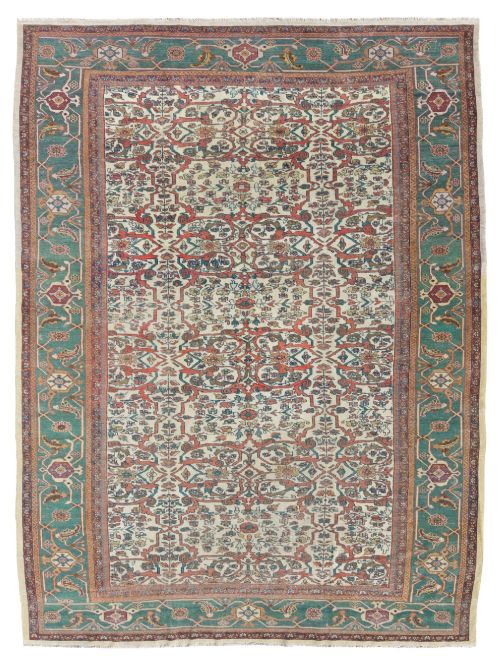
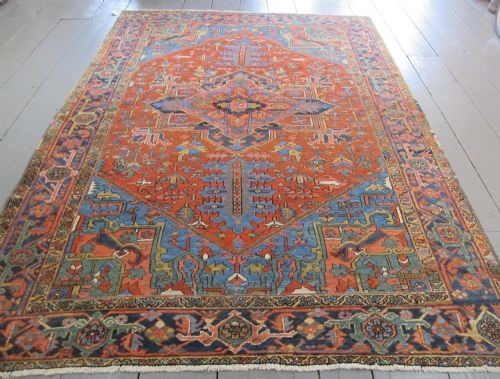
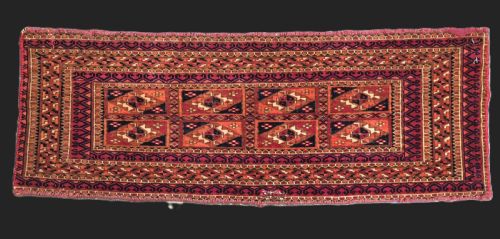
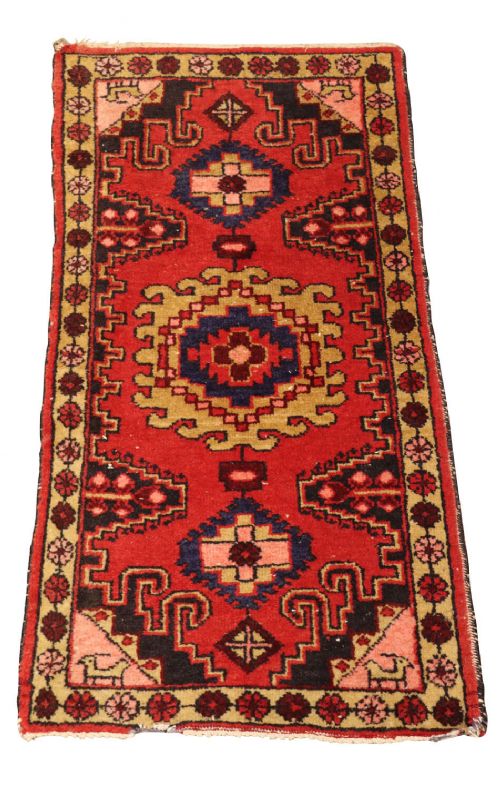
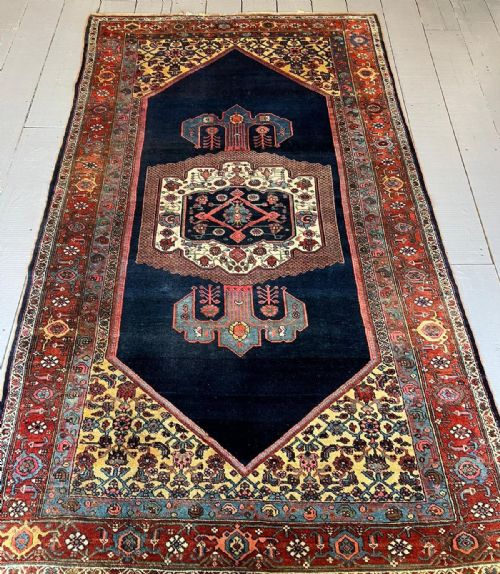
A late 19th century carpet encompasses substantial floor coverings woven across Persia, Anatolia, the Caucasus and Central Asia during the decades leading up to nineteen hundred. These textiles range from grand room-size Persian city formats like Sultanabad, Heriz and Fereghan to smaller tribal village rugs and nomadic Turkmen main carpets.
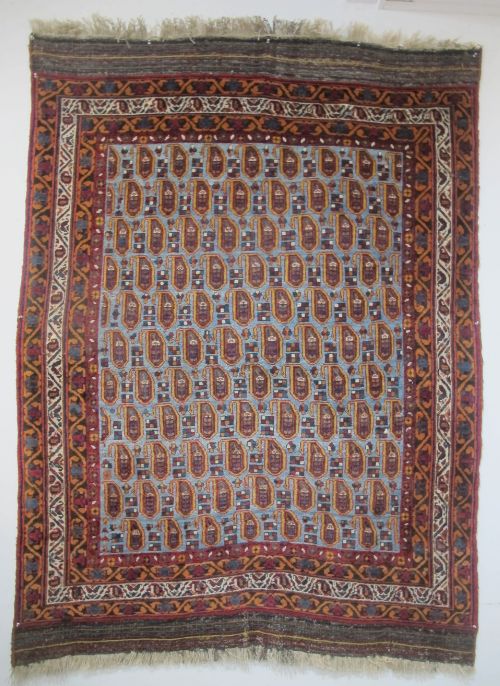
The selections span distinct weaving traditions including Kurdish, Baluch, Qashqai and Caucasian workshops alongside large-scale Turkish Oushak productions. Floor placement varies from sprawling drawing room centerpieces to narrow corridor runners and compact village scatter rugs.
Makers utilised diverse regional formats, producing everything from intricate medallion layouts and all-over repeating boteh motifs to stark geometric prayer designs and tribal guls. Each piece reflects the specific cultural geometry and palette of its originating locale.
Materials and construction
Weavers relied principally on hand-spun wool foundation yarns and pile, frequently pairing these with cotton warps and wefts for structural stability. Certain nomadic groups additionally incorporated camel hair or silk highlights to add texture and tonal depth.
Colour palettes derived from natural dyes extracted from madder root, indigo and local flora, yielding rich tones that mellow gracefully over decades of light exposure. Artisans knotted the pile by hand onto vertical looms, varying knot densities according to whether the workshop served urban commercial markets or tribal domestic needs.
Late 19th Century Carpet Retail Price Guide 2026
Typical asking prices for late 19th century carpet among the pieces listed under this phrase on Sellingantiques today, from the lower quarter to the upper quarter. They describe what is for sale here now, not the wider market.
Tibetan saddle covers join the floor formats, offering a compact reminder that not every antique weaving spent its life on a room floor.
Standards of execution
Quality rests in the integrity of the natural dye palette, where harmonious saturation and subtle abrash indicate skilled pigment preparation. The precision of the hand-knotted weave and the suppleness of the wool foundation likewise separate standard village outputs from exceptionally fine workshop productions.
Design coherence and the crisp rendering of traditional motifs govern desirability across regional types. Pieces retaining strong structural integrity alongside balanced proportions command greater attention from collectors.
The Late 19th Century Carpet Glossary
- Abrash
- A subtle horizontal banding of colour variation caused by changes in dye batches or hand-spun wool lots during weaving.
- Gul
- An octagonal or repeating medallion motif characteristic of Turkmen and Central Asian tribal weaving traditions.
- Boteh
- A stylized almond or paisley motif representing a floral spray or cypress tree, frequently repeated across Persian and Caucasian fields.
- Kelleh
- A large, elongated carpet format traditionally designed for the long corridor or centre of a Persian reception room.
- Warp
- The vertical foundation threads stretched lengthwise on the loom onto which the woolen knots are tied.
Late 19th Century Carpet: Frequently Asked Questions
How do I clean a antique carpet?
Routine maintenance requires gentle vacuuming without rotating brush heads to protect the wool pile. Professional specialist cleaning remains essential for addressing deeper soil accumulation.
Water exposure and standard household detergents must be avoided to prevent dye migration and fibre degradation in natural materials.
Where were these carpets woven?
Production centres spanned traditional Persian towns, Anatolian weaving hubs, Caucasian villages and Central Asian nomadic encampments. Each region developed distinct structural characteristics and palette preferences.
Urban workshops produced large commercial room sizes, while smaller nomadic groups created portable rugs and tent trappings for daily utility.
How do I identify regional styles?
Distinctions rely on analyzing specific motif vocabularies, border arrangements, knotting structures and foundational materials. Persian pieces often favor curvilinear florals, whereas Caucasian and Turkmen traditions emphasise geometric polygons.
Palettes also offer clues, with specific indigo blues and madder reds pointing toward distinct geographic origins.
Are these carpets suitable for heavy foot traffic?
Dense hand-knotted wool construction provides natural resilience against regular household use. Placing a quality underlay beneath the carpet cushions the foundation fibres and reduces friction.
Placing rugs in moderate traffic areas allows the textiles to endure while preserving their historical surface patina.