
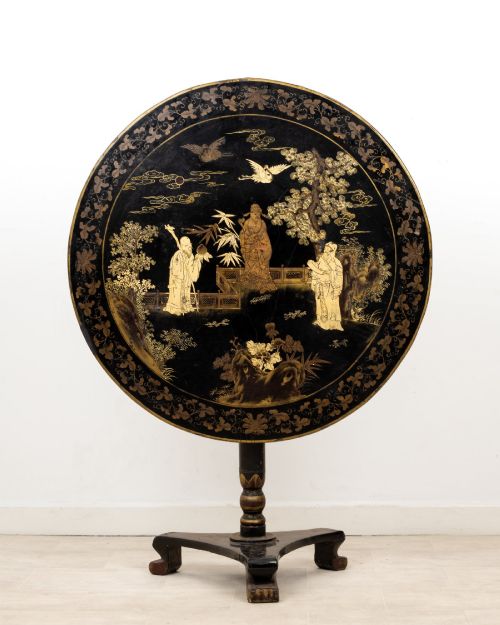
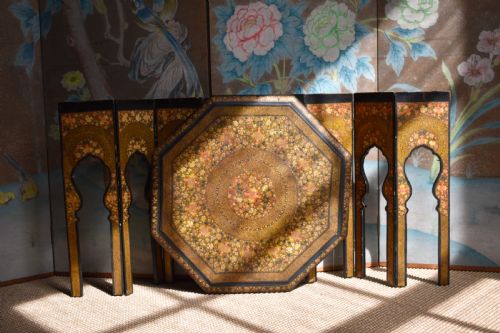
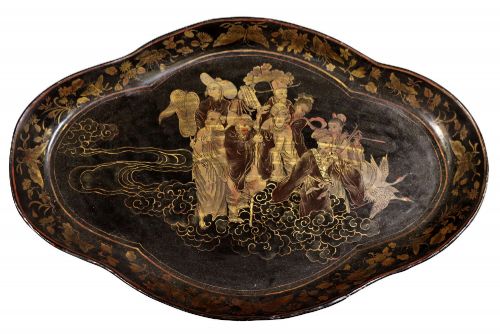
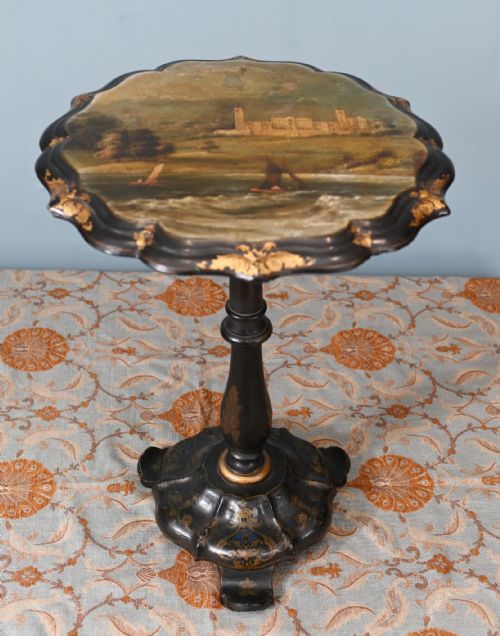

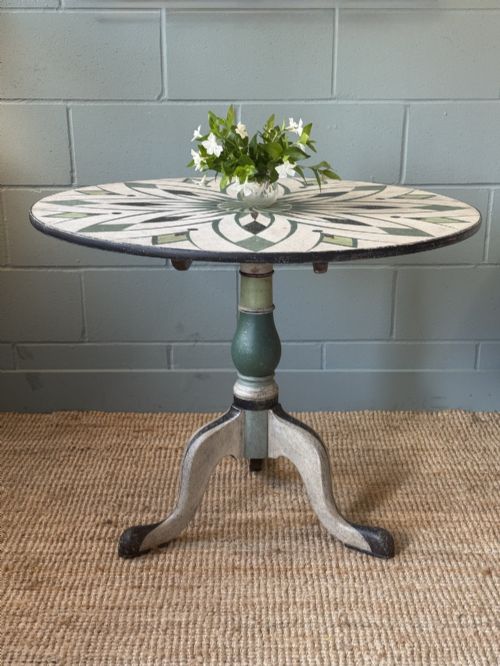


Hand Painted Tea Table
A hand painted tea table brings patterned colour and decorative surface work into a room, spanning nineteenth-century lacquer and Edwardian chinoiserie forms.
Hand Painted Tea Table
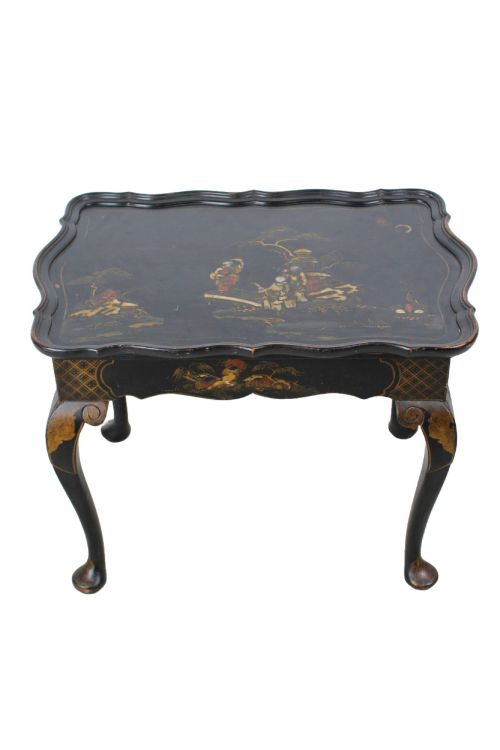
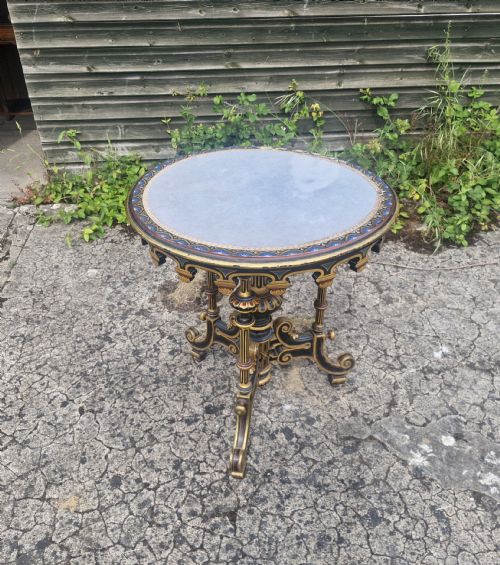
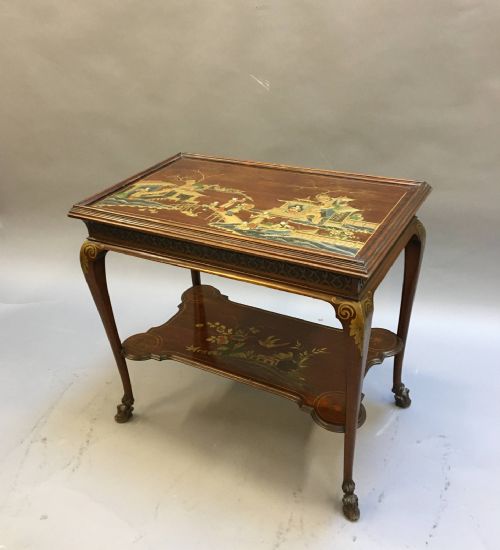
A hand painted tea table unites functional surface space with decorative painted or lacquered schemes, drawing from nineteenth-century, Victorian, and Edwardian periods. Buyers search for these pieces to introduce patterned motifs, floral designs, or figural scenes into sitting rooms and studies.
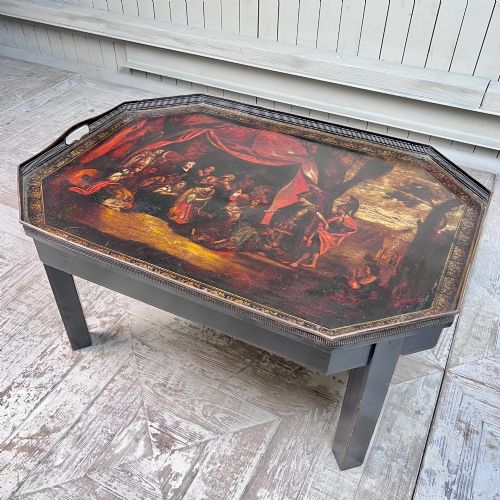
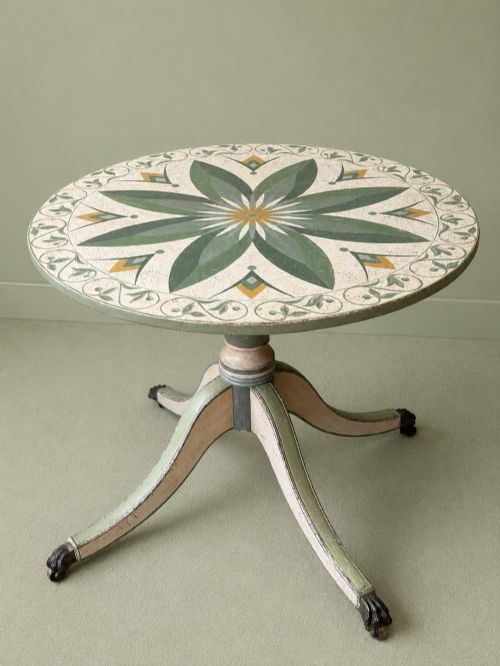
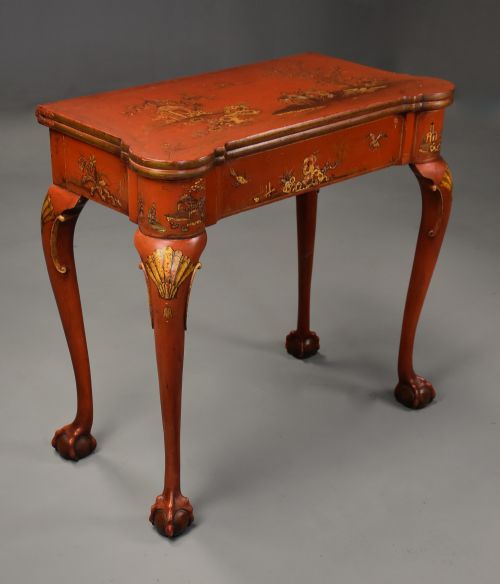
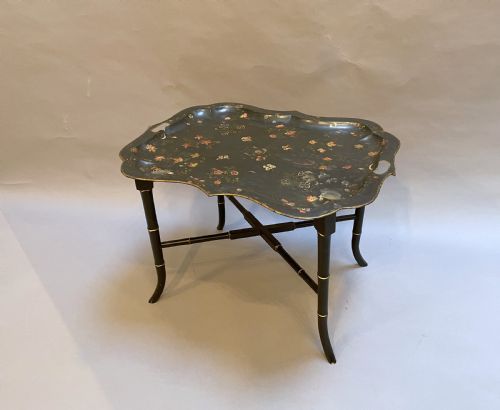
The most common formats on this page include tray top coffee tables, tilt-top occasional tables, and folding card or games tables. Makers adapted traditional forms like Pembroke tables and demi-lune tables by adding hand-painted or lacquered decoration.
Origins stretch across English workshops, Anglo-Indian production, Kashmiri craft, and Chinese lacquer work, alongside Venetian and Burmese examples. These diverse geographic sources mean surface decoration ranges from floral sprays to elaborate chinoiserie landscapes.
Materials and construction
Construction relies on timber foundations such as mahogany, satinwood, and oak, alongside papier-mâché and metal toleware structures. Artisans applied layers of lacquer or paint directly to wood or prepared surfaces to create smooth grounds for subsequent brushwork.
Decoration involved hand-applied paint, gilt, and gold leaf, frequently sealed with clear finishes to protect the detailed imagery. Many tray tables combined removable painted trays with later or folding wooden stands, while tilt-top mechanisms utilised pivoted wooden blocks and brass catches.
Hand Painted Tea Table Retail Price Guide 2026
Typical asking prices for hand painted tea table among the pieces listed under this phrase on Sellingantiques today, from the lower quarter to the upper quarter. They describe what is for sale here now, not the wider market.
Materials recorded across the selection include wood, lacquer, paint, gilt, brass, gold leaf, papier-mâché, and mahogany.
Evaluating quality and execution
Quality rests upon the execution of the hand-painted or lacquered surface work, distinguishing delicate brush control and fine detail from heavy, unrefined application. The depth of lacquer layers and the integrity of the original gilt work indicate the care taken during production.
Structural stability in tilt-top mechanisms, card table folding actions, and tray supports determines how well a piece survives daily use. Original surfaces carry greater weight than later repainting, though period additions often reflect ongoing utility.
The Hand Painted Tea Table Glossary
- Chinoiserie
- European theatrical interpretation of Chinese and East Asian artistic motifs, frequently rendered in lacquer and gilt on furniture surfaces. This style dominates Edwardian and nineteenth-century occasional and coffee tables.
- Toleware
- Painted or lacquered sheet metal, commonly tinplate, used to form decorative trays and vessels. These trays often sit upon folding wooden stands to form functional tables.
- Papier-mâché
- Composite material made from paper pulp or sheets mixed with glue, pressed and dried into sturdy forms before being lacquered and painted. It provided a lightweight base for nineteenth-century tray tables.
- Tilt-top
- Table construction featuring a hinged top that pivots vertically to save space when not in use. This mechanism is frequently paired with tripod bases on occasional tables.
- Pembroke
- Drop-leaf table design featuring hinged flaps on two opposing sides supported by pivoting brackets. Examples from the nineteenth century occasionally feature painted floral decoration on the top.
Hand Painted Tea Table: Frequently Asked Questions
How do I care for a lacquered surface?
Keep painted and lacquered tables away from direct sunlight and excessive heat sources to prevent cracking or fading of the finish. Dust gently with a dry, soft cloth and avoid chemical polishes that can damage old varnish.
Place protective coasters under cups or heavy objects to shield the delicate paintwork from moisture and scratches. Maintaining a stable room temperature helps preserve the underlying timber and surface layers.
Were these tables used for serving tea?
Many examples began as removable serving trays that rested on separate stands, allowing servants to bring tea from the kitchen. Over time, these trays became permanent table tops or were paired with folding bases for domestic entertaining.
Other formats, such as tilt-top and occasional tables, provided stable surfaces for holding tea service items in the parlour. Their portable nature made them practical for changing social habits throughout the Victorian and Edwardian eras.
How can I tell the period from the style?
Victorian and nineteenth-century pieces often feature heavier papier-mâché construction or darker ebonised wood with traditional floral and gilt decoration. Edwardian examples lean heavily towards bright chinoiserie lacquer work on lighter coffee and lamp table frames.
Earlier Georgian and Regency variations display finer inlaid woodwork alongside painted borders or classical figural panels. Examining the construction joints and the ageing of the paint layers helps confirm the era of manufacture.
What is the difference between a tray table and a coffee table?
A tray table consists of a removable or fixed shallow-rimmed tray mounted upon a folding or rigid support stand. Originally designed for carrying items, the raised edges prevent objects from sliding off.
A coffee table is a low, permanent living room table built specifically for daily surface use at seating height. Many Edwardian and later pieces adapt the tray format into fixed low tables suitable for modern rooms.