



Hand Painted Meissen
These hand painted meissen pieces span delicate eighteenth-century figures and bold nineteenth-century services, prized by collectors for their mastery of porcelain body and enamel pigment.
Hand Painted Meissen
Hand painted meissen works comprise a diverse range of decorative and functional objects, from cabinet plates and reticulated dishes to intricate figural groups and elaborate urns. When exploring this selection, collectors regularly encounter delicate eighteenth-century tablewares alongside robust nineteenth-century revival pieces modelled in historic styles.
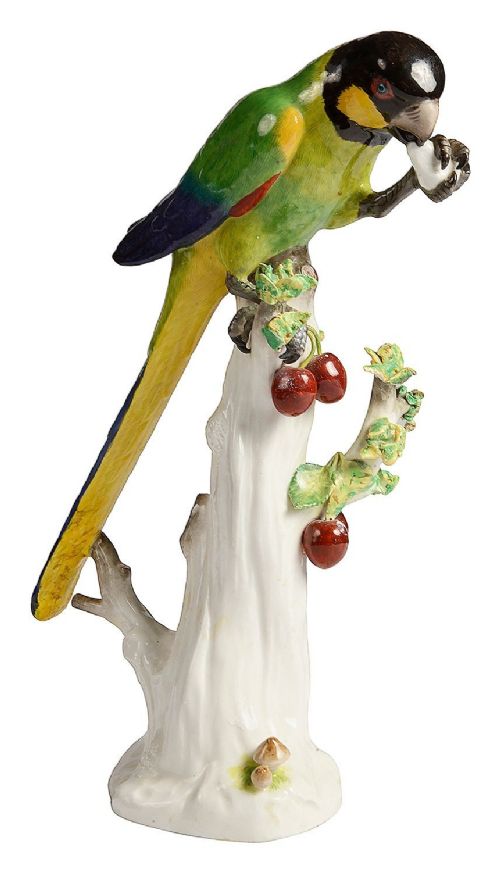
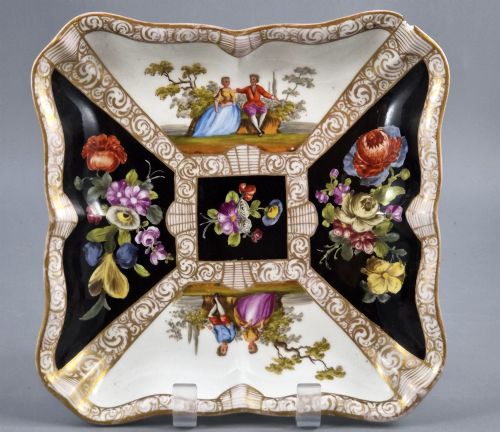
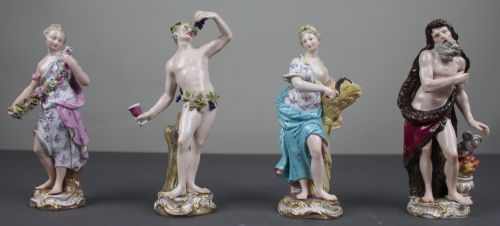
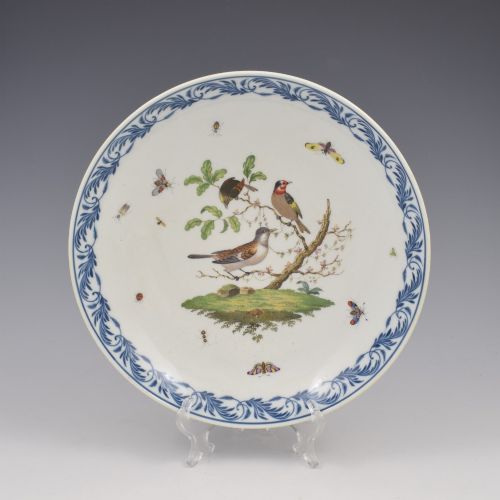
The objects frequently depict pastoral scenes, exotic birds, floral sprays known as Streublumen, and allegorical figures inspired by classical and rococo traditions. Many items bear variations of the iconic crossed swords mark, helping identify works produced across different eras of the European ceramic tradition.
How they were made
The foundation of these works lies in hard-paste porcelain, a dense ceramic body fired at high temperatures to create a durable, vitrified base capable of holding crisp details. Artisans applied hand-mixed enamel pigments directly onto the glazed surface before secondary firings fused the vibrant colours permanently.
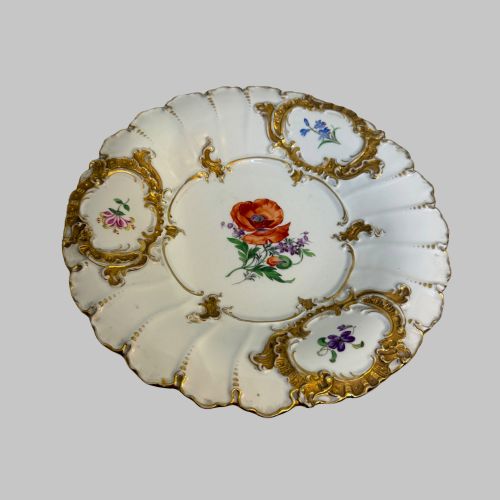
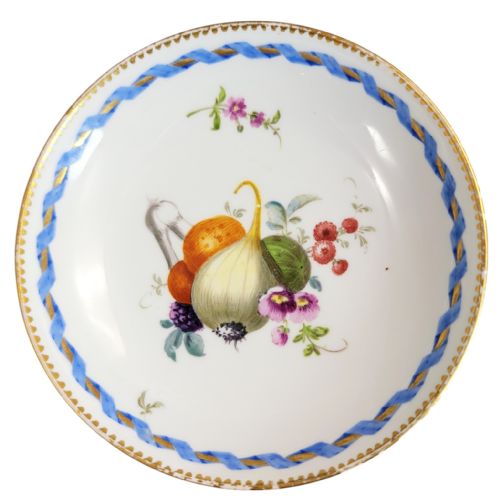
Gilding played a central role in finishing many plates and vessels, utilising gold leaf or liquid gold applied by hand to rims, handles, and borders. Master painters often used fine-hair brushes to render intricate feather patterns, botanical studies, and Watteau-style figures with remarkable precision.
Listings feature hard-paste porcelain objects spanning the eighteenth to the twentieth centuries, utilising enamel, gilt bronze, and gold leaf.
What varies in quality
The artistic merit of the hand painting itself largely determines the standing of an individual piece, separating mechanical repetition from fluid, expressive brushwork. Superior examples display confident line work, delicate shading in plumage and drapery, and harmonious colour palettes that remain crisp across the entire surface.
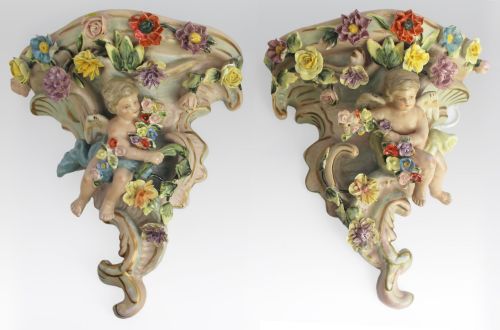
Sculptural definition also dictates value, particularly in figures and modelled groups where facial expressions, hand gestures, and fine details like moulded flowers retain their intended sharpness. Pieces with clean glaze application, minimal firing blemishes, and well-preserved gilding demonstrate greater mastery during production.
The Hand Painted Meissen Glossary
- Hard-paste porcelain
- A vitrified ceramic composed of kaolin and petuntse fired at very high temperatures. This dense material resists scratching and provides an ideal bright white ground for painted enamel decoration.
- Reticulated plate
- A ceramic dish featuring pierced or openwork lattice borders carved into the clay before firing. These intricate cut-outs required immense skill to prevent warping in the kiln.
- Schneeballen
- A dense covering technique using hundreds of tiny applied porcelain petals and flowers over the entire surface of a vessel. Translating to snowball, this labour-intensive method creates a heavily textured white ground.
Hand Painted Meissen: Frequently Asked Questions
How do I identify genuine pieces?
Authentic items frequently feature underglaze blue crossed swords marks on the base, though the style of these marks varied significantly across different centuries. Examining the crispness of the hand painting, the weight of the hard-paste porcelain, and the quality of the glaze provides further confirmation.
Familiarising yourself with period-specific modelling styles and enamel palettes helps distinguish eighteenth-century productions from later nineteenth-century revival wares and regional imitations.
What are Streublumen decorations?
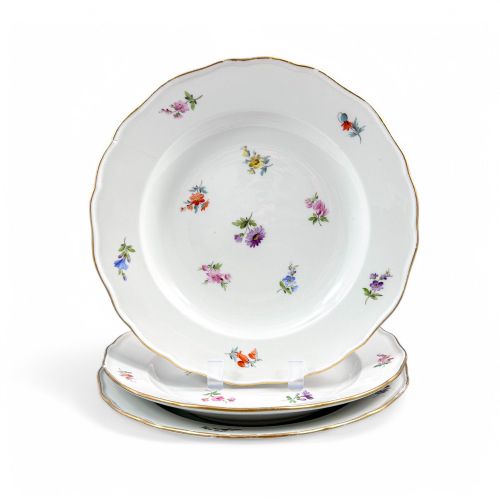
Streublumen refers to scattered floral motifs painted individually across the white porcelain ground of plates, bowls, and cups. Instead of a dense central bouquet, these small botanical sprigs appear as though casually dropped onto the surface.
This minimalist approach allowed the high-quality white ceramic body to remain a prominent feature of the tableware while showcasing delicate botanical painting skills.
How should I care for porcelain?
Keep delicate figures and painted plates away from direct sunlight to prevent any fading of sensitive enamel pigments over time. Dust gently with a soft, dry brush and avoid abrasive cleaning materials that might scratch the glaze or wear away surface gilding.
Display items in stable environments protected from sudden temperature fluctuations to preserve the structural integrity of both the ceramic body and historical repairs.
What is hard-paste porcelain?
Hard-paste porcelain is a true ceramic compound made from china clay and petuntse, fired at exceptionally high temperatures. This process results in a completely vitrified, non-porous body that rings clearly when struck and bears a brilliant white lustre.
Its durability allowed eighteenth and nineteenth-century makers to craft remarkably thin, translucent tablewares and intricate sculptural details without losing structural strength.