
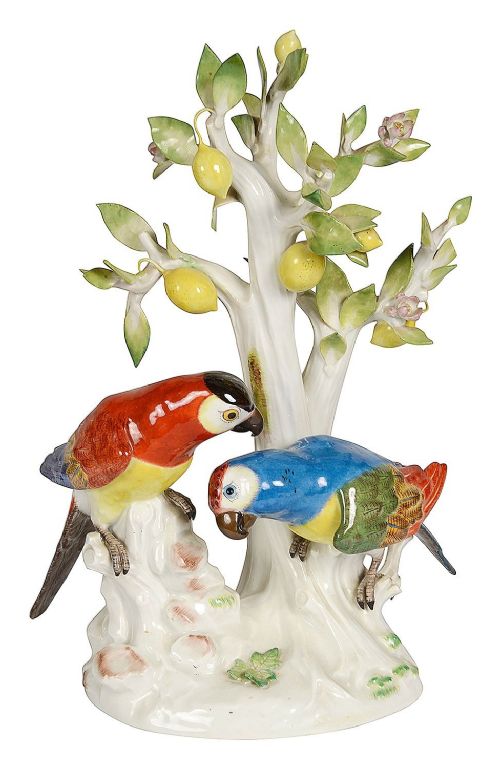


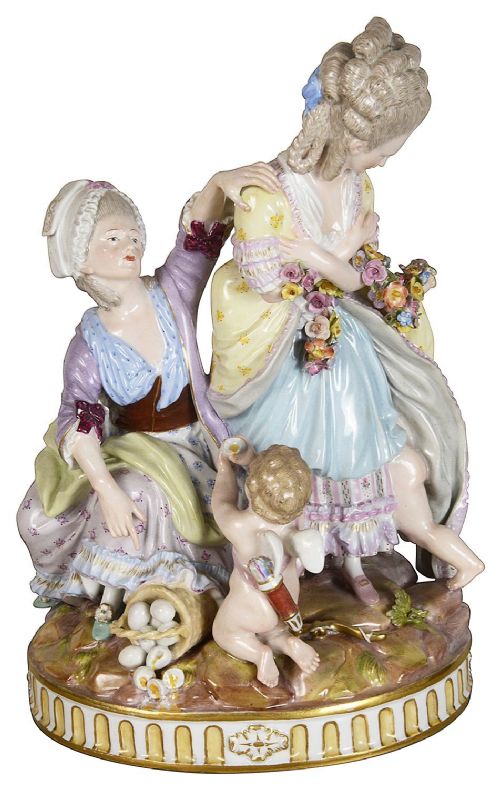
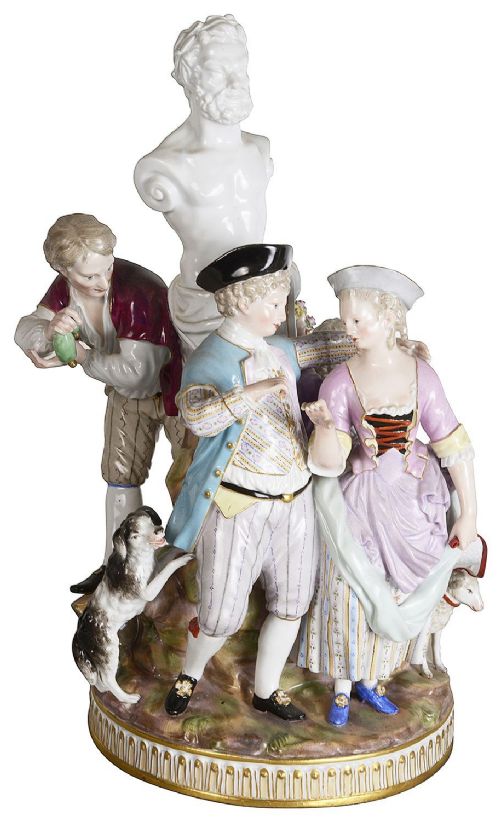


Meissen Porcelain Group
A Meissen porcelain group captures multi-figure figural narratives in hard-paste ceramic, offering collectors intricate modelling and storied European heritage.
Materials and production methods
Makers utilised hard-paste porcelain as the primary substrate, shaped into detailed porcelain figures and decorative objects through skilled moulding and modelling. This dense ceramic body provided the durability required for complex multi-figure compositions with delicate extremities.
Surface decoration relies on enamel painting combined with gold leaf highlights to define garments, facial expressions, and surrounding flora. Selected pieces feature structural enhancements incorporating gilt bronze, ormolu, wood, and straw.
Distinctions in craftsmanship and execution
The integration of secondary materials, such as ormolu mounts or detailed bases, influences the overall character of the piece. Greater articulation in the enamel work and gold leaf application distinguishes finer sculptural groups from simpler production runs.
Several groups star mischievous putti juggling grapes or tumbling through seasonal harvests.
The Meissen Porcelain Group Glossary
- Hard-paste porcelain
- A dense, vitreous ceramic composed of kaolin and petuntse fired at high temperatures. It serves as the primary material for these German figures.
- Enamel
- Vitreous pigments applied over the glazed surface and refired to bond permanently. This technique delivers the colourful palettes seen on garments and natural elements.
- Putti
- Depictions of plump, winged or wingless infant boys, often representing mythological themes or allegories such as the seasons. They frequently populate these sculptural groups.
- Ormolu
- Gilt bronze mounts cast and chased to frame or support porcelain elements. This technique bridges ceramic art with decorative metalwork.
- Marcolini Period
- The tenure of Count Marcolini at the factory during the late eighteenth century. Pieces from this era bear specific stylistic and compositional traits.
Meissen Porcelain Group: Frequently Asked Questions
What themes do these figure groups depict?
These compositions portray mythological subjects, allegories of the senses or seasons, and pastoral scenes involving gardeners, dancers, and musicians. Narrative groups often feature children, putti, or romantic couples engaged in daily activities.
Historical models frequently draw on classical mythology, theatrical characters like harlequins, or domestic allegories such as motherhood and family life.
How do eighteenth and nineteenth century groups differ?
Eighteenth-century examples typically originate from the active neoclassical and rococo periods, including the Marcolini tenure, displaying sharper modelling and period-specific palettes. Nineteenth-century pieces often revive these earlier styles with distinct manufacturing marks and varying enamel intensity.
Examining the paste, underglaze markings, and painting style helps determine whether a piece is an eighteenth-century original or a later nineteenth-century interpretation.
Are these pieces made entirely of ceramic?
While the primary figures and bases consist of hard-paste porcelain, select groupings incorporate additional elements. Certain sculptural works feature mounts in gilt bronze or ormolu, alongside secondary materials like wood and straw.
These mixed-media compositions combine ceramic modelling with decorative metalwork to create stable, elaborate tabletop displays.