

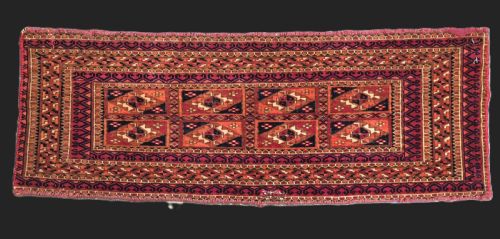
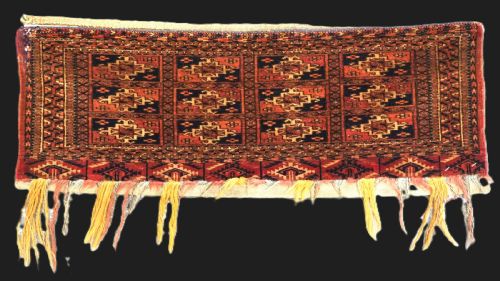


Hand Knotted Tribal Torba
A hand knotted tribal torba is a Central Asian nomadic storage bag, woven with distinctive tribal patterns to hold household possessions.
Hand Knotted Tribal Torba
When searching for a hand knotted tribal torba, a buyer looks at Central Asian nomadic textile pieces designed as small storage bags or bag faces. These items originate from tribal groups inhabiting the Trans-Caspian steppes and surrounding regions during the nineteenth and early twentieth centuries.
The versions most frequently met on this page include Tekke, Yomut, and Ersari tribal examples dating from the mid-nineteenth century up to the 1920s. Pieces appear either as complete bags with backs intact or as individual faces and fragments displaying specific regional designs.
How they were made
These textiles rely on hand-spun wool combined with cotton foundations, constructed through traditional knotting techniques executed by nomadic weavers. Natural dyes provide the palette, producing rich tones across the ground and motif details.
The construction varies from standard village density to exceptionally fine weaves, depending on the specific tribal workshop and the intended utility of the storage piece.
What varies in quality
The standard of a hand knotted tribal torba depends heavily on the crispness of the drawing within the primary motifs and the precision of the knot density. Pieces with very fine weaves and saturated natural dye palettes demonstrate superior technical execution by the weaver.
Preservation also marks the distinction between examples, ranging from complete bags retaining their original backs to fragmented faces or worn surfaces that have lost structural integrity.
The Hand Knotted Tribal Torba Glossary
- Torba
- A small Turkmen storage bag traditionally used inside a yurt for household possessions. These items typically feature horizontal rectangular formats and detailed tribal guls.
- Gul
- A primary medallion or repeating octagonal motif used in Central Asian tribal weaving. Each pattern often identifies the specific tribe or sub-group that produced the textile.
- Mafrash
- A larger rectangular storage box or bedding bag face associated with nomadic weaving traditions. These items share similar construction methods and wool materials with smaller torbas.
- Ikat
- A dyeing technique where bundles of threads are tightly wrapped and dyed prior to weaving to create feathered pattern edges. This design influence appears on specific Ersari pieces.
- Asmalyk
- A pentagonal trapeze-shaped camel trapping used in wedding processions. Certain torba designs incorporate styles derived from these ceremonial pieces.
Hand Knotted Tribal Torba: Frequently Asked Questions
What is a torba used for?
Nomadic families utilised these bags inside tents to store small household belongings, clothing, or valuables. They hung against the lattice walls of a yurt.
Over time, these functional items became prized collector pieces representing specific Central Asian tribal traditions.
How do I identify a Tekke torba?
Tekke pieces often display precise repeating octagonal guls, such as the aina gul or four chuval guls, woven with a very fine structure.
They originate from the Akhal Oasis and surrounding regions, showing characteristic warm red grounds and precise natural dye use.
What is an Ersari beshir torba?
Ersari weavers from the Beshir region produced textiles featuring larger scale patterns, including ikat designs, curled leaves, and star in octagon motifs.
These pieces depart from the tighter repetitive guls seen in other Turkmen groups, often displaying more expansive floral or geometric field arrangements.
How should I care for a textile bag face?
Keep the wool away from direct sunlight to prevent natural dye fading, and vacuum gently using low suction without a rotating brush.
Displaying the piece flat on a wall or keeping it out of high-traffic floor areas preserves the hand-spun wool and cotton structure.