
Red Wool Textile
When you handle a red wool textile, you touch centuries of nomadic craft woven for daily utility and tribal ceremony.
Red Wool Textile
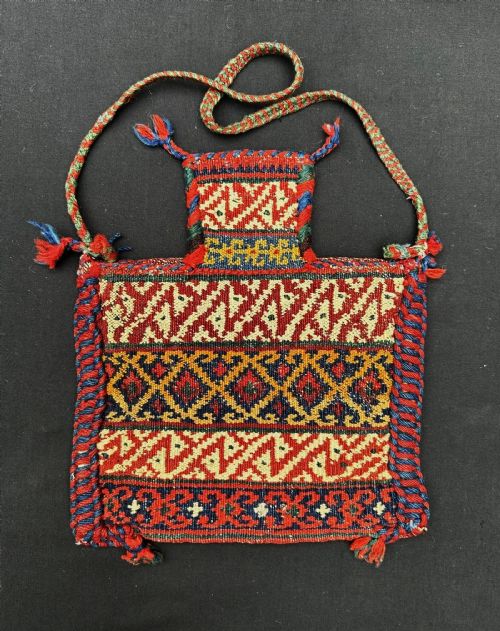
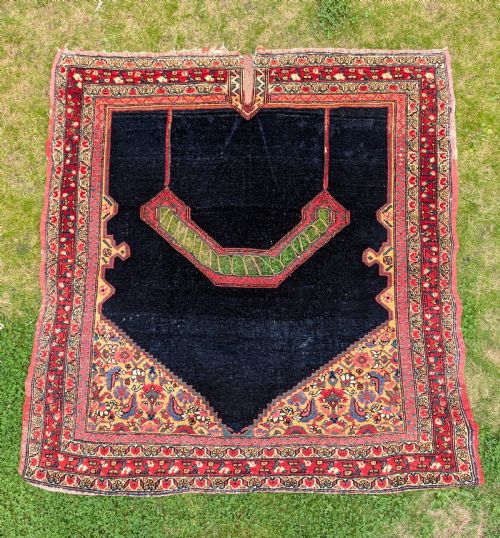
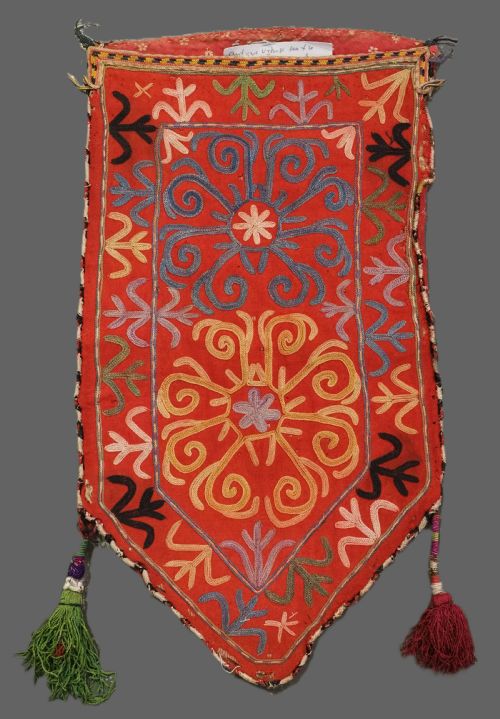
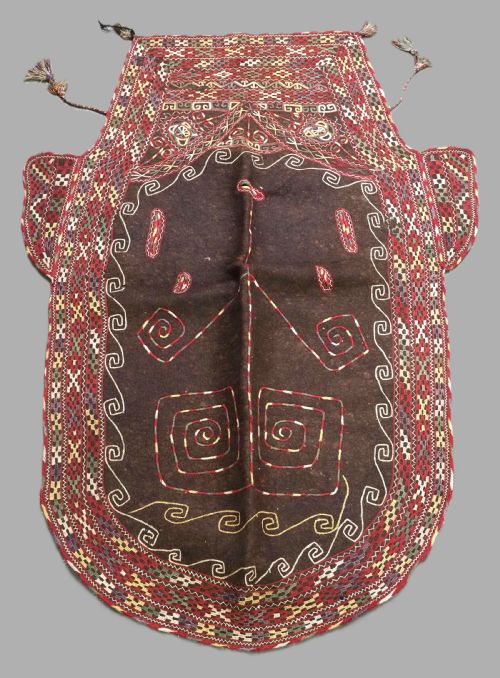
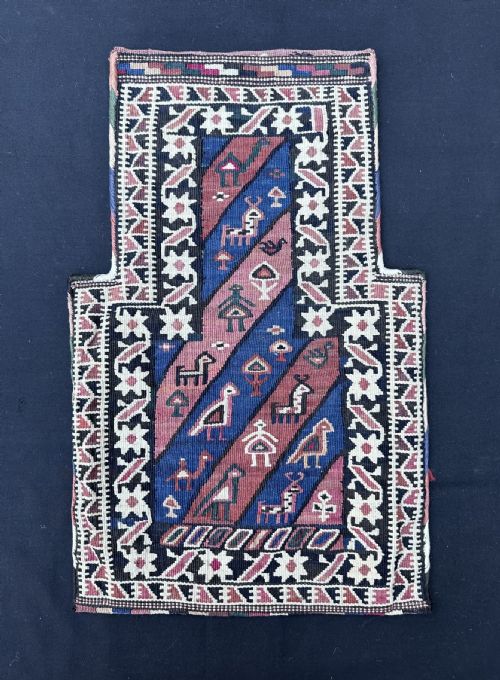
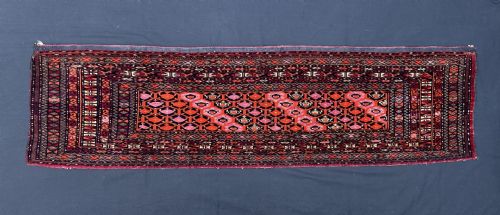
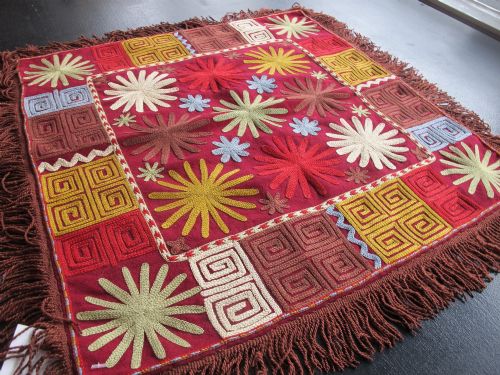
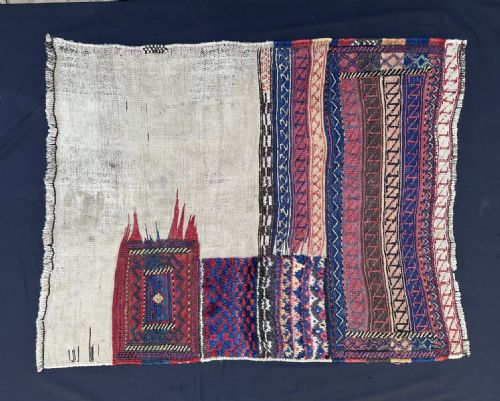
A red wool textile typically appears as a tribal bag, horse cover, saddle rug, or wall hanging originating from Persia, Central Asia, or Scotland during the nineteenth and early twentieth centuries. You will frequently encounter horse blankets, dowry embroideries, and ceremonial trappings created by nomadic groups such as the Yomut, Ersari, and Lakai tribes.
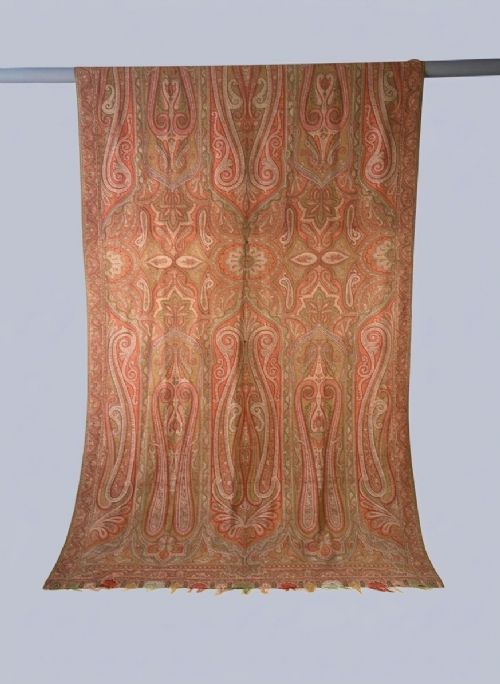
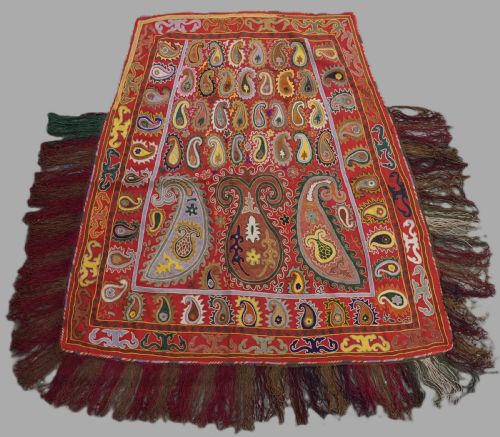
These pieces served practical roles in nomadic life, functioning as storage bags, tent bands, and animal decorations alongside ceremonial items. Their formats range from small vanity bags and saddle covers to large Paisley shawls woven in Victorian Britain.
The materials reflect regional traditions, combining hand-spun wool, cotton, and silk threads with natural dyes applied to woven cloth, felt, or embroidery.
How they were made
Weavers utilised hand-spun wool and cotton, often combining felted wool with fine silk thread for surface embroidery and structural detail. Artisans constructed heavy pile rugs, flatwoven bagfaces, and felted horse blankets using traditional upright or horizontal looms.
Natural dyes produced the characteristic red tones, derived from regional plant and insect sources and set into the wool and cotton fibres through traditional mordanting techniques. Embroidery work on felt and woven grounds involved dense stitching executed by nomadic women for dowries and tribal ceremonies.
Listings span the nineteenth and early twentieth centuries, featuring woven wool, felt, and cotton from Persian and Central Asian nomadic tribes alongside Victorian Scottish shawls.
What varies in quality
Quality rests upon the density of the weave, the fineness of the hand-spun wool, and the complexity of the tribal design. Pieces retaining original tassels, complete borders, and vibrant natural dye saturation stand apart from heavily worn examples.
The precision of the embroidery work and the structural integrity of the base felt or woven textile determine the durability and visual impact of each piece.
The Red Wool Textile Glossary
- Asmalyk
- A ceremonial pentagonal horse trapping traditionally woven or embroidered by Yomut Turkmen tribes for wedding processions.
- Ilgich
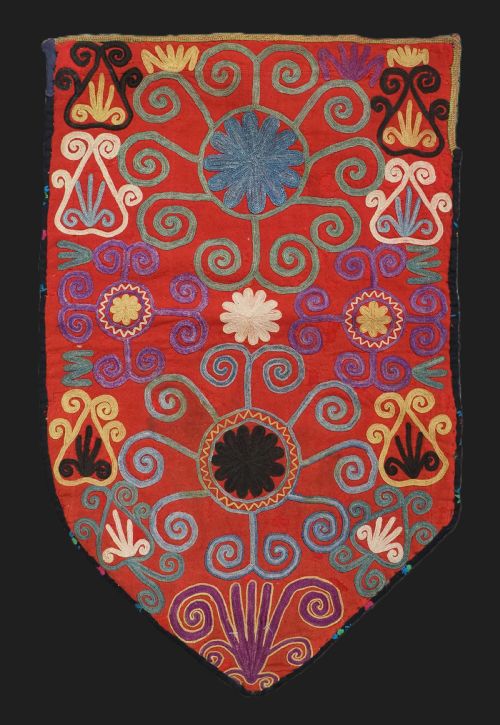
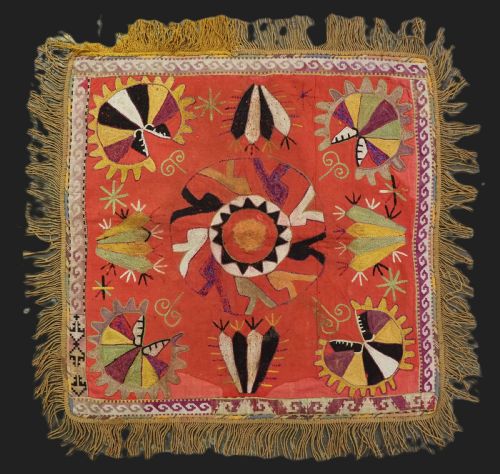
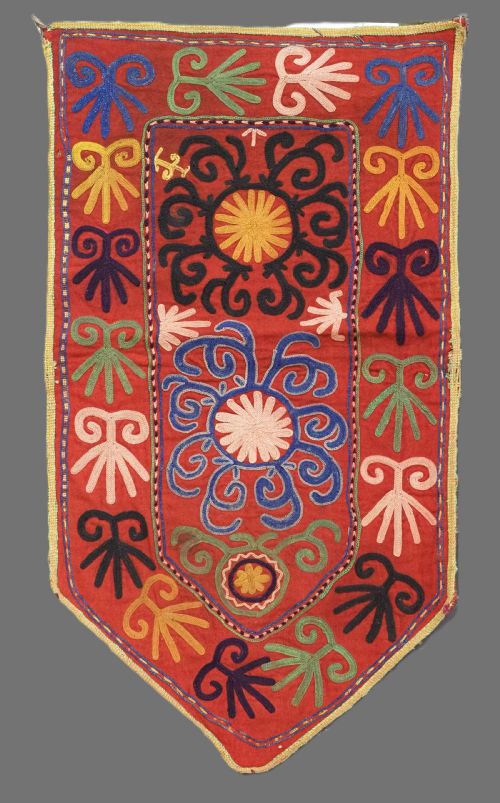
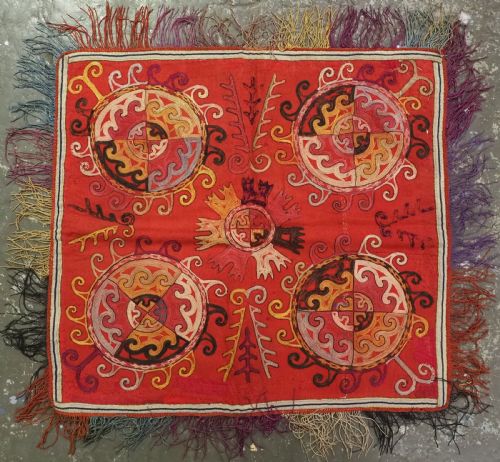
- An embroidered dowry hanging produced by the Lakai tribe in Central Asia, often worked in silk on a felt or wool ground.
- Jollar
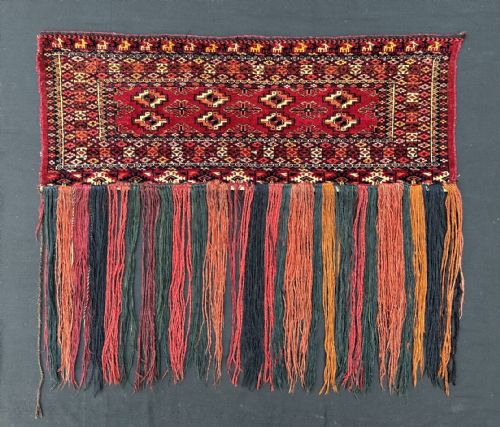
- A Turkmen bag face or storage sack utilised inside the nomadic tent for household possessions.
- Paisley shawl
- A large decorative wrap woven in Scotland and patterned with distinctive teardrop motifs derived from traditional Kashmiri designs.
- Uut kap
- A double-faced storage bag used within Central Asian yurt tents, commonly associated with Lakai tribal embroidery.
Red Wool Textile: Frequently Asked Questions
What is a red wool textile used for?
Nomadic communities utilised these woven and embroidered pieces for daily transport, tent storage, and animal trappings during ceremonies. Many items functioned as saddle bags, horse blankets, or dowry wall hangings.
In Victorian Britain, weavers produced large wool shawls worn as garments or displayed as decorative furnishings within the home.
How do I care for a red wool textile?
Protect the wool and natural dyes by keeping the textile away from direct sunlight, which causes fading over time. Gentle vacuuming through a mesh screen removes surface dust without damaging delicate embroidery or loose tassels.
Avoid hanging heavy pieces by single points to prevent stretching the historic woven or felted fibres.
How can I tell tribal groups apart?
Tribal attribution relies on specific structural formats, wool qualities, and distinct embroidery motifs. Yomut and Ersari pieces from Turkmenistan display characteristic geometric gul patterns and deep red palettes.
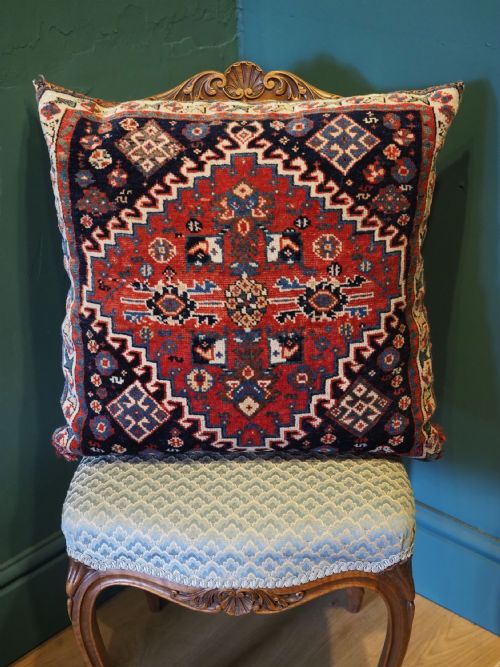
Lakai embroideries from Uzbekistan utilise lively curvilinear silk stitching on felt grounds, whereas Persian nomadic groups such as the Qashqai and Shahsevan employ distinct saddle bag and animal trapping formats.
Are these pieces made with natural dyes?
The nineteenth and early twentieth century examples rely primarily on natural dye sources to achieve their deep red colourways. Artisans extracted these tones from plants and insects native to Persia and Central Asia.
This chemistry reacts to light and age with subtle tonal variations across the wool and cotton fibres.