

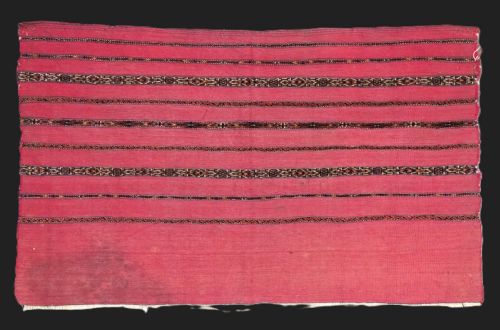
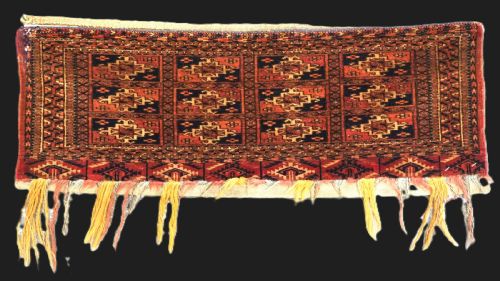
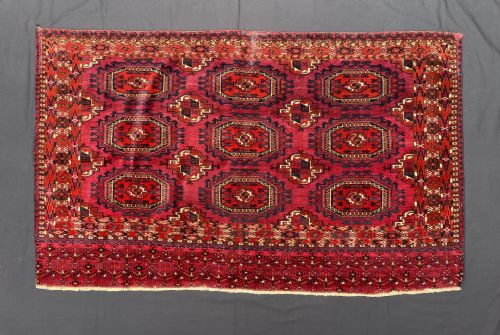


Red Turkmen Carpet Bag
These historic red turkmen carpet bag examples bring authentic Central Asian tribal weaving into domestic spaces.
Red Turkmen Carpet Bag
When you search for a red turkmen carpet bag, you encounter utilitarian nomadic containers produced by Central Asian tribal groups during the nineteenth and early twentieth centuries. These textile items served functional roles as tent storage bags, camel-load bags, and bedding sacks used by nomadic populations across the steppes and oases of Turkmenistan.
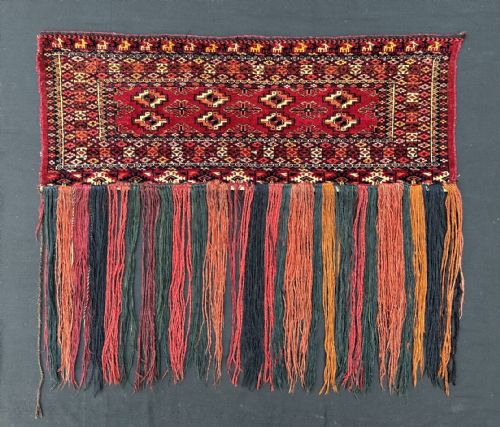
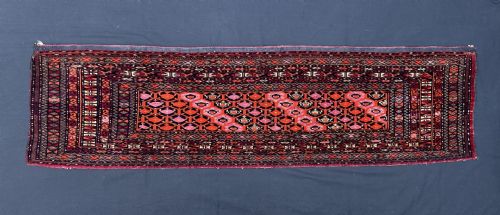
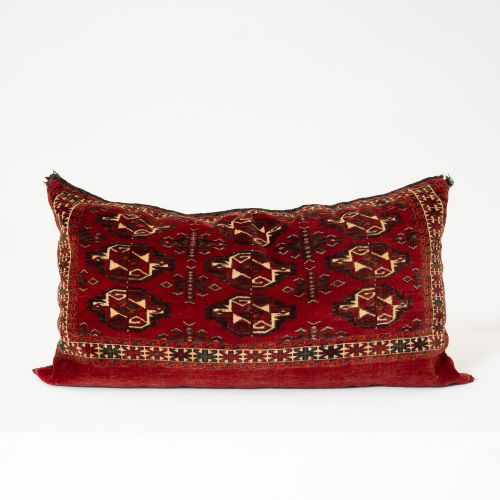
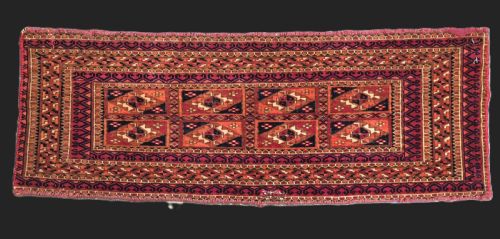
The selections on this page predominantly consist of torba, chuval, and mafrash faces created by specific tribal confederations such as the Tekke, Yomut, Ersari, and Saryk. Many survive as fragments or isolated bagfaces due to the division of larger storage pieces over generations of nomadic use.
Examples date from the mid-nineteenth century through to the early twentieth century, reflecting the traditional tribal motifs and saturated madder red palettes of their makers. Collectors encounter both complete containers with original plain-weave backs and front panels mounted for display.
Materials and Construction
Nomadic weavers constructed these utility textiles primarily using hand-spun wool for both the pile and the foundation structure, often supplemented by cotton and occasionally linen or silk for specific highlights. Natural dyes, prominent among them madder for the dominant red grounds, provided the deep tones characteristic of nineteenth-century Central Asian production.
Weavers utilised asymmetric knots tied on woollen warps, achieving varying degrees of density depending on the tribe and the specific function of the storage bag. Flatweave techniques frequently appeared on the backs and lower skirts, while sturdy selvages protected the edges from the heavy friction of nomadic transit.
Listings span from the mid-nineteenth century through the 1920s, highlighting wool, natural dyes, and cotton across Tekke, Yomut, and Ersari tribal groups.
Assessing Textile Quality
The primary distinction in quality rests upon knot density, handle suppleness, and the precision of the drawing within the primary and secondary guls. Pieces woven with exceptionally fine wool and tight knotting demonstrate superior technical mastery by the artisan.
Palette saturation and dye consistency also dictate distinction, particularly the depth and vibrancy of the madder red ground and the clarity of contrasting ivory or dark indigo details. Unusual gul configurations, such as turreted Salor motifs on Tekke pieces, elevate the desirability of a textile.
The Red Turkmen Carpet Bag Glossary
- Torba
- A small horizontal wall-hanging storage bag used within the nomadic tent for holding domestic items. These utility pieces typically feature prominent primary guls arranged in rows across the face.
- Chuval
- A large tent bag traditionally utilised for storing bedding and heavy garments during nomadic migrations. They frequently display multiple rows of major guls framed by intricate minor borders.
- Gul
- The primary medallion motif repeated across Turkmen carpets and storage bags, often serving as a tribal identifier. Each clan utilised distinct geometric variations of these octagonal or diamond-shaped emblems.
- Mafrash
- A rectangular trapezoidal storage bag or box-face designed for camel transport. These pieces often incorporate banded flatweave designs alongside knotted pile sections.
- Kizil
- A term denoting red-ground pile weavings particularly associated with Tekke tribal production. The designation highlights the deep madder dye baths characteristic of these nomadic items.
Red Turkmen Carpet Bag: Frequently Asked Questions
What were Turkmen bags used for?
Nomadic tribes utilised these woven containers for storing household goods, blankets, and clothing inside felt tents known as yurts. They also functioned as saddlebags and packs transported by camels during seasonal migrations across the Central Asian steppes.
Over time, these utilitarian objects became prized expressions of tribal identity and artistic skill. Families incorporated them into dowries and domestic interiors to display status and heritage.
How do you hang a bagface?
Collectors typically mount these textile fragments onto conservation-grade fabric backings or tension-rod sleeves for safe wall display. This method distributes the weight evenly and prevents stretching the delicate historical wool foundation.
Alternatively, smaller pieces find placement as table mats or cushion covers when paired with appropriate protective backings. Direct exposure to bright sunlight should be avoided to protect the natural dyes from fading.
How do you identify tribal groups?
Attribution relies heavily on the specific structure of the guls, the choice of secondary border motifs, and the overall colour saturation. For instance, Tekke weavings frequently display octagonal guls with quartered colour schemes, while Yomut pieces often feature hooked kepse motifs.
Structural details such as warp depression, knot type, and selvage finishing provide further clues for distinguishing between tribes like the Ersari, Saryk, and Yomut. Regional weaving centres and oasis settlements also influenced the final aesthetic of each piece.
Are these pieces complete bags?
Many surviving historical examples exist as bagfaces rather than complete containers because the back panels wore out from constant friction during travel. The front pile portions were often preserved and removed from the utilitarian plain-weave backs for easier trade and display.
Some listings retain their original plain-weave or piled backs, offering a complete structural view of the original storage vessel. Both complete containers and isolated faces hold significant historic value for textile collectors.