



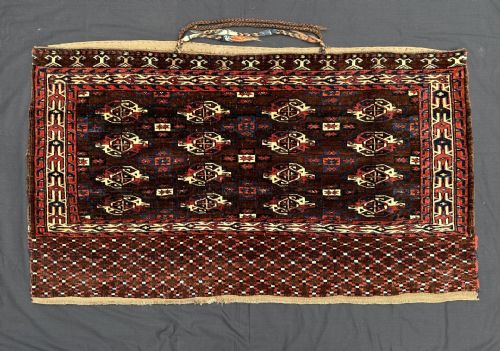

Trans Caspian Tribal Weaving
Trans caspian tribal weaving brings the bold geometric artistry of nineteenth-century nomadic life straight into your home.
Trans Caspian Tribal Weaving
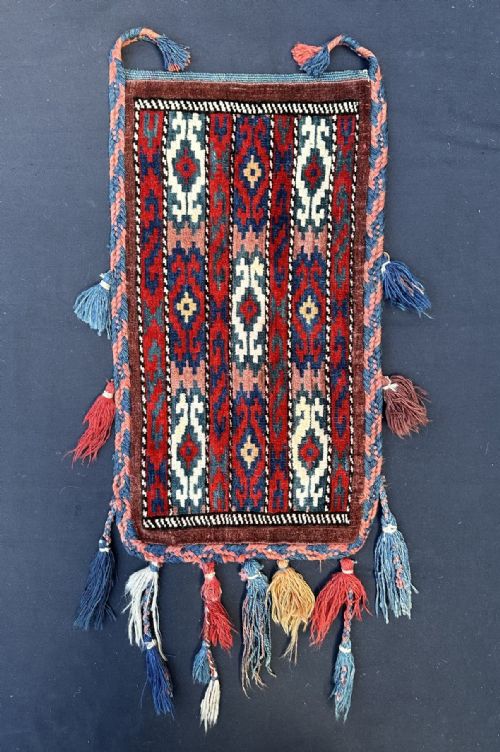
Trans caspian tribal weaving encompasses utilitarian and ceremonial textiles produced by nomadic and tribal groups across the Central Asian steppes. You are primarily looking at nineteenth-century Turkmen pieces created by the Yomut tribe, originating from Turkmenistan.
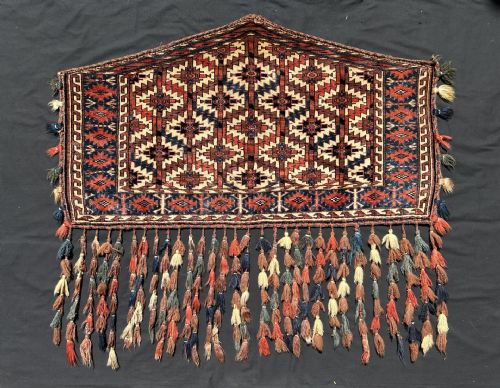
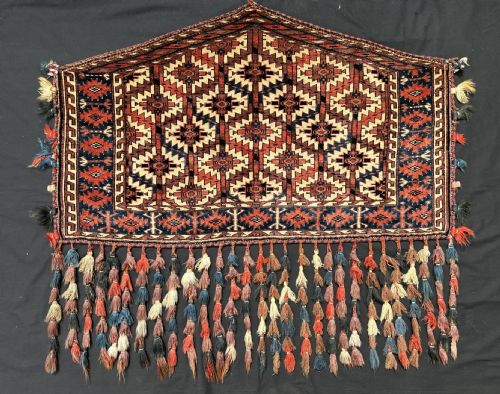
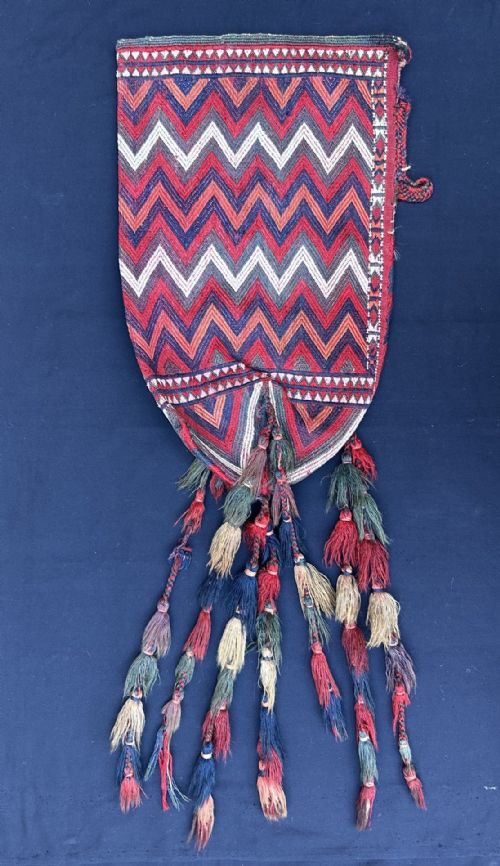
The forms on this page include specialised domestic and camel-trapping items such as spindle-bags, asmalyks, kap, uk bash, dizlyks, torbas, and chuvals. These objects served practical functions within nomadic households or decorated camel mounts for tribal ceremonies and weddings.
Dating across these listings spans from the eighteen-sixties to the eighteen-nineties, representing a cohesive period of traditional tribal production before commercial industrialisation altered local craft.
How They Were Made
These textiles rely entirely on wool and hand-spun wool, providing a durable foundation built for nomadic survival and daily domestic use. Artisans worked these animal fibres into dense pile or flatweave structures designed to withstand harsh steppe conditions.
Colour comes from natural dyes applied to the yarn, yielding deep, saturated hues that mellow gracefully with age. The interplay of these organic colorants defines the visual character of each piece.
Materials across the inventory consist solely of wool, hand-spun wool, cotton, and natural dyes.
What Varies in Quality
Quality rests in the precision of the tribal motifs and the tightness of the weave, which reflects the weaver's skill and the time invested. Finer examples display crisp geometric delineation and harmonious colour balance across the surface.
Condition and completeness also distinguish the pieces, particularly given their age and utilitarian origins. Well-preserved specimens retain their original structure and vibrant natural dye palettes without excessive structural loss.
The Trans Caspian Tribal Weaving Glossary
- Asmalyk
- A large, five-sided ornamental trapping traditionally hung on the flanks of a camel during Yomut wedding processions. These decorative textiles display intricate tribal guls.
- Chuval
- A large rectangular storage bag utilised within the yurt for household goods and bedding. Their wide formats provide generous fields for elaborate geometric patterns.
- Torba
- A smaller wall-hanging storage bag typically mounted inside the nomadic tent. These rectangular pieces feature horizontal bands of guls and detailed border designs.
- Uk bash
- A decorative trapping used to cover the converging roof poles inside a Turkmen yurt. These textile components added colour and status to the interior domestic space.
Trans Caspian Tribal Weaving: Frequently Asked Questions
What are trans caspian tribal weaving pieces?
These items are nineteenth-century nomadic textiles created by the Yomut tribe in the trans-caspian steppes of Central Asia. They encompass functional storage bags, tent decorations, and ceremonial camel trappings.
Each piece reflects the traditional lifestyle and aesthetic vocabulary of Turkmen weavers using local wool and natural dyes.
How do I date these antique pieces?
Dating relies on stylistic analysis, material examination, and historical context pointing to the decades between eighteen-sixty and eighteen-ninety. The use of traditional hand-spun wool and specific natural dye palettes helps place them within this nineteenth-century window.
Comparing structural formats and motif evolution across known tribal examples provides further chronological clarity.
How do I care for antique wool textiles?
Protect these woven pieces from direct sunlight to prevent natural dye fading, and keep them in environments with stable humidity. Gentle vacuuming through a mesh screen removes surface dust without damaging the wool pile.
Professional textile conservators should handle any significant cleaning or structural stabilization.