

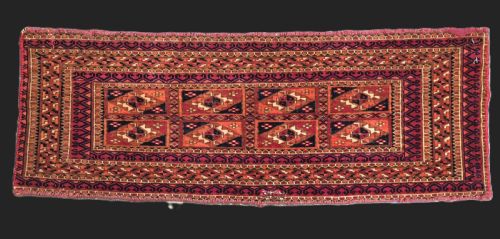
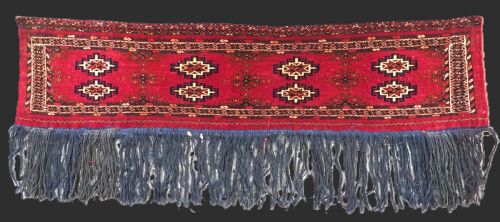
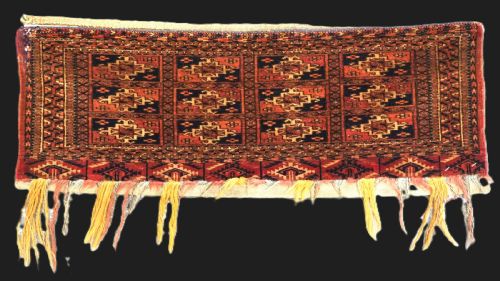


Wool Turkmen Torba Bag
When hunting a wool turkmen torba bag, collectors seek authentic nineteenth-century Central Asian tribal tent hangings woven with rich natural dyes and distinctive tribal guls.
Wool Turkmen Torba Bag
A wool turkmen torba bag is a traditional Central Asian tribal storage sack created by nomadic groups such as the Tekke, Yomut, Saryk, Ersari, and Chodor tribes. These utilitarian pieces functioned as dowry belongings or domestic containers inside felt tents across the Trans-Caspian steppes.
Most examples found on this page date from the nineteenth century, ranging from complete bags retaining their plain weave backs to individual bag faces. Tribal weavers utilised specific formats like the nine gul or six gul layouts, alongside banded flatweave designs.
The regional diversity encompasses specific tribal aesthetics, from Tekke and Saryk pieces featuring measured secondary guls to Ersari and Yomut variations displaying hooked motifs and ikat patterns. Each object represents the nomadic heritage of Turkmenistan and surrounding Central Asian territories.
Assessing quality and execution
Quality rests upon the fineness of the knotting and the precision of the drawing within the primary and secondary guls. Pieces possessing a very fine weave and crisp, deliberate proportions command greater attention from experienced collectors.
The handling of colour harmony and the depth of the natural dyes distinguish superior examples from standard ones. Additionally, the presence of original backs, complete dimensions, and unusual design variations elevate the standing of a textile.
Nomadic weavers packed these small bags with blankets and worldly goods, carting them across dusty steppes on the backs of camels.
Tekke Tribes·Yomut Tribes·Saryk Tribes·Ersari Tribes·Chodor Tribes
The Wool Turkmen Torba Bag Glossary
- Torba
- A small Turkmen wall storage bag used traditionally for household goods inside a yurt. These functional sacks display characteristic tribal motifs across the face.
- Gul
- A medallion motif repeated across tribal carpets and bags to identify specific clans or lineages. Different tribes utilised distinct gul forms such as the kepse or chuval designs.
- Mafrash
- A rectangular tribal storage container or bedding bag closely related in function and weave to the torba. They often share similar flatweave or pile structures.
- Kezdebe
- A decorative wedding procession design featuring diamond-lattice patterns seen on Saryk and Tekke pieces. This motif relates directly to dowry weavings.
- Beshir
- A sub-group of Ersari tribal weaving known for ikat patterns and expansive use of natural dyes. These pieces originate from the middle Amu Darya region.
Wool Turkmen Torba Bag: Frequently Asked Questions
What is a wool turkmen torba bag used for?
These textiles served as practical storage sacks inside nomadic tents, holding small possessions, utensils, or bedding elements. They also functioned as important dowry items denoting tribal identity and status.
Today, collectors mount these bag faces or complete sacks on walls as decorative tribal art. Their robust wool construction allows them to endure as interior display pieces.
How do you identify different tribal designs?
Distinguishing tribes relies on the specific layout of the guls, the secondary ornaments, and the colour palette. Tekke and Saryk pieces often use orderly octagonal medallions, while Yomut examples incorporate hooked motifs and banded flatweaves.
Ersari and Chodor bags display alternative drawing styles, occasionally integrating larger diamond patterns or ivory grounds. Examining the structure and dyes helps confirm the regional origin.
What does complete with back mean?
Many surviving examples are merely bag faces cut from the original container to be traded or displayed. A piece described as complete retains its original plain weave back panel and sometimes accompanying tassels.
Finding a bag with its backing intact provides a complete view of the maker's original utilitarian object. It preserves the full construction method used by nineteenth-century nomads.
How old are these tribal bags?
The pieces available generally date from the nineteenth century, specifically spanning the decades between the eighteen-fifties and the early nineteen-hundreds. This era represents the peak period of traditional nomadic Turkmen weaving before commercial dyes became widespread.
Datings are estimated through technical analysis of the wool, the structure, and the fading characteristics of the natural dyes. Earlier nineteenth-century examples often exhibit finer weaves and deeper madder red saturation.