
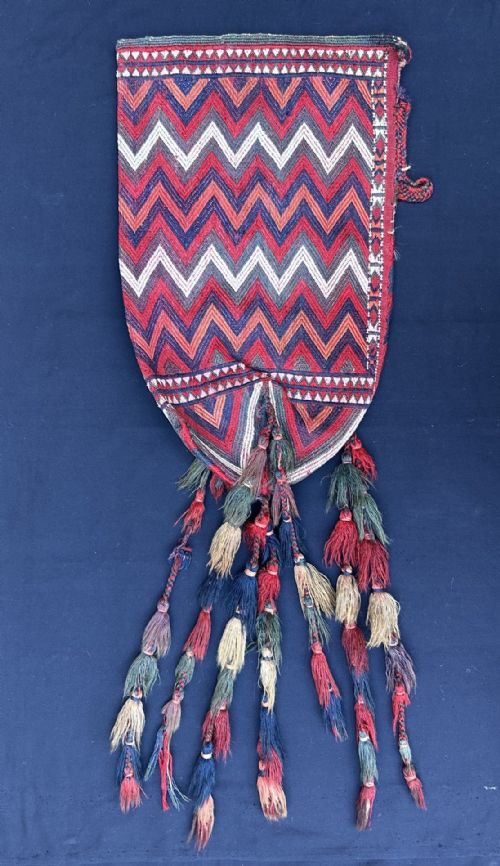


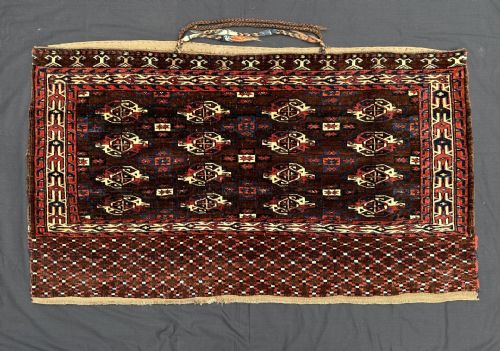


Yomut Tribal Tent Bag
A yomut tribal tent bag is a woven masterpiece of nomadic life, prized by collectors for its rich hues and geometric power.
Yomut Tribal Tent Bag
A yomut tribal tent bag represents the rich weaving heritage of the Trans-Caspian steppes and Central Asia. These nomadic textiles served practical storage functions within traditional yurt dwellings before finding favour among collectors of tribal rugs.
The most common examples encountered on this page are torba faces and complete torbas featuring characteristic gul motifs. Chuval storage-bag pieces and smaller uk bash tent-pole bags also appear among these Central Asian textiles.
Originating predominantly from the late nineteenth century, these pieces showcase the distinctive design vocabulary of Turkmen tribes. Collectors encounter them as flat textiles or wall hangings that retain their original nomadic character.
How they were made
Nomadic weavers utilised hand-spun wool for the pile and foundation structure of each yomut tribal tent bag. Cotton often appears in the construction alongside wool to provide structural stability for the dense weave.
The vibrant colouring relies entirely upon natural dyes applied to the fleece before weaving commenced. Skilled artisans constructed these pieces using traditional tribal knotting techniques passed down through generations.
Listings feature pieces spanning from eighteen sixty to nineteen hundred, created using hand-spun wool and natural dyes across Central Asia.
What varies in quality
The refinement of the weave separates standard examples from exceptional tribal works. Denser knotting allows for sharper definition within the geometric gul designs and improves the overall drape of the textile.
Colour saturation and the clarity of natural dye palettes dictate visual impact across different pieces. Examples that retain original backs or complete structural elements hold greater interest for serious textile scholars.
The Yomut Tribal Tent Bag Glossary
- Torba
- A wide storage bag used within nomadic tents for household possessions. These pieces typically display intricate gul patterns along the main face.
- Chuval
- A large tent storage bag traditionally employed for bedding and heavy goods. They share the dense wool construction seen across other Turkmen nomadic weavings.
- Gul
- A medallion motif repeated across tribal carpets and bags to identify specific tribal lineages. The kepse and aishk variants frequently appear on yomut pieces.
- Uk Bash
- A specialised tent-pole bag designed to cover and protect the ends of wooden yurt struts. They possess a distinctive narrow profile compared to standard storage bags.
- Asmalyk
- A pentagonal trapping hung inside the nomadic wedding tent during festive processions. Their distinctive shape influences the design vocabulary of certain smaller bags.
Yomut Tribal Tent Bag: Frequently Asked Questions
What is a yomut tent bag?
A yomut tent bag is a woven textile created by nomadic weavers in Central Asia for storage inside traditional dwellings.
These pieces utilise hand-spun wool and natural dyes to form intricate geometric patterns that reflect tribal heritage.
How were these bags used?
Nomadic families hung these textiles inside yurt tents to store bedding, clothing, and household utensils.
Different shapes served specific functions, such as wide torbas for general storage and narrow uk bash bags for tent poles.
How do I date an antique bag?
Dating relies upon examining the wool quality, the range of natural dyes, and stylistic indicators within the gul motifs.
Most pieces originate from the latter half of the nineteenth century up to nineteen hundred.
Can I hang these on walls?
Many collectors display these tribal textiles as wall hangings to protect the weave from floor traffic.
Proper mounting ensures the wool structure remains supported across the entire surface of the bag.