


Hand Carved Duck Decoy
These hand carved duck decoy examples are working country birds turned decorative folk art, prized for their weathered surface and sculptural silhouette.
Hand Carved Duck Decoy
When you search for a hand carved duck decoy, you are looking at working water bird sculptures shaped to lure game and now valued for their rustic presence. These pieces emerge chiefly from the nineteenth century through the nineteen-thirties, spanning English, French, and American origins. The most frequent encounters on this page are Edwardian and early twentieth century items shaped in timber and pine.
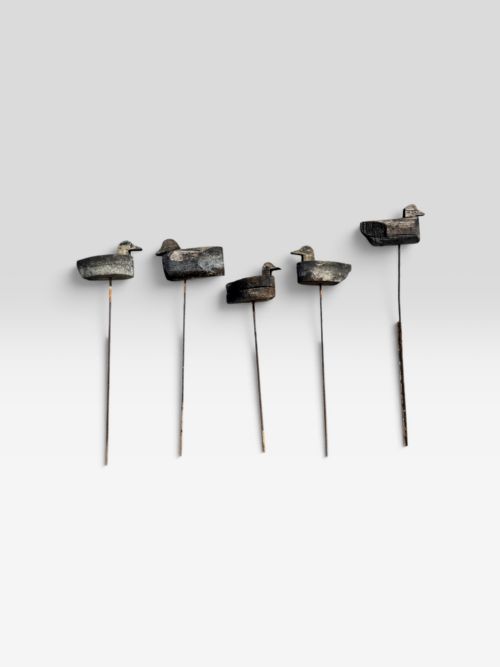
The inventory ranges from single working decoys to sets of three, alongside more unusual forms such as an American loon with her chick. Makers shaped these birds as functional objects for shooting marshlands before they transitioned into decorative sculptures and folk art. Each specimen carries the specific vernacular of its regional maker, showing the marks of working life on inland waterways and coastal estuaries.
How they were made
Carpenters and carvers shaped these bodies from solid blocks of timber, pine, and carved wood using drawknives, hand axes, and rasps to achieve a buoyant, realistic silhouette. Artisans frequently hollowed out the internal sections to reduce weight and prevent the wood from splitting as it dried. Iron fixings and lead weights were sometimes attached to the underside to keep the bird stable upon the water.
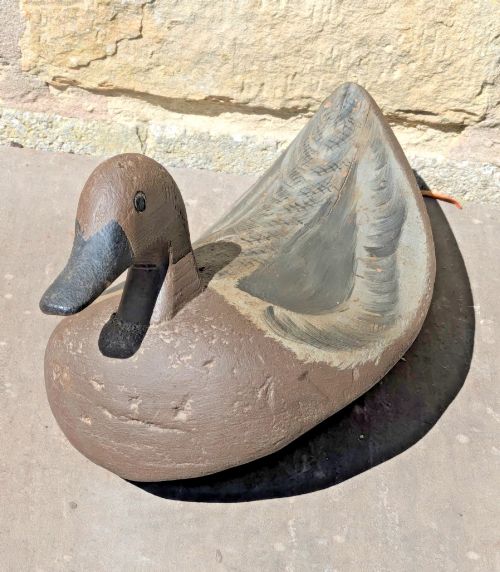
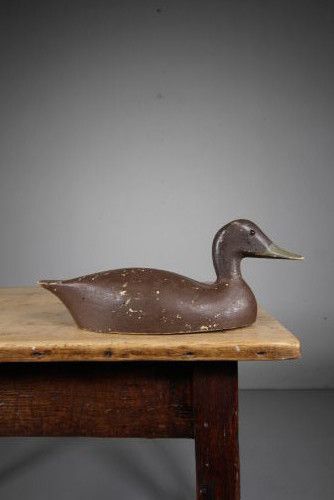
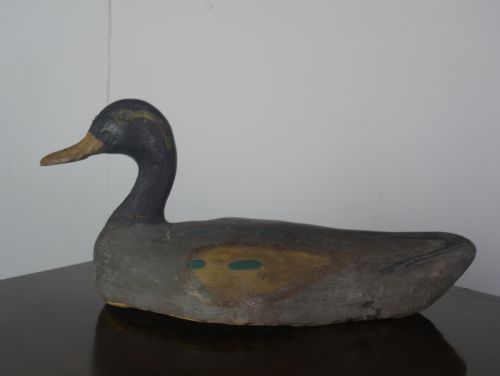
Surfaces received thick coats of oil-based paint, applied by hand to render realistic plumage patterns in muted natural tones. Over decades of exposure to water and weather, these paint layers developed craquelure, flaking, and dry patinas that define the current aesthetic. Glass eyes were occasionally inserted into the carved wooden heads to enhance the lifelike expression of the decoy.
Current listings feature wood, pine, iron, and glass materials across pieces dated from the nineteenth century to nineteen-thirty.
What varies in quality
Quality rests in the sculptural confidence of the carving, where bolder tool marks and more fluid body contours separate superior folk art from rigid commercial production. The articulation of the head and bill shows the hand of a more accomplished artisan, whereas utilitarian pieces display simpler, blockier geometry. Original untouched paint surfaces carry greater aesthetic weight than heavily restored or later overpainted skins.
The integrity of the timber also dictates the stature of the piece, with sound pine and dense hardwoods holding their form better than severely degraded material. Sculptural ambition elevates certain works, such as multi-bird groupings or rarer species like the loon with a chick, above standard single mallard representations. Ultimately, the survival of the original surface patination governs the standing of any given decoy.
The Hand Carved Duck Decoy Glossary
- Folk art
- Objects created by self-taught or traditional craftsmen using local materials for utilitarian or community purposes. These pieces reflect regional vernacular traditions rather than academic fine art rules.
- Decoy duck
- A carved and painted bird replica used by hunters to attract waterfowl onto lakes, rivers, and marshes. They are now collected primarily as decorative sculptures.
- Craquelure
- The fine network of small cracks that forms across aged paint surfaces as the oil medium hardens and shrinks over decades. It serves as a visual indicator of genuine age.
- Patina
- The surface sheen and textural change acquired by wood and paint through handling, age, and environmental exposure. A dry, undisturbed patina is prized by collectors.
- Edwardian
- The period spanning the reign of King Edward VII from nineteen hundred to nineteen ten. Pieces from this era often display specific regional British country folk art characteristics.
Hand Carved Duck Decoy: Frequently Asked Questions
How old are these duck decoys?
The examples listed here primarily date from the nineteenth century through the nineteen-thirties. Edwardian pieces and items from around nineteen hundred appear frequently in the inventory.
Earlier nineteenth-century works often show heavier weathering and simpler forms. Later nineteen-thirties pieces can display more refined toolwork and preserved paint.
Were these decoys actually used on water?
Most of these birds began as working objects deployed on lakes, rivers, and coastal marshes by hunters. They were weighted with iron or lead to keep them upright in choppy conditions.
This functional past accounts for the knocks, dents, and worn paint found across the bodies. The active working life is what creates the desirable decorative character.
How should I display a wooden decoy?
Wooden decoys sit well on plain wooden surfaces, bookshelves, or side tables where their silhouette can be appreciated from multiple angles. They pair naturally with other rustic and country objects.
Keep them away from direct heat sources and strong sunlight to protect the fragile historic paint layers. Simple dusting with a dry cloth is sufficient for maintenance.
How do I tell different periods apart?
Period identification relies on observing the tool marks, timber choice, and the composition of the paint layers. Nineteenth-century examples often feature heavier hand-axing and simpler volumetric forms.
Edwardian and nineteen-twenties pieces frequently exhibit more detailed feather painting and distinct regional British or French characteristics. Comparing surface wear helps establish the timeline.