


Folk Art Decoy Duck
A folk art decoy duck brings genuine vernacular character to a room, shaped by hands that worked water and wood.
Folk Art Decoy Duck
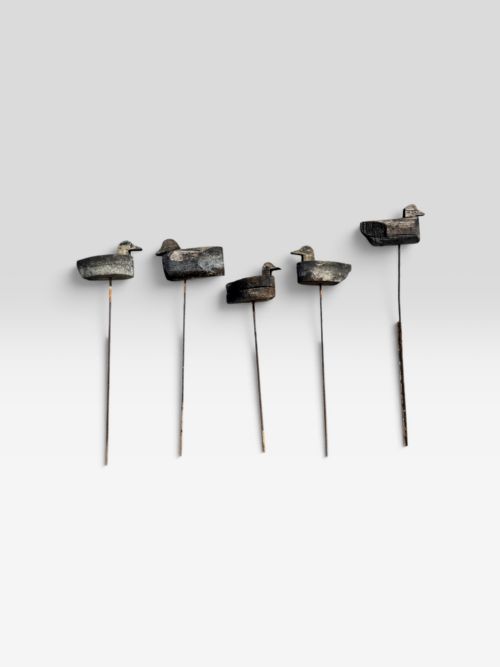
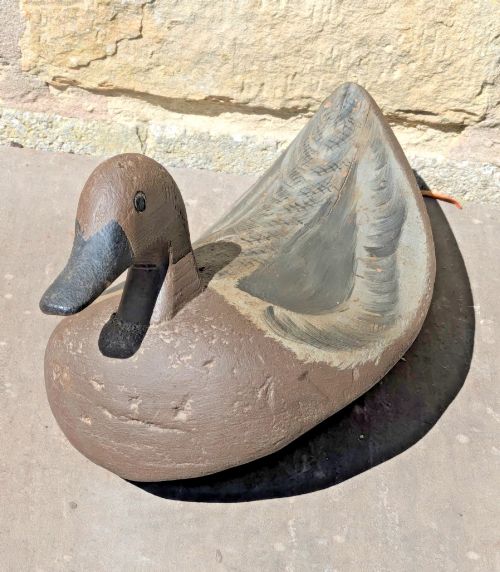
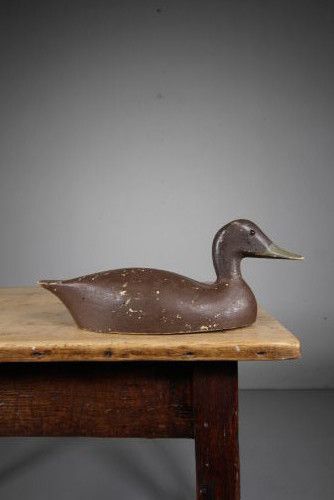
A folk art decoy duck represents working waterfowl carvings produced across the nineteenth and twentieth centuries, predominantly designed to lure birds on rivers and lakes. These utilitarian objects transitioned from practical pond tools into decorative sculptures prized for their robust silhouettes and honest surfaces.
Buyers encountering this selection will frequently meet carved wooden examples originating from English and French makers, alongside continental variations. Pieces span from nineteenth-century work to Edwardian and 1920s or 1930s interpretations, often showcasing regional characteristics in bill shapes and body postures.
The category encompasses solitary drakes, swimming studies, and nesting pairs, sometimes accompanied by related water birds such as loons. While many adopt traditional floating forms, others emerge as purely decorative sculptures or papier-mâché studies of ducklings.
Materials and construction methods
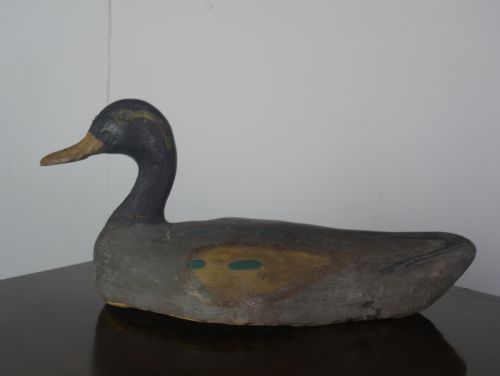
Makers shaped these carvings from solid timber and carved wood, utilising local logs and reclaimed planks to form buoyant bodies. Surfaces received coats of oil paint or lead-based pigments, applied by hand to mimic the plumage of mallards, bluebills, and other species.
Detailing often included glass eyes inserted into carved sockets to heighten realism, while internal weighting or iron hardware provided stability upon the water. Alternative methods incorporated papier-mâché and straw for specific sculptural studies.
Among the floating drakes, an American loon sits proudly accompanied by her tiny chick.
Distinctions in quality and character
Quality rests in the vigour of the carving and the preservation of original layered paint surfaces rather than pristine factory finish. Pieces retaining their honest working patina, worn through decades of exposure to weather and handling, demonstrate superior visual depth.
Proportion and stance separate standard production from exceptional vernacular sculpture, where maker interpretation creates a potent silhouette. The integrity of the original timber and the survival of early glass eyes contribute significantly to desirability.
The Folk Art Decoy Duck Glossary
- Decoy duck
- A carved and painted floating bird model used historically by hunters to attract wildfowl onto water. These objects now function primarily as decorative sculptures within interior spaces.
- Bluebill
- A common diving duck frequently represented in historical decoy carving traditions. Collectors often recognise distinct regional variations associated with this specific water bird.
Folk Art Decoy Duck: Frequently Asked Questions
What is a folk art decoy duck?
A folk art decoy duck is a working wooden carving traditionally utilised by hunters on lakes and rivers to attract waterfowl. Over time, these utilitarian objects have transitioned into collectable decorative sculptures.
They display the distinct hand of regional makers through varied carving styles and weathered paint surfaces.
How do I date a decoy duck?
Dating relies upon examining the tool marks left by the maker, the type of timber utilised, and the composition of the paint layers. Nineteenth-century examples often exhibit heavier hand-shaping and dense iron fixings.
Twentieth-century pieces from the Edwardian era or the 1920s and 1930s show evolving styles and occasionally incorporate glass eyes.
How were decoy ducks used?
Hunters placed these carved wooden birds upon the surface of ponds or coastal waters to create the appearance of resting flocks. Anchored by weighted lines, they bobbed with the current to draw wildfowl within range.
Their construction demanded robust materials capable of withstanding constant exposure to moisture and rough handling.
How do I display a decoy duck at home?
These sculptures sit comfortably on bookshelves, mantelpieces, or side tables where their organic forms provide a strong textural contrast. They require stable indoor conditions away from direct heat sources to protect the aged wood and historic paint.
Grouping pairs or mixed flocks creates a striking focal point within a room.