


Green Man Oak Carving
A green man oak carving brings foliate mask motifs into Victorian furniture, offering both architectural presence and traditional craftsmanship for domestic interiors.
Green Man Oak Carving
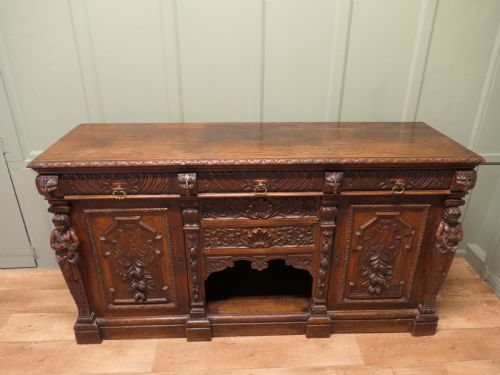
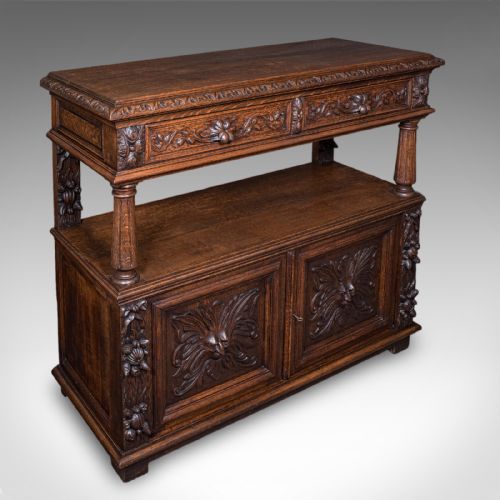
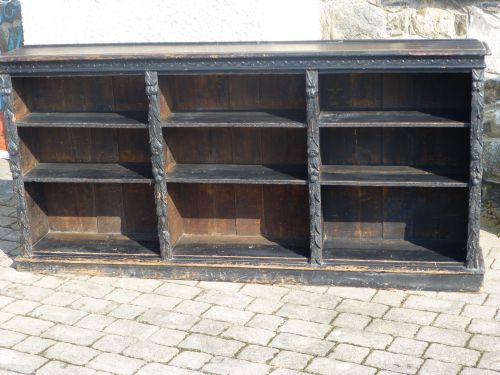
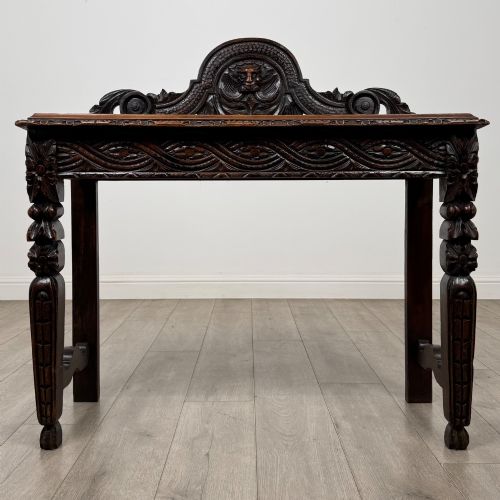
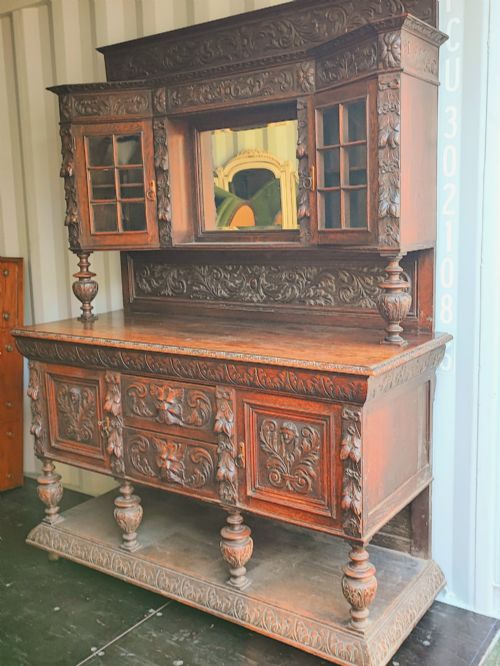
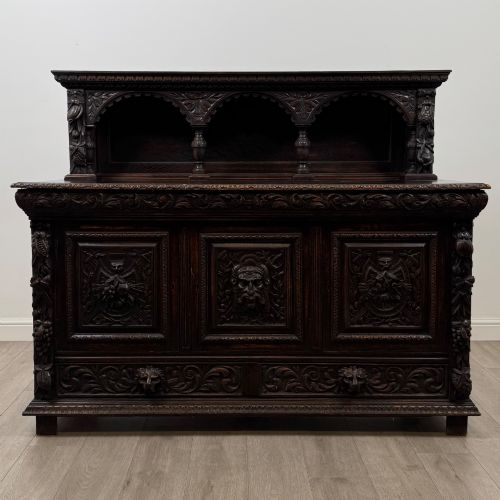
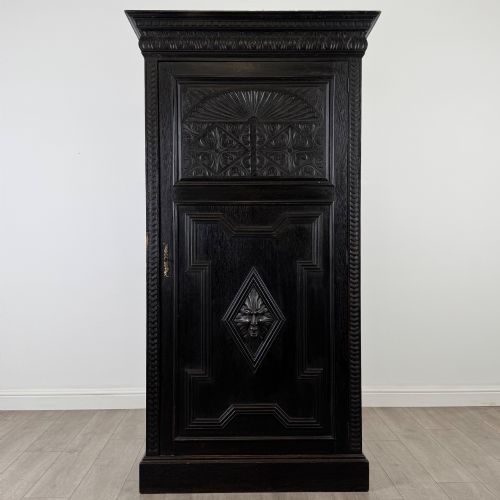
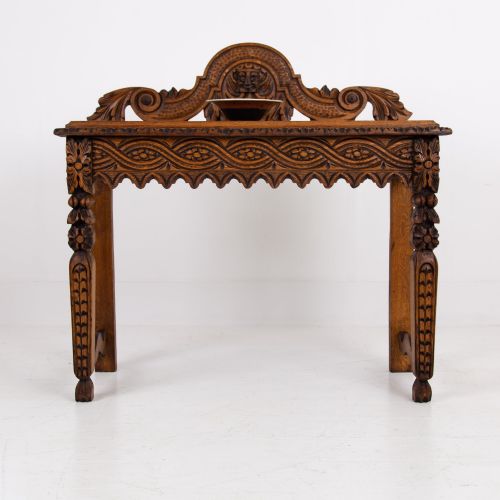
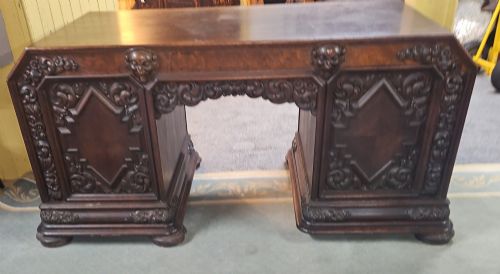
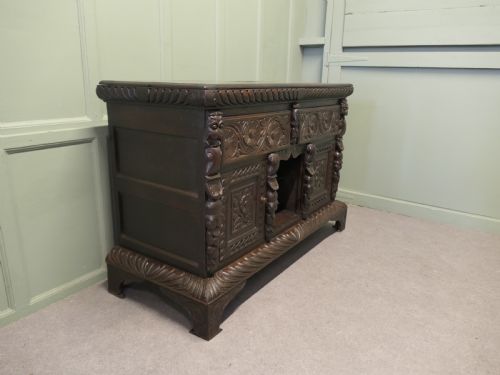
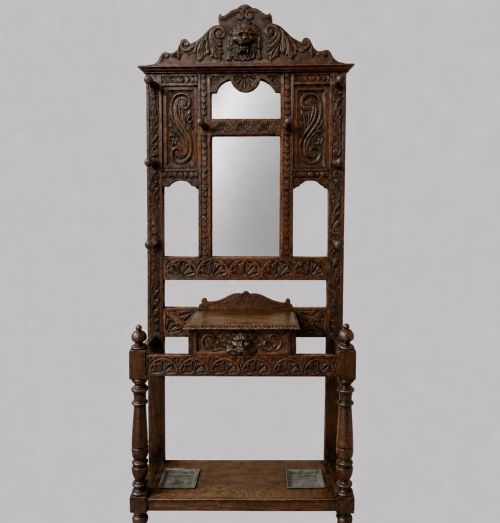
A green man oak carving typically appears on substantial nineteenth-century furniture such as sideboards, desks, bookcases, and hall stands. These pieces range from monumental library bookcases to smaller occasional tables and panel inserts.
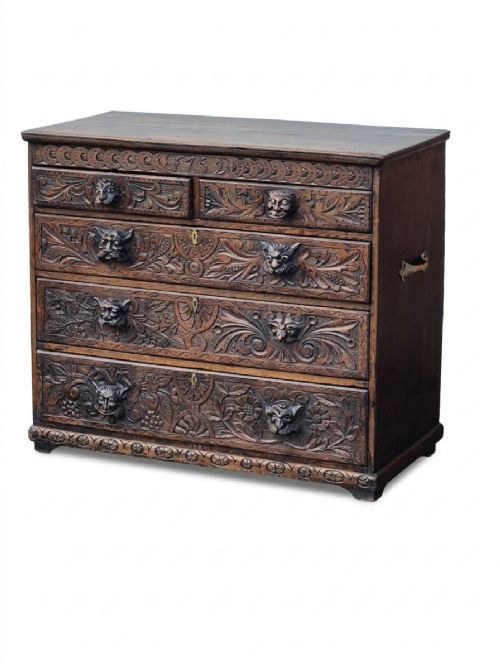
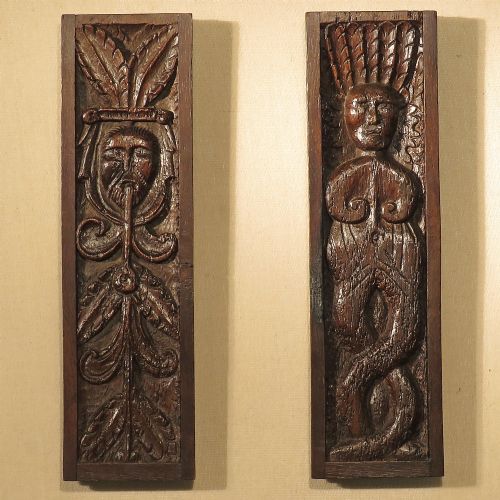
The aesthetic leans heavily into Victorian Gothic Revival and Renaissance styles, where the motif emerges from foliage and scrolling acanthus leaves. Buyers encounter everything from integrated drawer fronts on chests to detached sixteenth-century architectural panels.
While earlier examples dating back to the fifteenth and sixteenth centuries exist as isolated architectural fragments, the vast majority of pieces meeting this search phrase are nineteenth-century interpretations.
Materials and construction
Makers relied principally on solid oak and ebonised oak, utilising the dense timber to achieve deep, robust relief work without compromising structural integrity. Secondary materials like brass, glass, and leather appear in functional elements on desks and sideboards.
Somewhere in the room, a leafy visage peers out from the oak panelwork, keeping a watchful eye on daily household comings and goings.
Factors of quality
The distinction between ordinary and exceptional pieces lies in the crispness and depth of the chisel work within the foliage. Superior carvings display spirited expression and anatomical precision in the mask, whereas lesser examples rely on shallow, mechanical stamping or rudimentary surface incision.
Proportion and architectural cohesion also dictate value; pieces where the green man motif integrates harmoniously into the structural design of a sideboard or bureau outrank items where carvings appear hastily applied as afterthoughts.
Winterhalder & Hofmeier
The Green Man Oak Carving Glossary
- Green man
- A sculptural face depicted with leaves, vines, or branches sprouting from the mouth, nose, or face. This ancient motif symbolizes rebirth and the cycle of growth.
- Gothic Revival
- An architectural and decorative style popular during the nineteenth century that revived medieval forms, pointed arches, and heavy relief carvings.
- Foliate
- Ornamentation styled using leaves, flowers, and branches. It frequently frames or merges with the green man mask in panelwork.
- Ebonised
- Timber treated with a chemical stain or finish to imitate ebony. This dark surface treatment highlights bright metal fittings and deep carving details.
- Relief carving
- Sculpture technique where figures project from a flat background. High relief creates strong shadows and three-dimensional depth on cabinet doors.
Green Man Oak Carving: Frequently Asked Questions
What periods do green man carvings date from?
The pieces available span from sixteenth-century architectural panels to fifteenth-century fragments, though the vast majority date from the nineteenth century during the Victorian Gothic Revival.
Craftsmen of the Victorian era frequently revived these medieval and Renaissance motifs, applying them liberally to functional household furniture such as desks, bookcases, and sideboards.
How were green man carvings used in furniture?
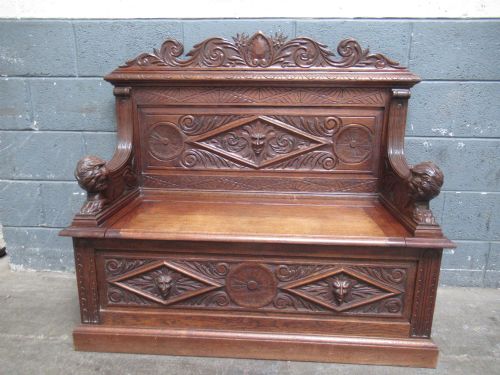
Carvers integrated the foliate mask into prominent architectural focal points, including drawer fronts, sideboard pediments, cabinet doors, and the crestings of hall benches.
On larger items like partners desks and monumental bookcases, the mask often anchors complex symmetrical foliage, serving as both structural ornamentation and symbolic protection.
Are these carvings always English in origin?
While many pieces reflect British cabinetmaking traditions, continental workshops in France and Flanders produced comparable Gothic Revival and Renaissance revival furniture featuring similar foliate masks.
Continental examples often exhibit distinct regional timber treatments and carving depths that differentiate them from domestic nineteenth-century production.
How do I care for carved oak furniture?
Solid oak requires stable indoor humidity levels to prevent the timber from splitting around deep relief carvings and paneled doors.
Periodic application of appropriate furniture wax preserves the finish and nourishes the wood without filling the intricate recesses of the foliate mask.