


Renaissance Relief Carving
Renaissance relief carving brings depth and architectural weight to a room through centuries-old wooden panels, marble plaques and figurative sculptures.
Renaissance Relief Carving
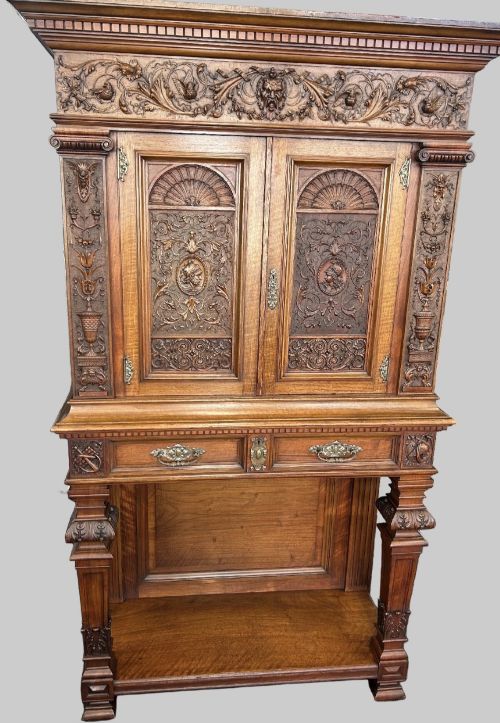
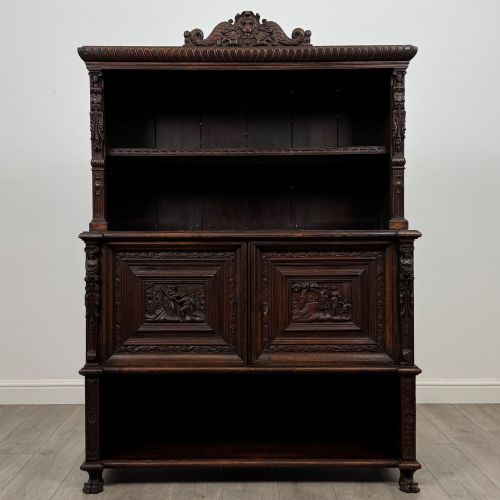
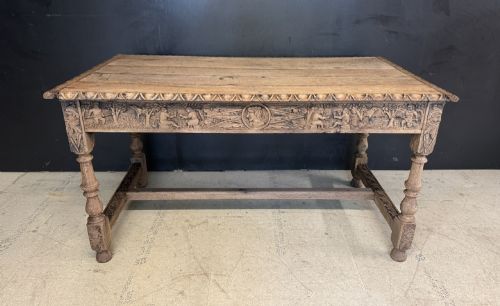
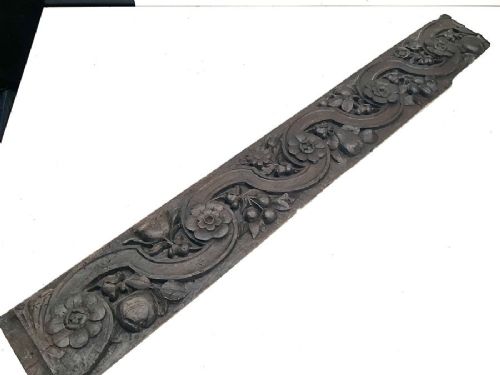
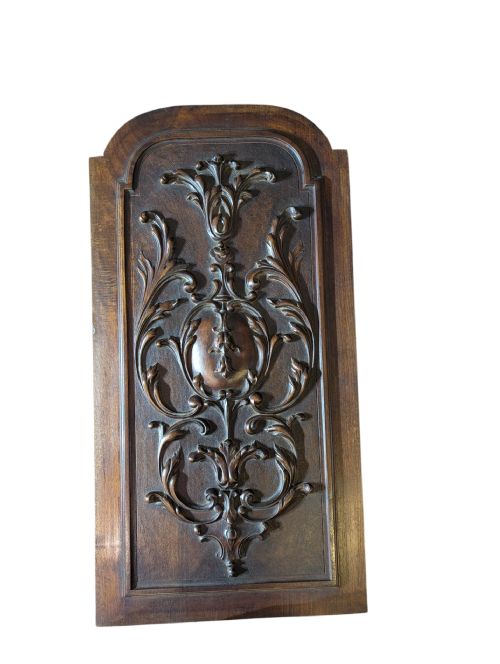
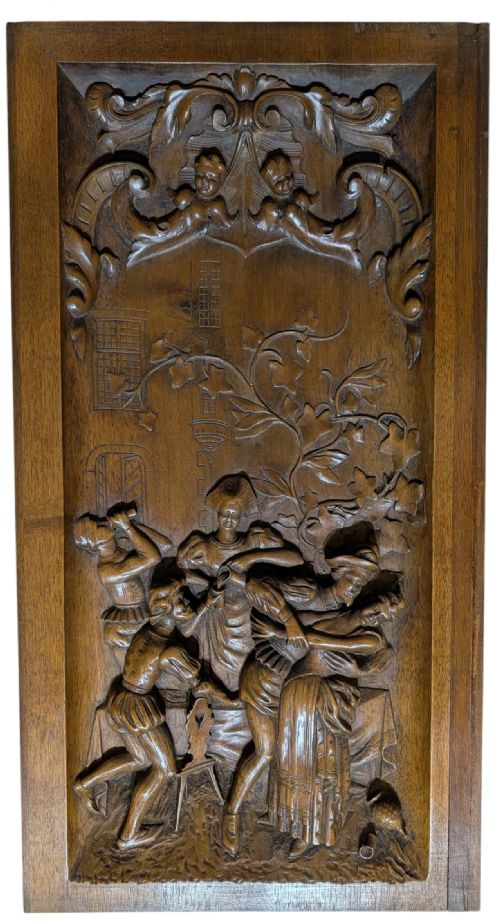
When buyers search for renaissance relief carving, they encounter architectural salvage, wall panels, cabinets and sculptural groups designed to project imagery outward from a flat background. These objects span from authentic sixteenth-century works to nineteenth-century revival interpretations executed in heavy timbers.
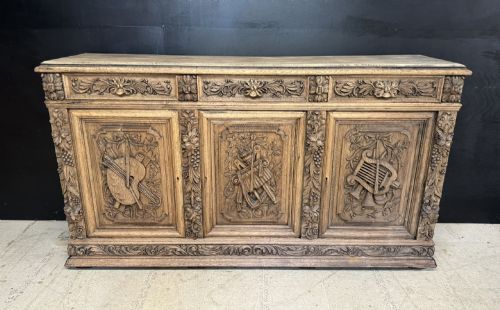
The material record divides clearly between domestic oak, dense walnut and occasional marble or bronze. Buyers find architectural fragments alongside complete sideboards, hall settles and cupboards incorporating figural panels.
Sixteenth-century examples display primary hand-chiselled execution, while nineteenth-century revival pieces appropriate those motifs for Victorian and continental interiors. Both eras utilise high-relief techniques to create dramatic shadow and form.
How they were made
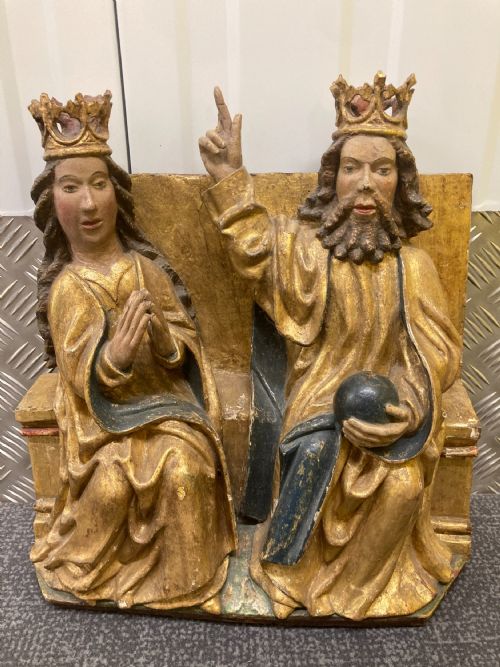
Carvers shaped these works primarily from solid oak and walnut using chisels and gouges to undercut figures and foliage from a single block. Certain pieces incorporate polychrome paint, gold leaf or Sienna marble to heighten the visual contrast of the carved surface.
Revival works from the nineteenth century often utilised mechanical assistance alongside traditional hand tools to assemble complex cabinets and wall panels. Secondary materials such as brass and leathermaché occasionally supplemented the primary timber framework.
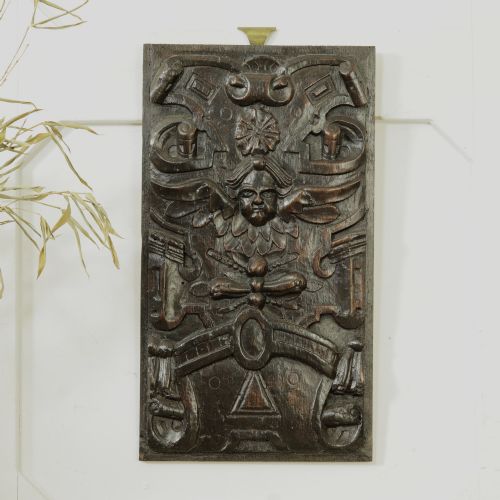
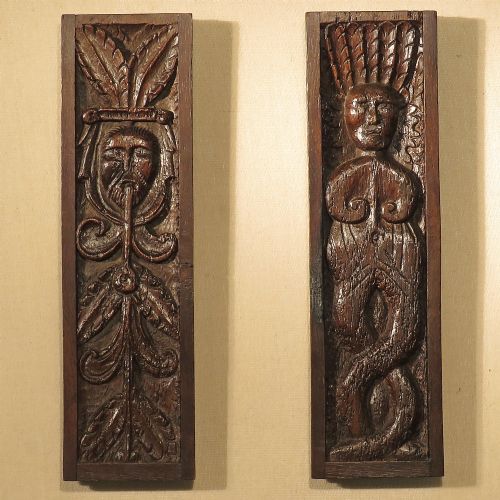
A sixteenth-century panel depicts a coiled serpent sharing wooden wall space with carved green men and pious saints.
What varies in quality
Depth of execution separates standard decorative panels from superior sculptural works, with high-relief carving demanding greater mastery of anatomical proportion and perspective. The crispness of the chisel work determines whether foliage and figures retain sharp definition or appear softened by wear and over-finishing.
The integrity of the timber foundation dictates longevity, as shrinkage and historical woodworm alter the stability of sixteenth-century oak panels. Original surface patination, whether aged walnut or traces of historic polychrome paint, preserves the integrity of the piece against modern stripping.
Hugues Sambin
The Renaissance Relief Carving Glossary
- Relief carving
- A sculptural technique where figures and ornaments project from a flat background plane. High relief occurs when the design stands far out from the ground.
- Linenfold
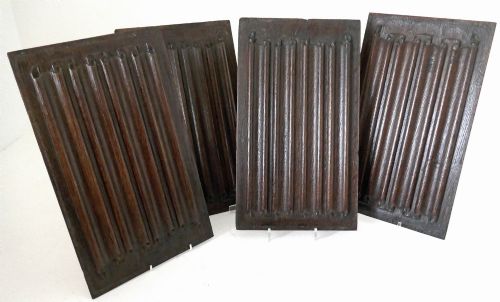
- A style of wood panel carving resembling folded parchment or cloth. This motif appears frequently on sixteenth-century oak panels.
- Green Man
- A sculptural motif representing a human face surrounded by or entwined with leaves and vines. It symbolises rebirth in architectural and furniture decoration.
- Terme
- A pedestal figure tapering downward, combining a human bust with a pillar. These structural supports appear in sixteenth-century walnut groupings.
- Architectural salvage
- Building elements rescued from demolished structures and repurposed as decorative wall panels or furniture components. These pieces retain original period joinery and surface wear.
Renaissance Relief Carving: Frequently Asked Questions
How do I date a carved oak panel?
Dating relies on tool marks, timber shrinkage patterns and the stylistic conventions of the period. Sixteenth-century panels display hand-riven boards and primitive joinery distinct from nineteenth-century revival machine cutting.
Examining the back of the panel reveals the method of preparation. Older pieces show adze marks and irregular thickness, whereas later revival work exhibits uniform machine sawing.
Where should I hang a wall panel?
Heavy oak and walnut panels require secure wall fixings anchored directly into studs or masonry. Avoid placing antique carvings in direct sunlight or above active heat sources to prevent timber splitting.
Positioning the panel at eye level allows the depth of the relief work to catch ambient room light. Wall reliefs benefit from neutral backgrounds that accentuate the dark tones of aged wood.
What is the difference between original and revival pieces?
Original sixteenth-century carvings were created as functional architectural elements, religious panels or domestic furnishings of their time. Nineteenth-century revival pieces emulated these earlier styles to satisfy Victorian demand for historical grandeur.
Revival furniture often integrates antique elements into newly constructed cabinets or hall stands. Examining the internal construction and wood species clarifies whether a piece is a unified period object or a nineteenth-century composite.
How do I maintain carved wooden furniture?
Dust carved surfaces regularly with a soft, dry brush to prevent dirt accumulating in the recessed areas of the relief. Avoid silicone-based sprays and apply a traditional beeswax sparingly to nourish the dry timber.
Maintaining stable indoor humidity prevents the historic wood from warping or cracking. Periodic inspection of joints ensures that heavy cupboard doors and panels remain structurally sound.